National Tsing Hua University Places Second at the ISC 2025 Student Cluster Competition in Europe
5 min read
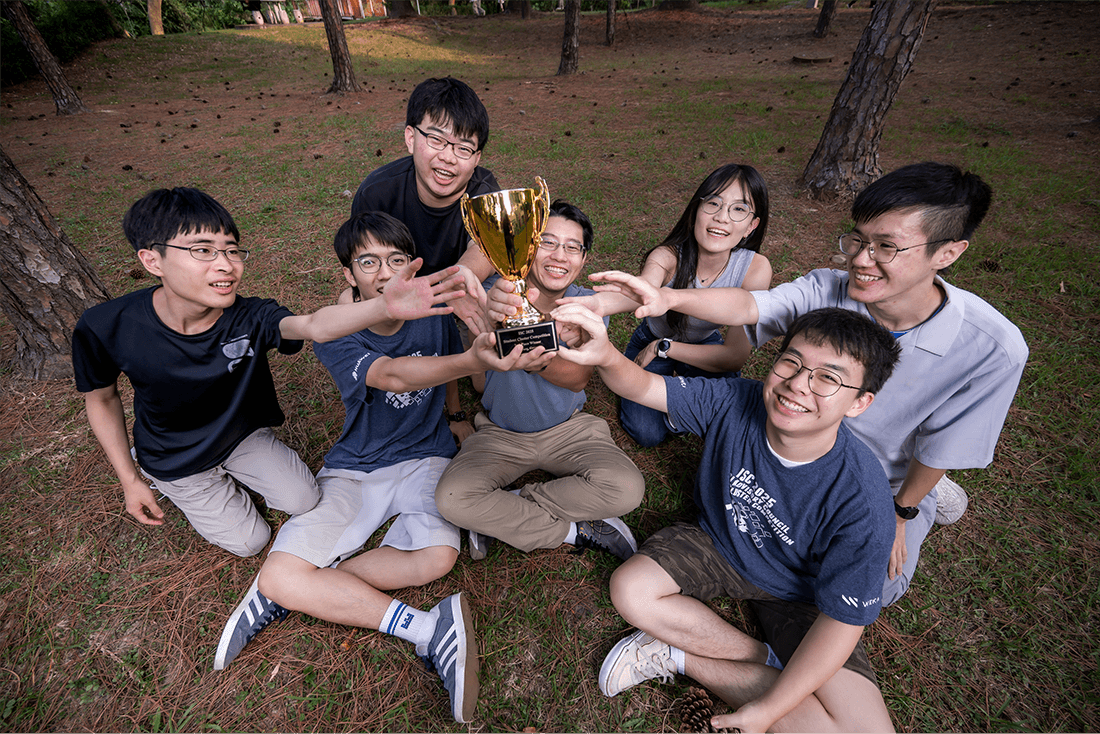
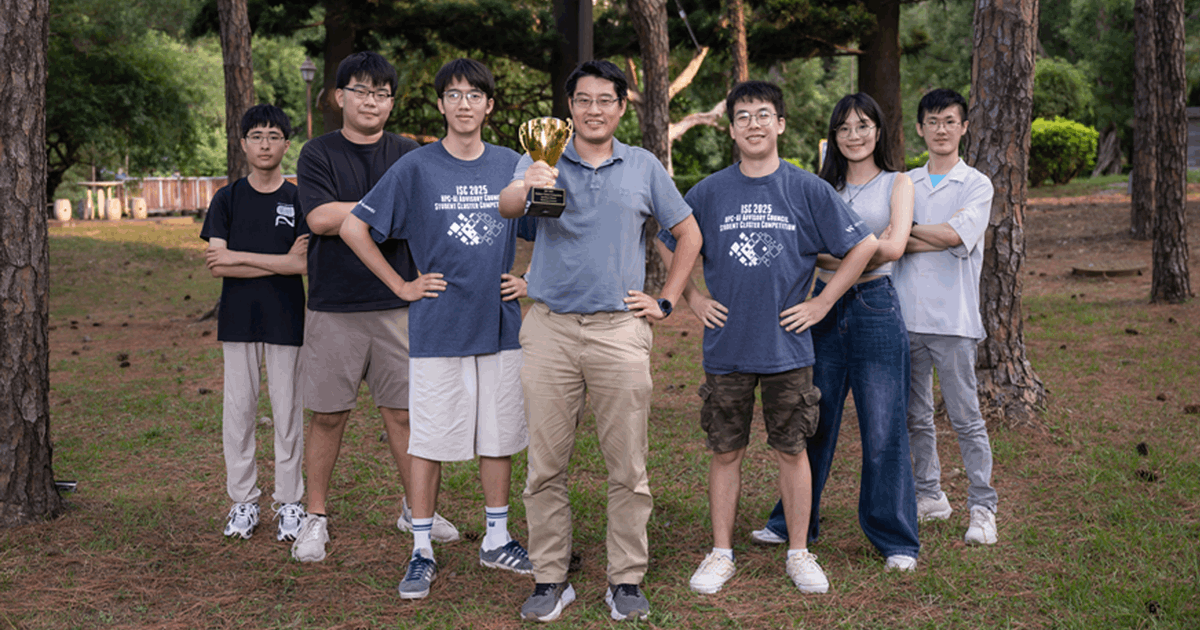
With the global boom in building AI computing infrastructure, high-performance computing (HPC) has become a key strategic focus for nations worldwide. To nurture interdisciplinary talent in AI and HPC, Professor Chih-Yuan Chou from the Department of Computer Science at National Tsing Hua University (NTHU) has been leading student teams to compete in top international supercomputing competitions. This year, with software, hardware, and technical support from Giga Computing, the team once again achieved an impressive second place at the ISC 2025 Student Cluster Competition in Europe.
ISC's competition is one of the world’s top three student supercomputing contests, the other two are: SC Student Cluster Competition (in the U.S.) and ASC Student Supercomputer Challenge (in China). The competition provides a platform for university students to showcase their comprehensive hardware and software capabilities in solving real-world problems while fostering international exchange and learning.
Professor Chou, who has extensive experience in distributed and high-performance computing and previously worked at Lawrence Berkeley National Laboratory, explained that the competition requires students to build a small-scale supercomputer and run AI and scientific applications under a strict 6,000-watt power cap. Participants must demonstrate end-to-end system integration skills, from hardware setup to software optimization, as well as fine-grained performance tuning and power management. Unlike traditional coursework, competitors learn by tackling real problems and developing the essential skills they need to master along the way.
To prepare for the competition, Professor Chou created and led an HPC fundamentals course that uses hands-on simulation to accelerate learning. The team began training in January 2024 and competed in both the Taiwan National Center for High-performance Computing (NCHC) Cup and the Singapore HPC-AI Competition, winning first place in the latter.
This year's ISC tasks spanned seismic simulations, fluid dynamics, and nanomaterials modeling. Since most computer science students had little exposure to these domains, the team collaborated with students from other departments. Led by Chemical Engineering student Sheng Er-Wei, the team also included undergraduate students Ji Guan-Yu, Lü Xuan-Yang, Yeh You-Chen, Lin Chih-Yi, and Lin Wei-Sheng from Computer Science. And they were supported by student coaches Lin Chan-Yi and Hsieh Tung-Yu, both members of last year's team.
Early HPC Node Testing with Giga Computing Enabled Strategic Resource Planning
Last year’s NTHU team also won second place at ISC, and this year’s student coaches leveraged their first-hand experience with competition rules, system setup, and on-site troubleshooting.
Three months before the event, Giga Computing shipped HPC nodes to NTHU’s data center for system testing and tuning. During HPL Benchmark tests, the team adjusted GPU thermal design power (TDP), CPU frequency, and fan speeds to stay within the power limit while maximizing TFLOPS performance.
For the AI fine-tuning task, the team used the open-source hyperparameter optimization framework Optuna. They praised the outstanding performance of GIGABYTE servers powered by NVIDIA H200 NVL GPUs, which allowed them to focus on data and model optimization. Through pre-event rehearsals, the team devised precise strategies for performance tuning, power allocation, and time management for each challenge.
NVIDIA H200 NVL and AMD EPYC™ 9655: A Winning Combination of Performance and Power Efficiency
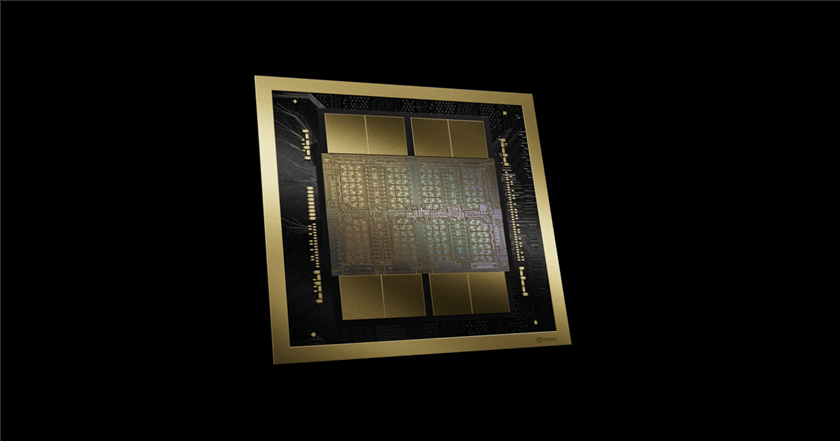
A major difference in this year’s competition was the inclusion of IO500 to address I/O bottlenecks, replacing the traditional HPCC benchmark. The increased GPU demands made real-time resource allocation under the 6 kW power limit particularly challenging. To stay within the competition’s power limit, Giga Computing upgraded its hardware from last year’s NVIDIA H100 NVL to eight NVIDIA H200 NVL GPUs.
The HPC application benchmarks included SeisSol for seismic simulation, code_saturne for CFD, OpenMX for nanoscale material modeling, and LLaMA 3.1 8B for LLM fine-tuning. The final “mystery challenge” featured LAMMPS for molecular dynamics. Each task came with unique difficulties. For example, LLaMA fine-tuning required the team to strike an optimal balance between performance and accuracy under time constraints. The NTHU team secured second place overall thanks to excellent software-hardware integration.
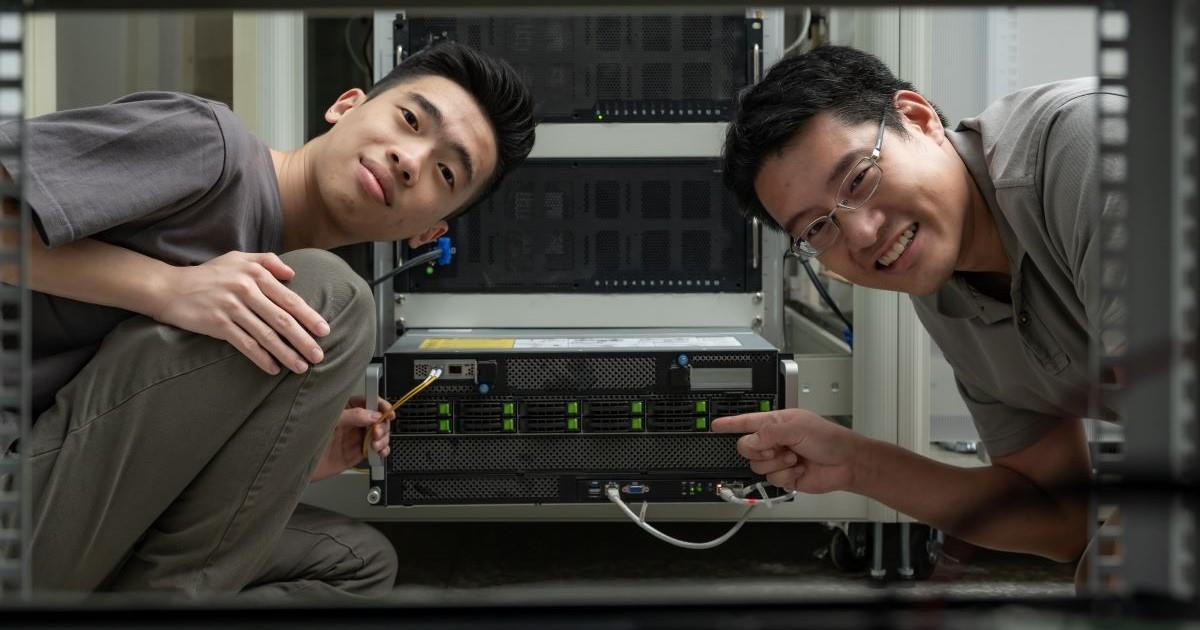
Giga Computing provided not only the high-performance hardware but also technical support including system debugging, equipment logistics, and shipping. The team used GIGABYTE G494-ZB4-AAP2 and GIGABYTE R183-Z90-AAD1 rack servers. The G494-ZB4-AAP2 came pre-installed with eight NVIDIA H200 NVL GPUs, which offer 1.5× larger memory, 1.4× higher memory bandwidth, 3× NVLink bandwidth, and 1.7× faster LLM inference than the H100 NVL, giving the team a significant edge.
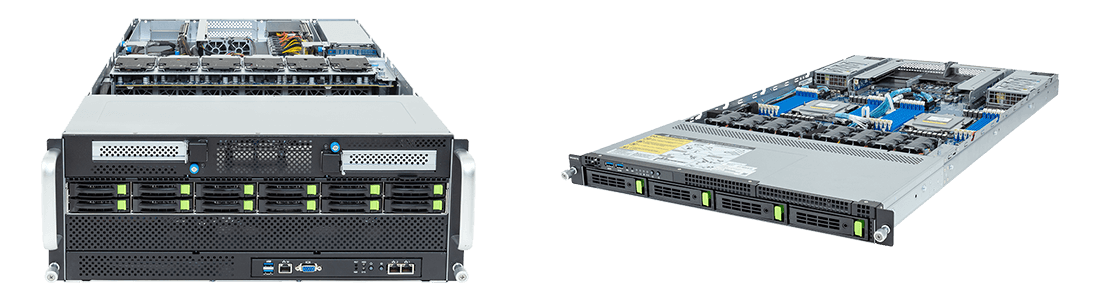
GIGABYTE G494-ZB4-AAP2 GPU server and GIGABYTE R183-Z90-AAD1 rack server
(Image source: GIGABYTE)
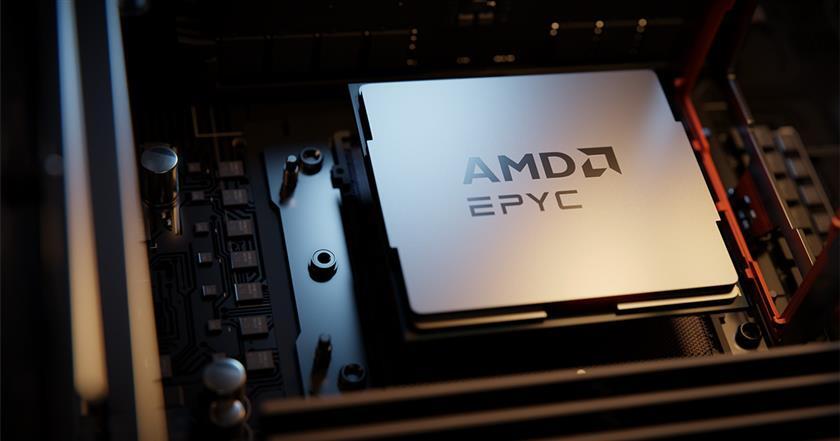
Both servers were powered by dual AMD EPYC 9655 CPUs with 192 cores each, enabling flexible power allocation across components. For high-speed interconnects, both systems used dual-port 200 Gb/s NVIDIA ConnectX-7 NICs and a NVIDIA Mellanox QM8700 switch with 40 ports at 200 Gb/s full-duplex per port.
Memory and storage were also crucial to performance. Both servers were equipped with Micron DDR5 6400 memory in the 12-channel platform. The G494-ZB4-AAP2 supported 48 DIMM slots and 12 hot-swap 2.5” bays, while the R183-Z90-AAD1 supported 24 DIMM slots and 4 drive bays. With 12 Solidigm SSDs, the team achieved excellent I/O performance on IO500.
Besides having powerful hardware, a fine-tuned fan speed and CPU clock adjustments were essential during the competition to maintain stability and to avoid power spikes. The combination of robust hardware and skillful students created a smooth, high-performance competition run.
A Model for Industry-Academia Collaboration and Next-Generation Talent Development
Many factors contributed to NTHU’s outstanding result: stable hardware operation, strategic system tuning, and solid HPC training. Professor Chou’s HPC curriculum and the knowledge passed down by the previous team provided a strong foundation for the students to succeed.
Clear task allocation also played a key role. Each problem was tackled by at least two team members, with every step documented to ensure smooth handoffs. Good communication habits, well-defined schedules, and efficient use of fragmented time allowed the team to optimize resource use under tight deadlines.
Looking ahead, Professor Chou will continue to guide students in deepening their HPC expertise. Through this partnership, Giga Computing and NTHU maximize the impact of interdisciplinary collaboration and industry-academia synergy. The program not only cultivates Taiwan’s next-generation HPC and system software talent but also gives students valuable real-world experience and a pathway to the global stage. This achievement highlights Taiwan’s growing strength and innovation in HPC, laying a solid foundation for future industry development.
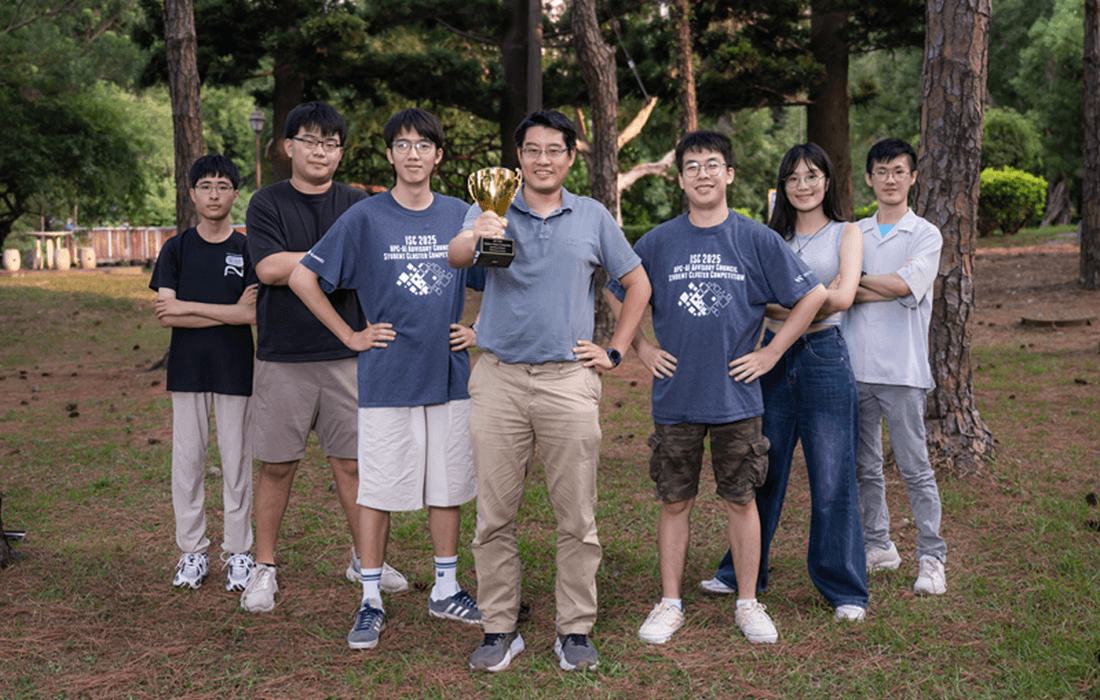
Team members from left to right: Lu Xuan-Yang, Ji Guan-Yu, Yeh You-Chen, Professor Chih-Yuan Chou, Lin Wei-Sheng, team captain Sheng Er-Wei, and student coach Hsieh Tung-Yu
(Image source: TechNews)
(Photo credit: TechNews)