Supporting JHPC-quantum Project with a Next-Generation High-Performance Computing System
Supported by Japan's Ministry of Economy, Trade and Industry (METI) and the New Energy and Industrial Technology Development Organization (NEDO), this national-scale initiative tasks Giga Computing Technology with the design and production of high-density GPU nodes, drawing on its expertise in server architecture and manufacturing. Through collaboration with partners including NVIDIA and ScaleWorX, the project delivers a high-performance, energy-efficient, computing platform that integrates the supercomputer Fugaku with quantum systems.

The Intersection of Quantum and Supercomputing
Global scientific research is entering a new era driven by heterogeneous computing and emerging quantum-classical simulation approaches. As AI model sizes and scientific simulation complexity continue to grow, single-architecture computing frameworks are increasingly insufficient to meet future research demands. Japan, a global leader in HPC, continues to lead with the Fugaku and is now accelerating progress toward a Quantum – HPC hybrid platform.
This hybrid platform brings together multiple supercomputers and quantum computers, including:
- Fugaku
- IBM Quantum System Two "ibm_kobe"
- Ion-trap quantum computer "Reimei"
These systems will be connected through a high-speed network and a unified software framework, creating one of the first integrated research environments capable of supporting quantum algorithm simulation, integrated application development, and hybrid-computing experimentation. The computing hub is planned to be located at RIKEN's Kobe site and is scheduled to be officially operational within Japan's fiscal year 2025.
Giga Computing's Role and Technical Challenges
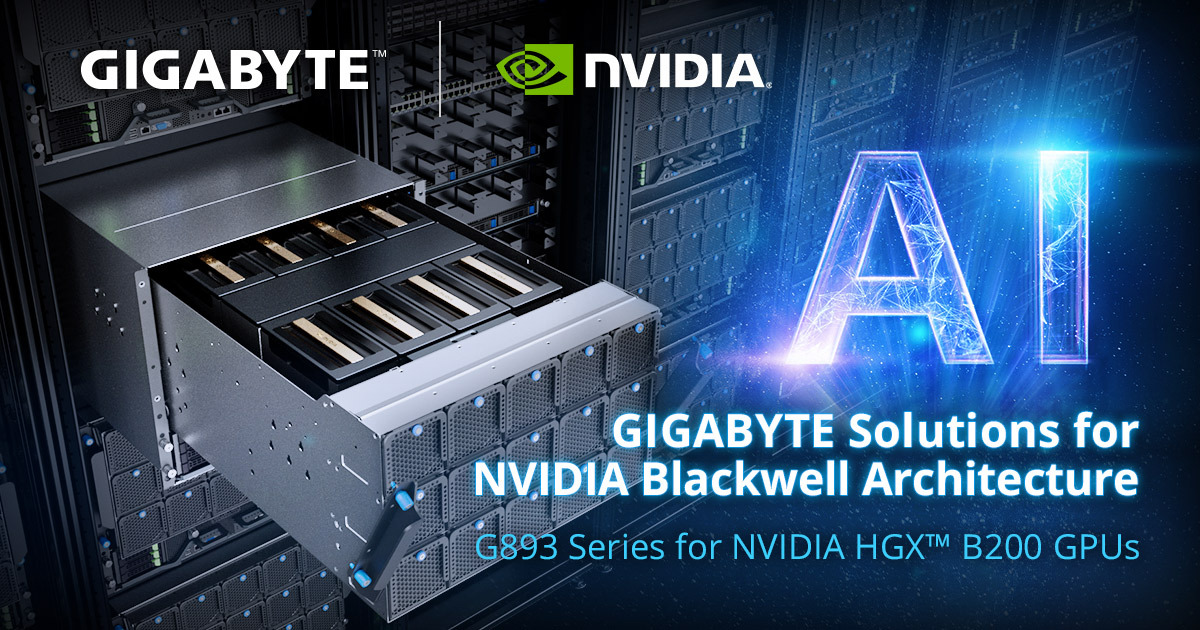
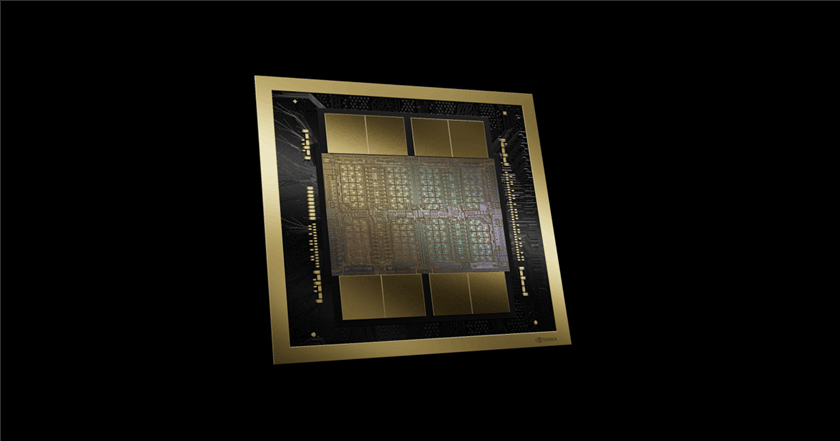
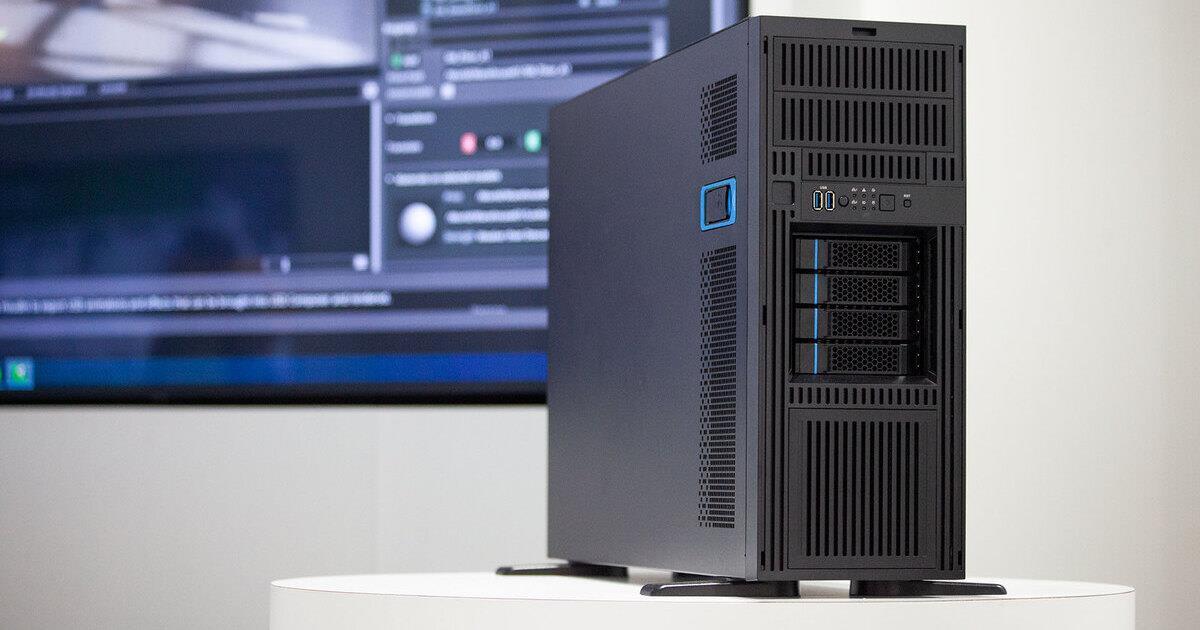
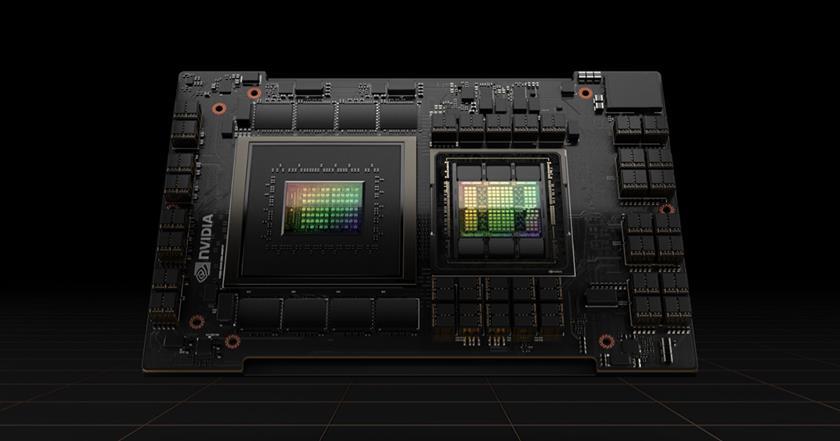
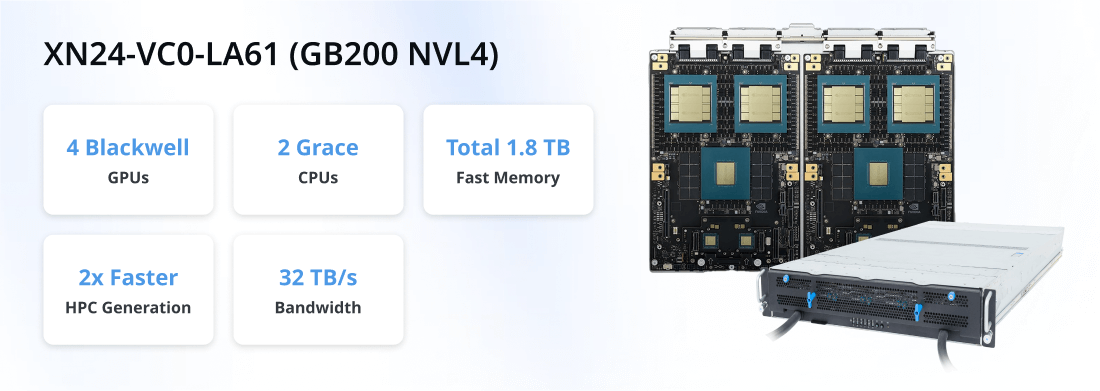
Within this national-scale initiative that bridges quantum and classical computing, Giga Computing's assigned mission is to design and manufacture 135 computing nodes, each equipped with NVIDIA's latest-generation Grace Blackwell Superchip (GB200 NVL4), totaling 540 GPUs.
This flagship AI computing architecture, combining Grace CPUs with Blackwell GPUs, is designed specifically for large language model training, physics simulations, and hybrid quantum algorithm optimization. To maximize performance and ensure long-term system stability, the project addressed three major technical challenges:
Thermal Management and Reliability Under Extreme Power Density
Modular, High-Density Design and Rapid Delivery
Deep Integration with NVIDIA High-Speed Networking
Innovation Highlights
Giga Computing contributed key engineering solutions in this project, serving as a foundation for the Quantum–HPC hybrid platform.
1. High-efficiency liquid-cooling architecture
- High heat-flux cold plates: Engineered for GB200 NVL4 chips to handle thermal loads exceeding 1,000 W
- Serviceable design: Quick-disconnect, zero-leak connectors enable fast replacement and reduced operational cost
- Energy recovery potential: Cooling water outlet temperatures can reach 45°C, allowing potential reuse for building heating or integration with heat recovery systems
2. Highly integrated rack-level architecture
- GB200 NVL4-based servers
- InfiniBand switches
- Coolant Distribution Unit (CDU) modules
- Power management and monitoring systems
3. Energy Efficiency and scalable performance
A Global Partnership Chain: From Design to Realization
The success of this project relies on cross-organizational collaboration. ScaleWorX serves as the system integrator; DTS Corporation oversees project planning and testing; NVIDIA provides the Grace Blackwell architecture and InfiniBand; DDN supplies the high-performance file system; and Giga Computing designs and manufactures compute nodes.
This multidisciplinary, international collaboration highlights the broader trend toward HPC ecosystem integration, and further demonstrates how shared expertise accelerates complex platform delivery.
"We are honored to collaborate with Japan's leading scientific research institutions. Leveraging Giga Computing's extensive experience in high-performance system design and manufacturing, together with close collaboration with NVIDIA," said Freya Yu, APAC Business Director at Giga Computing Technology. "We are accelerating Japan's continued breakthroughs in world-class research. We hope to become a key driving force in the next-generation computing revolution through designs that balance performance, efficiency, and sustainability."
The Future Value of Quantum–HPC Convergence
- Quantum algorithm simulation
- Hybrid AI / quantum machine-learning training
- Materials science and molecular dynamics
This enables breakthrough advances in energy development, drug discovery, financial simulation, and fundamental physics research.
The compute layer provides the horsepower for these workloads and demonstrates how classical HPC and quantum simulation can be orchestrated in one system, opening new possibilities for computational research.
Building the Future of Supercomputing with Technology and Vision
Participating in the construction of RIKEN’s Quantum–HPC hybrid platform is a significant milestone in bringing quantum and classical computing together at scale.
As quantum and HPC convergence continues to mature, the industry collaborators’ role is to support researchers with reliable systems and sustainable designs, allowing the platform to deliver real scientific results.
Key Results Summary
| Category | Key Highlights |
|---|---|
| Compute Nodes | 135 nodes, 540 GPUs (NVIDIA GB200 NVL4) |
| Networking | NVIDIA InfiniBand XDR, 3.2 Tbps bandwidth |
| Liquid Cooling | Warm-water cooling system (Warm-Water Cooling, >40°C) |
| Performance | FP64: 21+ PFLOPS / FP8: 5+ EFLOPS |
| System Integration | Connected with Fugaku, ibm_kobe, and Reimei |
| Leading Organization | RIKEN Center for Computational Science |
| Giga Computing Role | GPU node design & manufacturing, rack-level thermal and layout engineering |
| Sustainability Value | High-efficiency architecture, heat recovery potential, modular design |