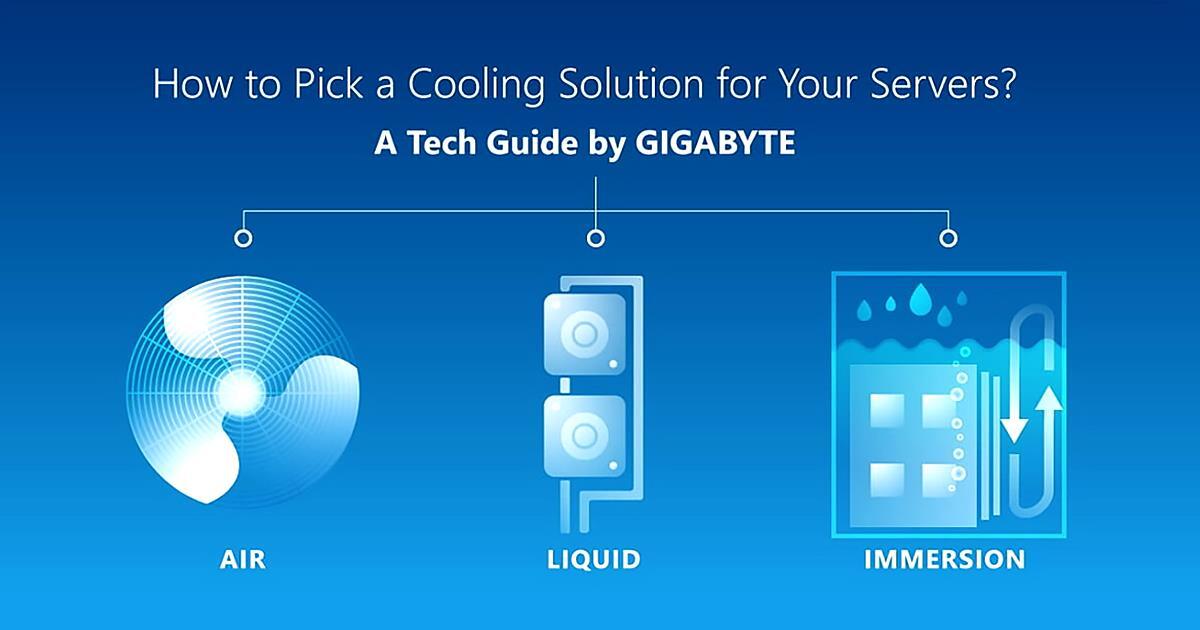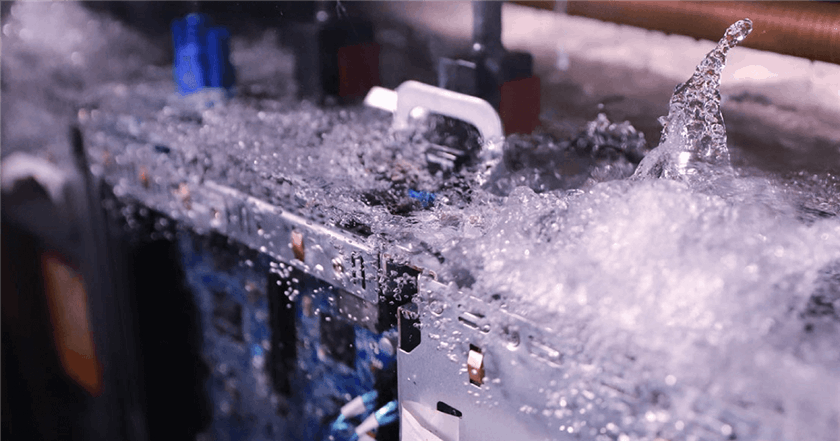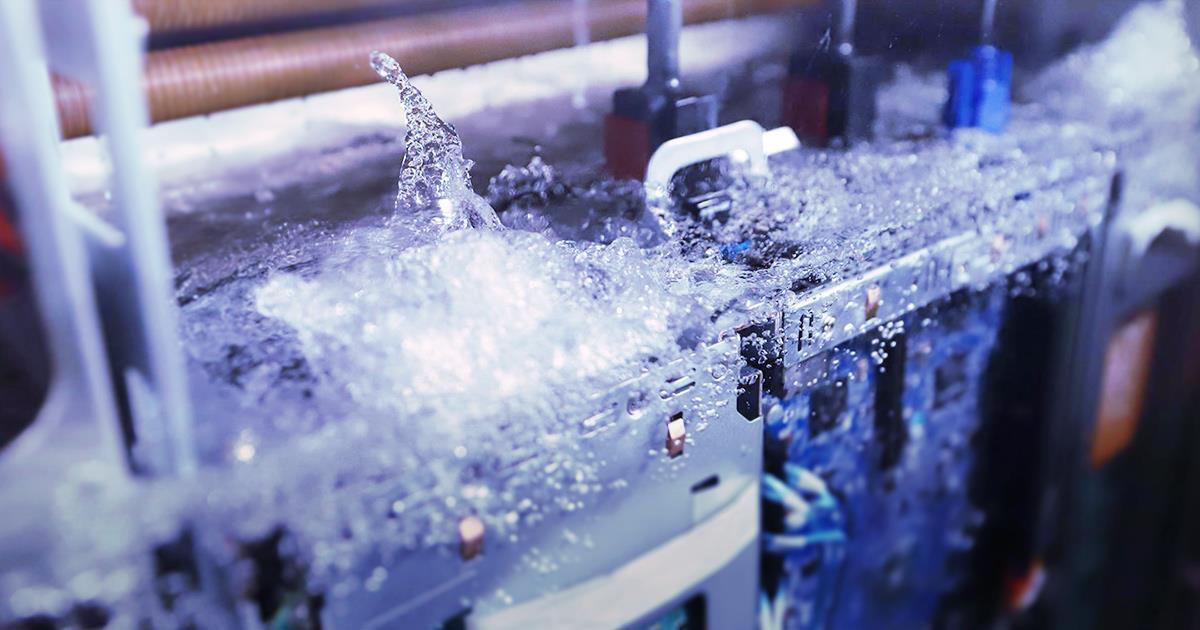
Two-phase and Single-phase Liquid Immersion Cooling
Comparison of Cooling Systems
Two-phase Liquid Immersion Cooling | Single-phase Liquid Immersion Cooling | Air-cooled | |
|---|---|---|---|
Structural Complexity | ★★★★☆ | ★★★☆☆ | ★★★★★ |
Installation Cost | ★★★★☆ | ★★★★☆ | ★★★★★ |
Cooling Efficiency | ★★★★★ | ★★★★★ | ★★★☆☆ |
Operating Expenses | ★★★★☆ | ★★★☆☆ | ★★★★★ |
Cooling Capacity | ★★★★★ | ★★★★☆ | ★★★☆☆ |
High-density Performance | ★★★★★ | ★★★★★ | ★★★☆☆ |
Reliability | ★★★★☆ | ★★★★★ | ★★☆☆☆ |
Deployment Flexibility | ★★★★☆ | ★★★★★ | ★★☆☆☆ |
How the Two Cooling Technologies Work
Furthermore, both of these two cooling structures do not need:
- Cooling fins and fans in the IT equipment
- Machine room refrigerated air conditioning system (CRAC & CRAH), raised access floor
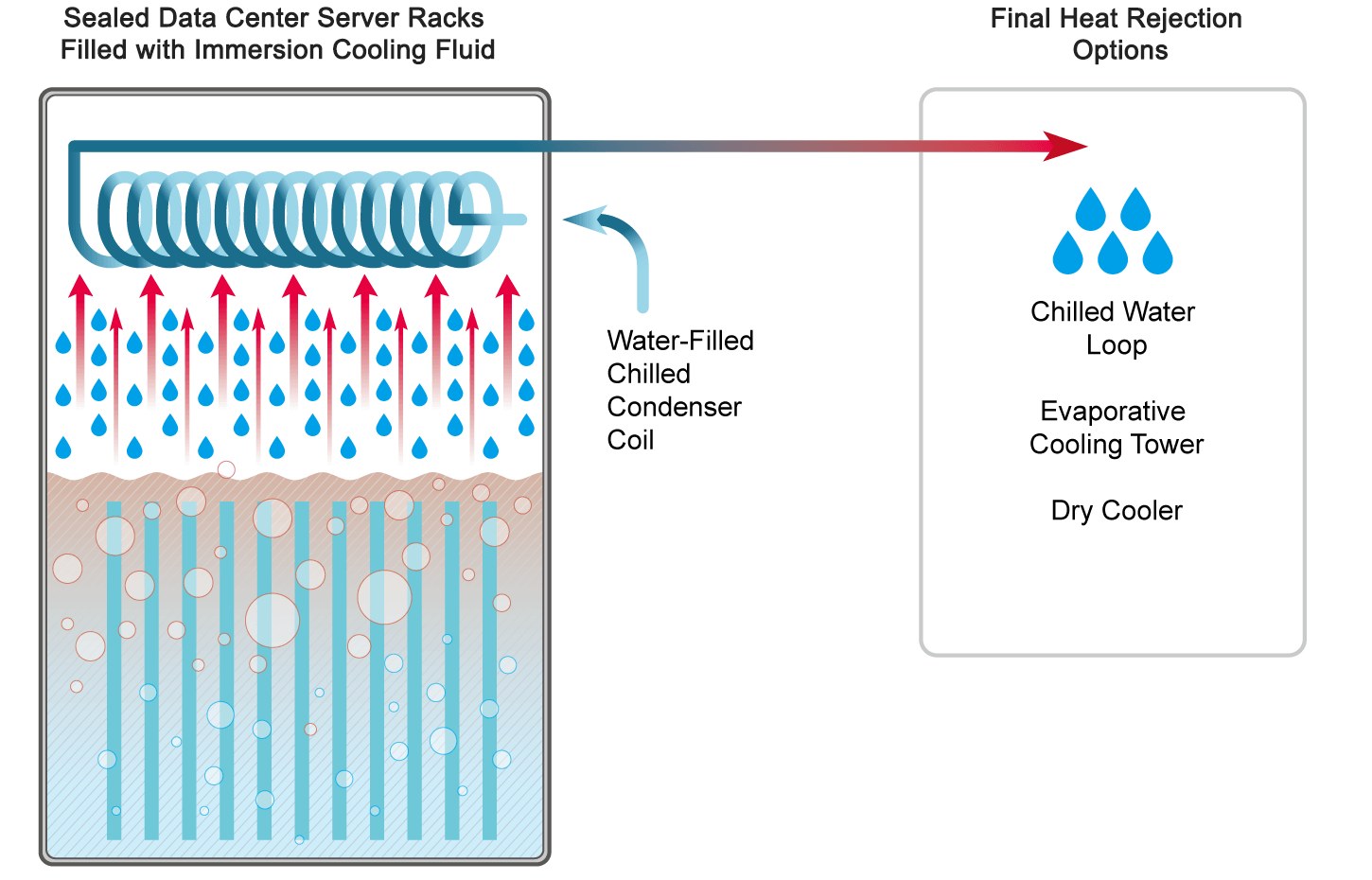
Two-phase Liquid Immersion Cooling System
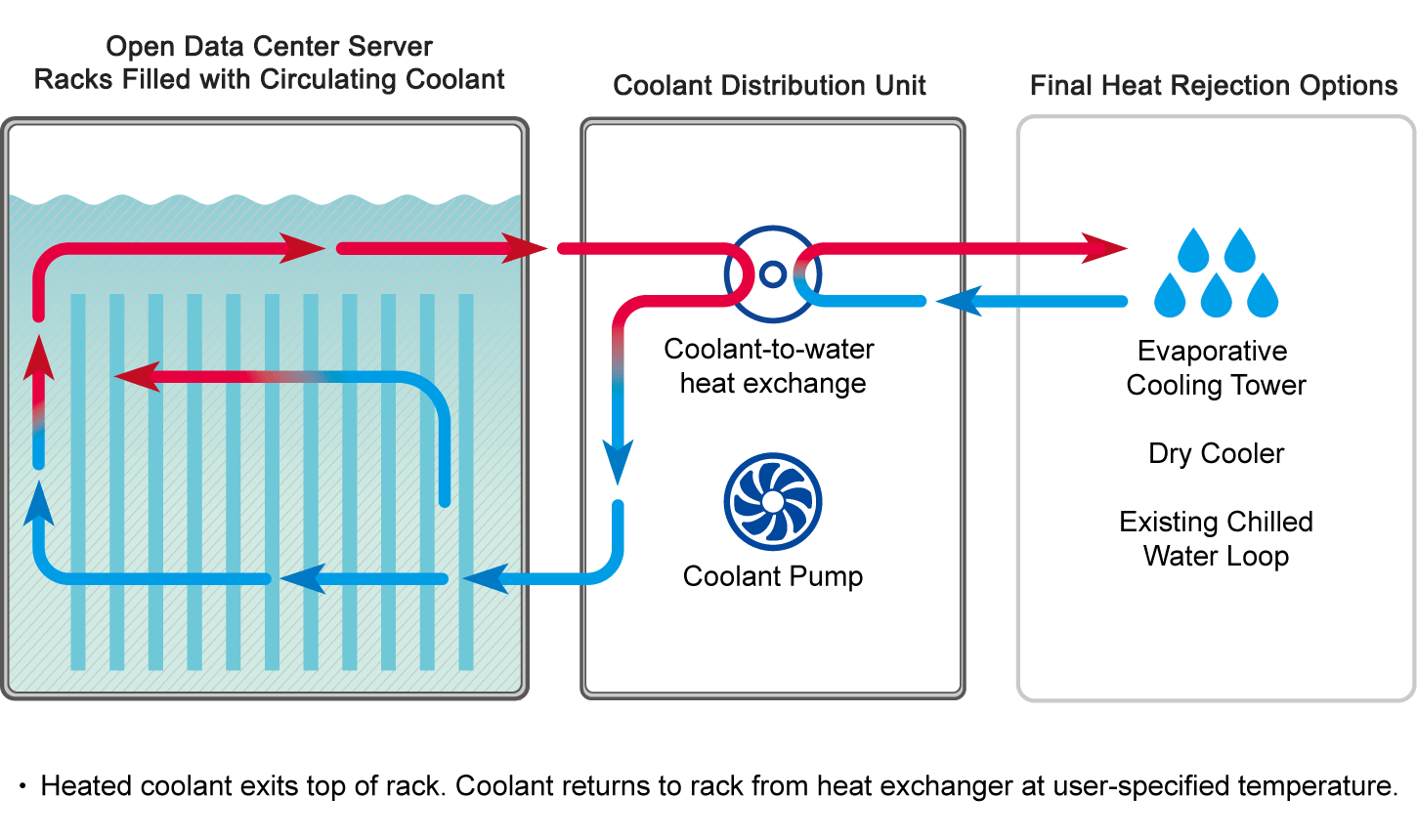
Single-phase liquid immersion cooling system
System Complexity and Installation Cost
The greatest difference in cost of two-phase and single-phase liquid immersion cooling systems is closely related to the medium and the environmental control system for a liquid tank. 3M is currently the leading brand and main supplier of non-conductive mediums for two-phase liquid immersion cooling in the global market, and its heat conducting liquid is prepared using fluorocarbons. The medium used in single-phase liquid immersion cooling is usually prepared using hydrocarbons. The design of liquid tanks is divided into sealed and unsealed tanks depending on the heat dissipation method.
Two-phase Liquid Immersion Cooling System
Single-phase Liquid Immersion Cooling System
Cooling Efficiency and Operating Expenses
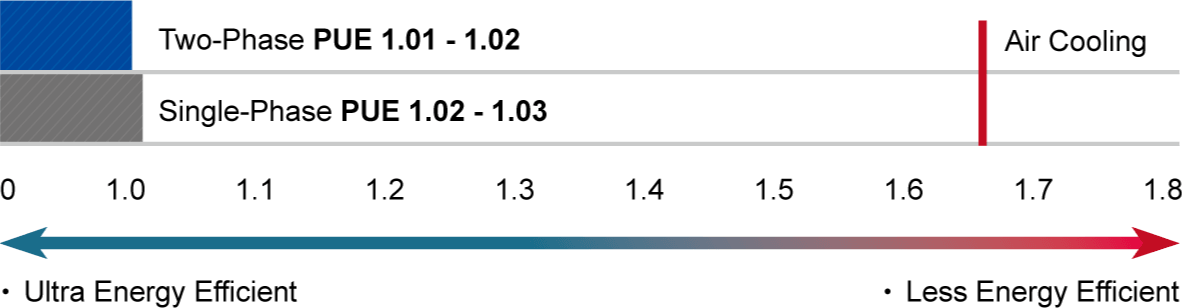
In terms of cooling efficiency, two-phase and single-phase liquid immersion cooling both have far better performance than air-cooled data centers. Two-phase liquid immersion cooling can be connected to an external air cooling or water cooling system for different external environments. In some currently running data centers, two-phase immersion cooling systems have been shown to achieve a Power Usage Effectiveness (PUE) score of 1.02. When single-phase liquid immersion cooling systems are connected to an external cooling system the PUE score can reach as low as 1.03. In comparison, air cooling systems have a PUE between 1.4 and 1.7, which is still efficient, but immersion cooling has shown there is room for improvements in efficiency.
Two-phase Liquid Immersion Cooling System
Single-phase Liquid Immersion Cooling System
Power Usage Effectiveness Comparison
Cooling Capacity and High-density Performance
Due to the progressive trend of next generation applications, such as AI, IoT, and edge computing, the performance and power consumption of core server parts has continued to increase, and reports on the use of liquid immersion cooling and its cooling capacity are constantly being published. The design of core parts, such as the immersion tanks and the device for environmental control devices, has gradually matured and is developing towards a modularized design.
Two-phase Liquid Immersion Cooling System
Single-phase Liquid Immersion Cooling System
KW Per Rack Potential

Reliability and Deployment Flexibility
Whether it may be two-phase or single-phase liquid immersion cooling, both were developed in response to ICT developments to increase the reliability of IT devices while having flexibility in deployment. One of the reasons is that liquid immersion cooling does not require the support of complex infrastructure that is needed by conventional air cooling equipment. It reduces the amount of electrical equipment that needs to be integrated, and eliminates the use of parts that may cause instability, such as fans. When comparing the reliability data of liquid immersion cooling with conventional air-cooled data centers, there is a significant increase in mean time between failures (MTBF) for immersion cooling.