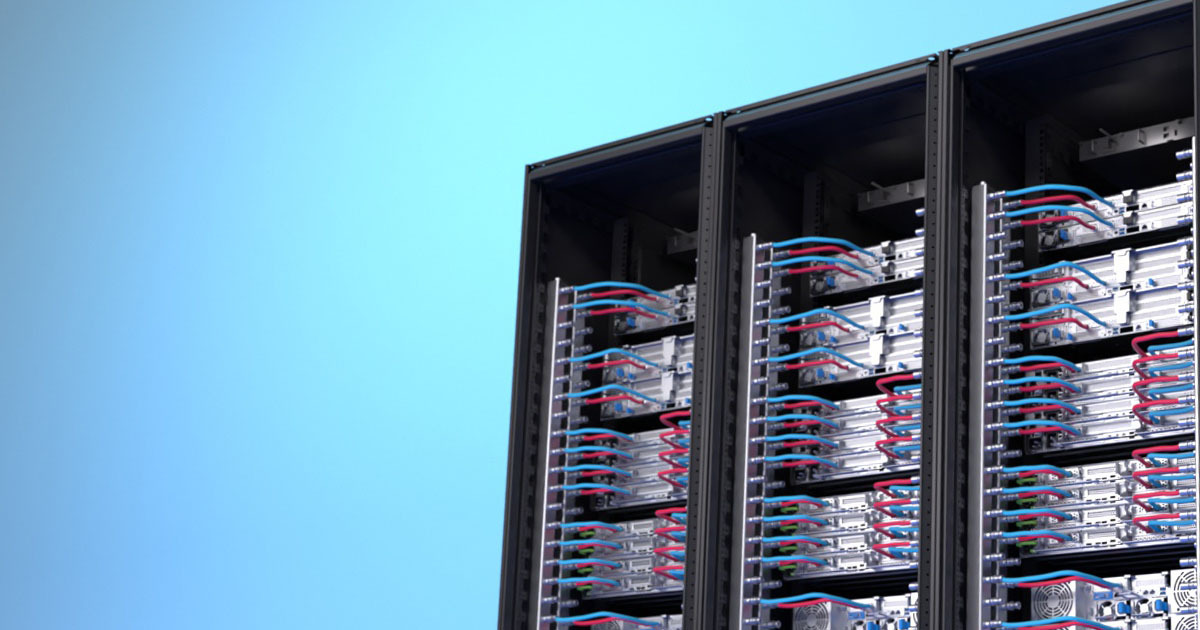
As the ever-expanding computing demands, to ensure the high performance and stability of the data center or server room, the use of advanced data center cooling solutions has become a global trend. Regardless of the type of computing server, a proper cooling solution is required to help achieve the primary task of reducing power consumption and improving performance.
For example, with the rise of high-performance computing (HPC), the power consumption of chips has increased significantly, and the heat dissipation demand has continued to expand.
Therefore, when choosing the right cooling system, in addition to evaluating the available installation space of the server room, it is also necessary to take into account the Thermal Design Power of the processor and the overall Power Usage Effectiveness to choose proper data center cooling solutions.
Now, let’s walk through the 5 technical terms to help you choose right data center cooling solutions.
For example, with the rise of high-performance computing (HPC), the power consumption of chips has increased significantly, and the heat dissipation demand has continued to expand.
Therefore, when choosing the right cooling system, in addition to evaluating the available installation space of the server room, it is also necessary to take into account the Thermal Design Power of the processor and the overall Power Usage Effectiveness to choose proper data center cooling solutions.
Now, let’s walk through the 5 technical terms to help you choose right data center cooling solutions.
- TDP (Thermal Design Power)
- PUE (Power Usage Effectiveness)
Today's Mainstream Data Center Cooling Solutions
- Air Cooling
Air cooling relies on heat sinks, fans, and other components inside the server to dissipate the heat and conduct thermal management. Heat sinks increase the surface area of key components and prevent any one point from overheating. Fans and air ducts pump cool air into the server from one side, and then remove the heated air from the other side.
- Liquid Cooling
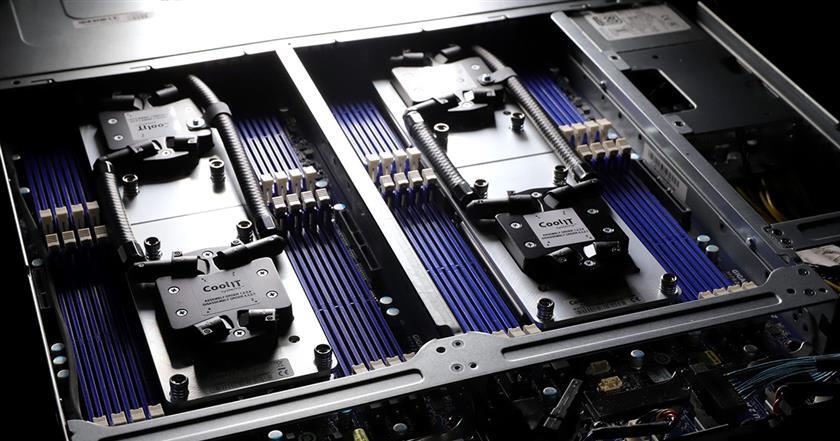
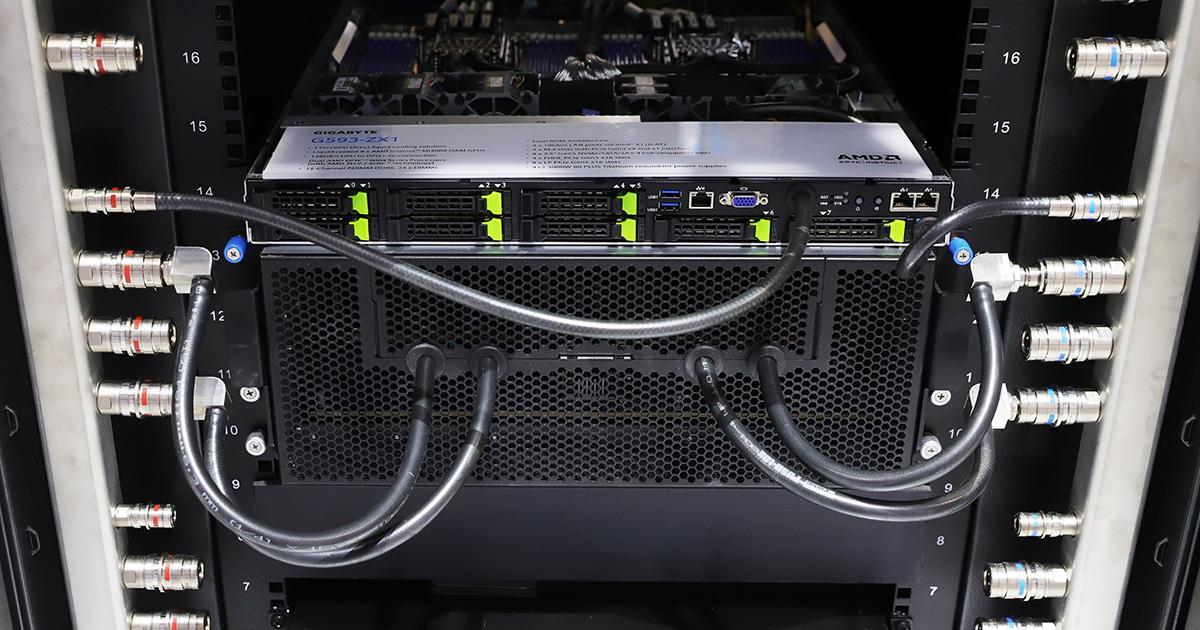
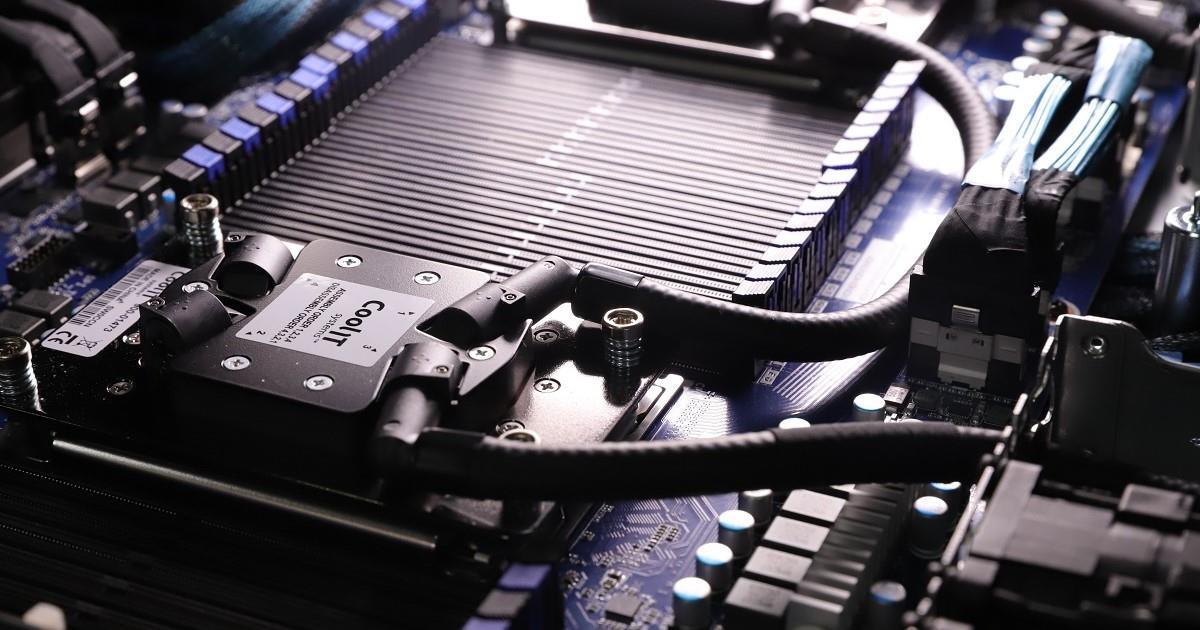
Liquid cooling technology uses liquid (in this case, coolant) as a heat transfer mechanism. The common liquid cooling technologies available on the market for servers are direct liquid cooling (DLC), also known as direct-to-chip (D2C) liquid cooling. Direct liquid cooling helps the server dissipate heat through the use of sealed tubes (called cooling loops) filled with coolant. The cooling loops coil around key components inside the server chassis. Thermal energy is transferred from the components to the coolant through conductive copper plates, also called cold plates. The heated coolant is then circulated outside the server to a heat exchanger, which removes the heat from the coolant before piping it back into the server to repeat the cycle.
- Immersion Cooling
By immersing the server directly into a bath of non-conductive liquid, thermal energy generated by the server’s components is directly transmitted into the surrounding fluid without any additional active cooling systems or parts required, such as heat sinks, heat pipes or fans. The hot fluid then evaporates and re-condenses, and this natural re-circulation method is used to dissipate heat. In theory, this cooling method can greatly improve energy efficiency. Immersion cooling can be separated into single-phase and two-phase immersion cooling. 《What are the benefits of immersion cooling?》
- Single-Phase Immersion Cooling
Server or IT component is immersed in a thermally conductive dielectric coolant. The coolant will not change its state either boil or freeze, and always remain liquid. The coolant in the tank is pumped by cooling distribution unit (CDU) to the heat exchanger outside the tank, where the heat is transferred to secondary cooling circuit mostly the building cold water.
- Two-Phase Immersion Cooling
Servers or other IT components are submerged in a thermally conductive dielectric liquid or coolant. Heat is removed from the system by circulating the liquid into direct contact with hot components, whereby the liquid undergoes a low-temperature evaporation process to cool the hot components and transfer the heat out of the liquid. The gas is cooled again by a heat exchanging method such as a condenser coil to allow return flow into the larger liquid volume.
Learn More:
《CoolIT Systems Direct Liquid Cooling》
《Two-phase and Single-phase Liquid Immersion Cooling》
Success Case:
《In the Quest for Higher Learning, High Density Servers Hold the Key》
《GIGABYTE Servers Become Part of the German Aerospace Center’s Data Center》
《Japanese Telco Leader KDDI Invents Immersion Cooling Small Data Center with GIGABYTE》
《Semiconductor Giant Selects GIGABYTE’s Two-Phase Immersion Cooling Solution》
GIGABYTE Technology provides advanced system cooling solutions utilizing air cooling, liquid cooling, and immersion cooling for customers in every sector with rich experience in the server and cooling field. We encourage you to reach out to our sales representatives for best matching your performance needs, ensuring your data center is designed for high density and better PUE, reducing operating costs and environmental impact, and making the computing environment have higher reliability. To submit a query: Contact GIGABYTE Sales