Node
What is it?
In computer science, a node is defined as a basic unit of a data structure that contains and processes data. This can be a fairly nebulous term, and it can encompass a broad range of devices or components, such as a personal computer, a server, a combination of interconnected components within a server, or a cluster of servers that fulfill the same role. In a sense, the term "node" has become shorthand for an independent unit of "computing resource" that is used in data processing. For this reason, as an example, the GIGABYTE H262-P60 High Density Server can be described as having four “nodes” in a 2U form factor; a cluster of these servers can also be described as the "computing node" of a computing cluster.
Why do you need it?
Since a potentially endless amount of computing tasks must be completed by a finite amount of computing resources, it is helpful for IT managers to separate these resources into nodes to allocate tasks more effectively. Within a computing cluster, which may constitute part of an HPC system or data center, the different groups of servers carrying out different tasks may also be called "nodes". For example, there is usually the computing node, which is outfitted with the most powerful processors to shoulder the heavy computing workloads. There is the storage node, which stores and protects the data; and there is the networking node, which helps the nodes connect to each other and the cluster connect to the outside world. Oftentimes, there is also a control node, through which the human user manages all the nodes in the cluster.
How is GIGABYTE helpful?
In the sense of different nodes that are contained within a single server, GIGABYTE's H-Series High Density Servers offer a wide variety of choices for your perusal. For example, the H262-Z62 contains four nodes within a slim 2U form factor. Since two 64-core AMD EPYC™ CPUs can be installed in each node, a single server can offer up to 512 cores and 1,024 threads—a massive increase in computing capacity.
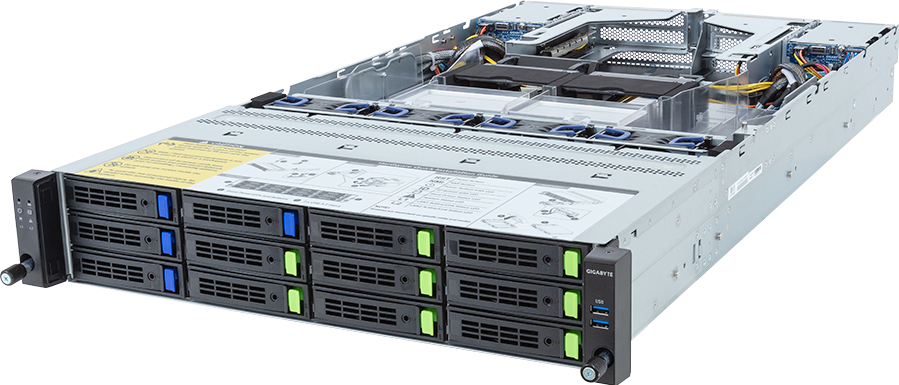
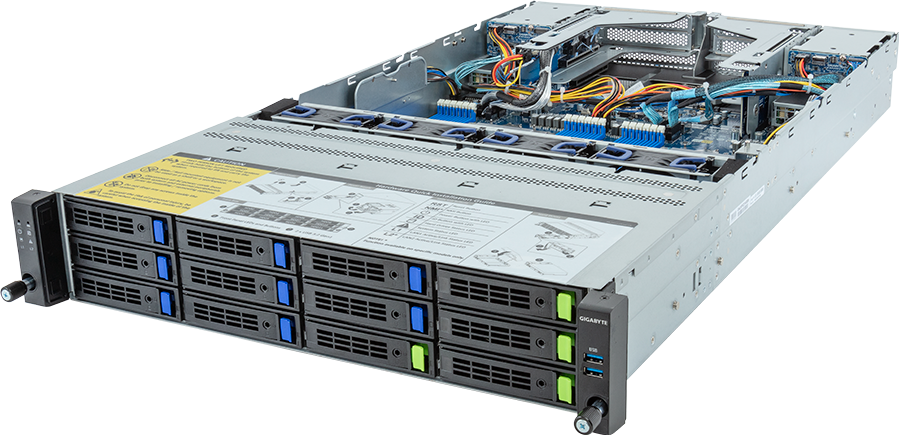
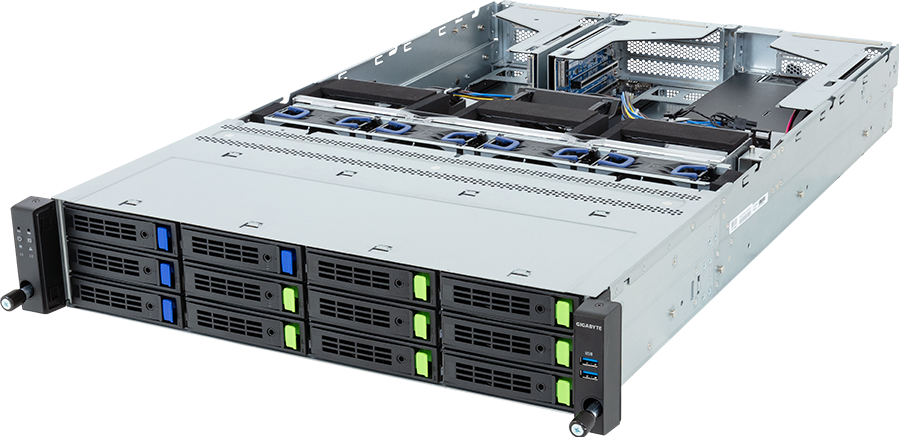
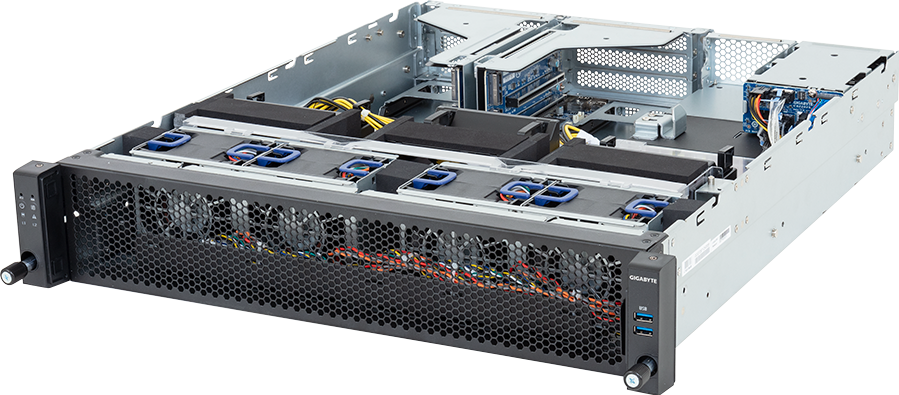
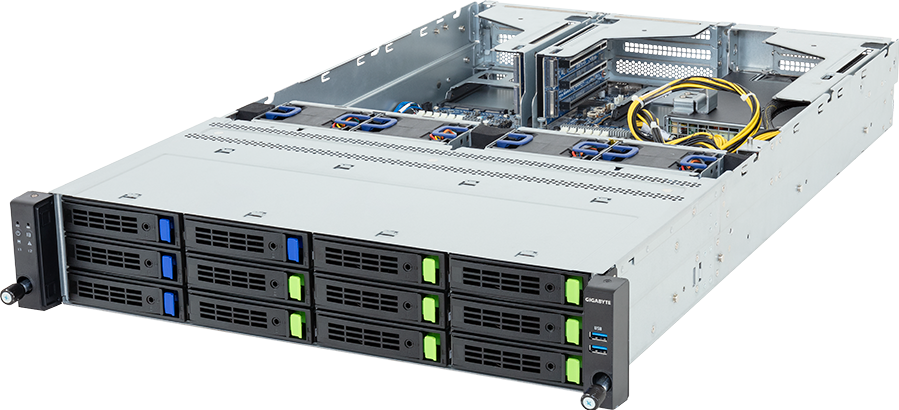
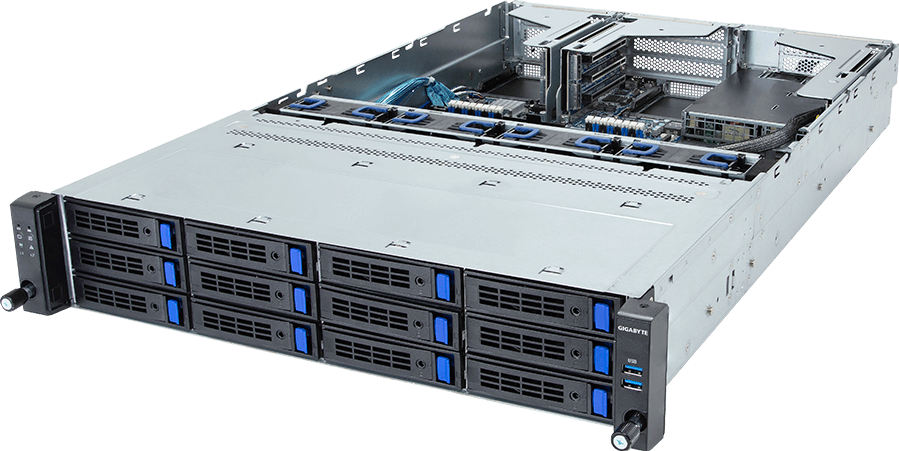
In the sense of nodes that fulfill separate purposes within a cluster, GIGABYTE can recommend different products for each role. For the computing and control nodes, where processing power is key, the aforementioned H-Series High Density Servers are eminently suitable. If parallel computing using GPGPUs is involved, G-Series GPU Servers are the ideal choice. S-Series Storage Servers are designed for the storage node, while the networking node can employ the versatile and multifunctional R-Series Rack Servers. For nodes outside of a standard server rack, which may be preferable for users who can't build or maintain a server room, W-Series Tower Servers / Workstations offer a compact, powerful choice that fits right on your desktop.
In the sense of nodes that fulfill separate purposes within a cluster, GIGABYTE can recommend different products for each role. For the computing and control nodes, where processing power is key, the aforementioned H-Series High Density Servers are eminently suitable. If parallel computing using GPGPUs is involved, G-Series GPU Servers are the ideal choice. S-Series Storage Servers are designed for the storage node, while the networking node can employ the versatile and multifunctional R-Series Rack Servers. For nodes outside of a standard server rack, which may be preferable for users who can't build or maintain a server room, W-Series Tower Servers / Workstations offer a compact, powerful choice that fits right on your desktop.