Neocloud
What Is a Neocloud?
A neocloud is a cloud service designed specifically for artificial intelligence (AI) and high-performance computing (HPC) workloads. Compared with traditional cloud platforms that support a broad range of enterprise IT applications, neoclouds place greater emphasis on accelerated computing resources such as GPUs, together with high-speed networking, high-performance storage and infrastructure built for large-scale AI computing.
The rise of neoclouds is closely tied to growing GPU demand driven by generative AI. Enterprises, AI startups and model developers can access large amounts of GPU computing power for model training, fine-tuning and AI inference without first building a complete AI data center. GPU as a Service (GPUaaS) has therefore become an important offering for many neocloud providers.
Gartner estimates that by 2030, Neocloud providers are expected to capture a 20% market share of the $267 billion AI cloud market.
Gartner estimates that by 2030, Neocloud providers are expected to capture a 20% market share of the $267 billion AI cloud market.
Traditional Cloud vs. Neocloud
Traditional public clouds provide virtual machines, storage, databases, analytics and a wide range of managed services. Major cloud providers now also offer extensive GPU and AI services. The distinction between traditional clouds and neoclouds is therefore not simply whether GPUs are available, but how the underlying infrastructure is designed.
Neoclouds are generally built around GPU-intensive workloads from the outset. They emphasize dense GPU clusters, high-bandwidth and low-latency networking, and more direct access to computing resources. Some providers also offer bare-metal servers or dedicated GPU clusters for users that require greater control over hardware configurations or large-scale distributed AI training.
Hyperscale public clouds, meanwhile, offer broader software ecosystems, managed services and global availability. Neoclouds are not intended to replace every traditional cloud workload, but provide a more specialized option for demanding AI and HPC applications.
What Are the Benefits of Neoclouds?
One of the main benefits of a neocloud is fast access to advanced GPU computing. Organizations can acquire the resources needed for model training, inference or individual projects without first purchasing and deploying large quantities of GPUs.
Because the infrastructure is designed around AI workloads, dense GPU servers, high-speed interconnects and high-performance storage can be optimized as a complete system. This helps reduce communication bottlenecks in distributed AI workloads. Users can also scale from individual GPU instances to dedicated clusters according to their computing requirements.
Common Neocloud Service Models
Neocloud providers offer different ways to access AI computing resources depending on workload duration, capacity and usage patterns.
・Reserved Instances — Reserved AI compute for predictable workloads
Designed for predictable, long-running AI workloads. Users reserve GPU capacity or computing resources in advance for more consistent availability and performance, making this model suitable for large-scale model training or sustained AI inference.
・On-demand Instances — Pay-as-you-go access to shared AI compute
Users obtain GPUs and other computing resources from shared pools as needed and pay according to actual usage without a long-term commitment. This model is well suited for AI development, testing, model fine-tuning and workloads with variable demand.
・Serverless Platforms — AI services without direct infrastructure management
The provider manages the underlying hardware, provisioning, scaling and lifecycle management, allowing developers to access AI models and computing resources through a managed platform or API without managing servers directly. This model is well suited for rapidly integrating AI models into production applications.
How Is GIGABYTE Helpful?
Scaling a neocloud requires more than adding GPUs. Networking, storage, power, cooling and system management must scale alongside computing capacity.
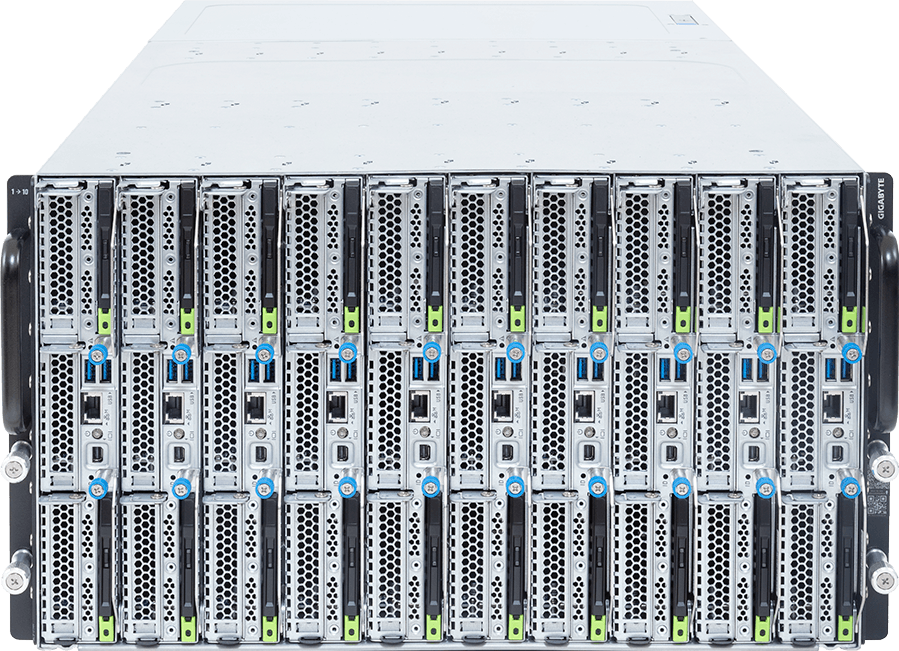
GIGABYTE provides a broad portfolio ranging from high-density GPU servers to rack-scale AI computing platforms for AI training and large-scale inference. GIGAPOD integrates GPU computing, high-speed networking and infrastructure into a scalable platform, while GIGABYTE POD Manager (GPM) provides centralized system monitoring and resource management.
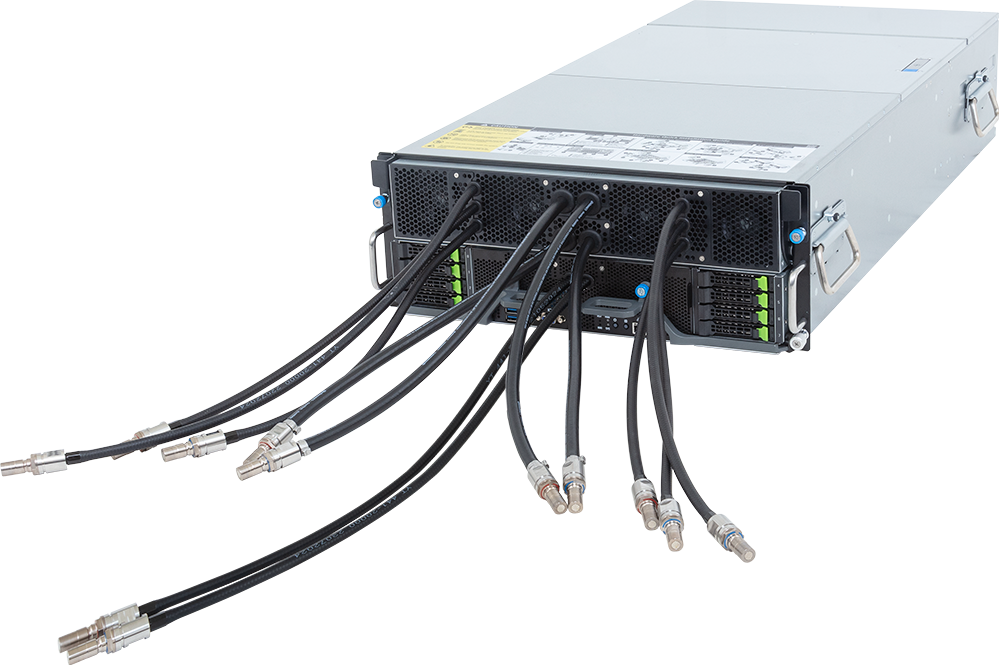
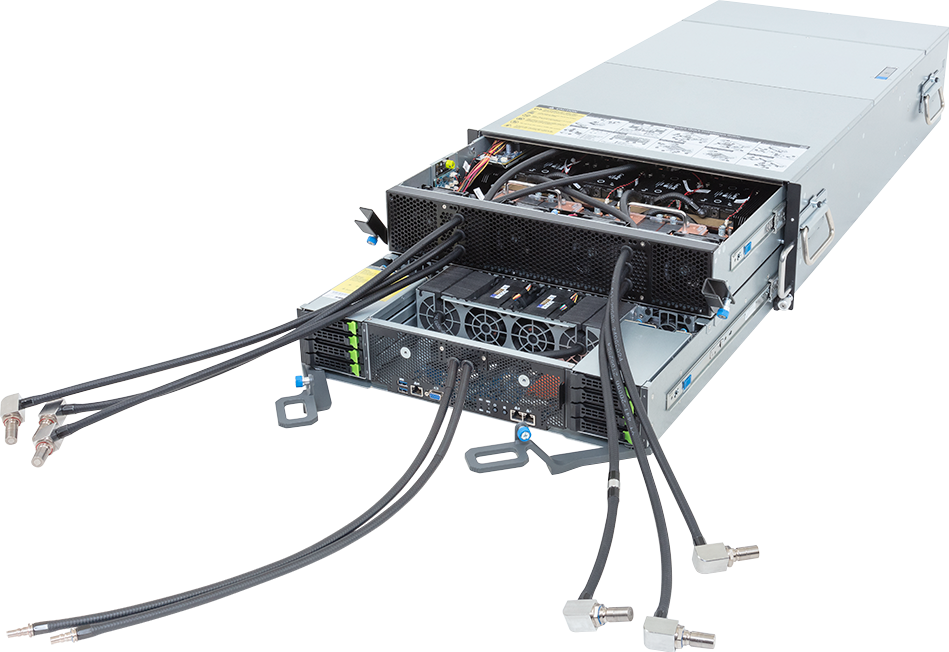
As GPU power and thermal density continue to increase, advanced cooling technologies such as direct liquid cooling (DLC) can further support high-density deployments, helping neocloud and cloud service providers build scalable AI infrastructure.