Moonshine Animation Applies Cutting-Edge AI & VDI Technologies with GIGABYTE HPC Servers
Founded in 2012 with the aim of establishing a professional-grade CG studio, Moonshine Animation is an artist-centric Taiwanese animation and visual effects company that now employs more than 150 professionals, including directors, project managers, concept designers, animators, compositors, special effects engineers, R&D engineers and interactive artists. Together they produce a variety of work that includes visual effects, animation, technology R&D, gaming, VR and interactivity, as well as engaging in business such as cultural content restoration. Moonshine has worked on animation production for a variety of major domestic companies and has created visual effects for various films, making it the leading animation production company in Taiwan.
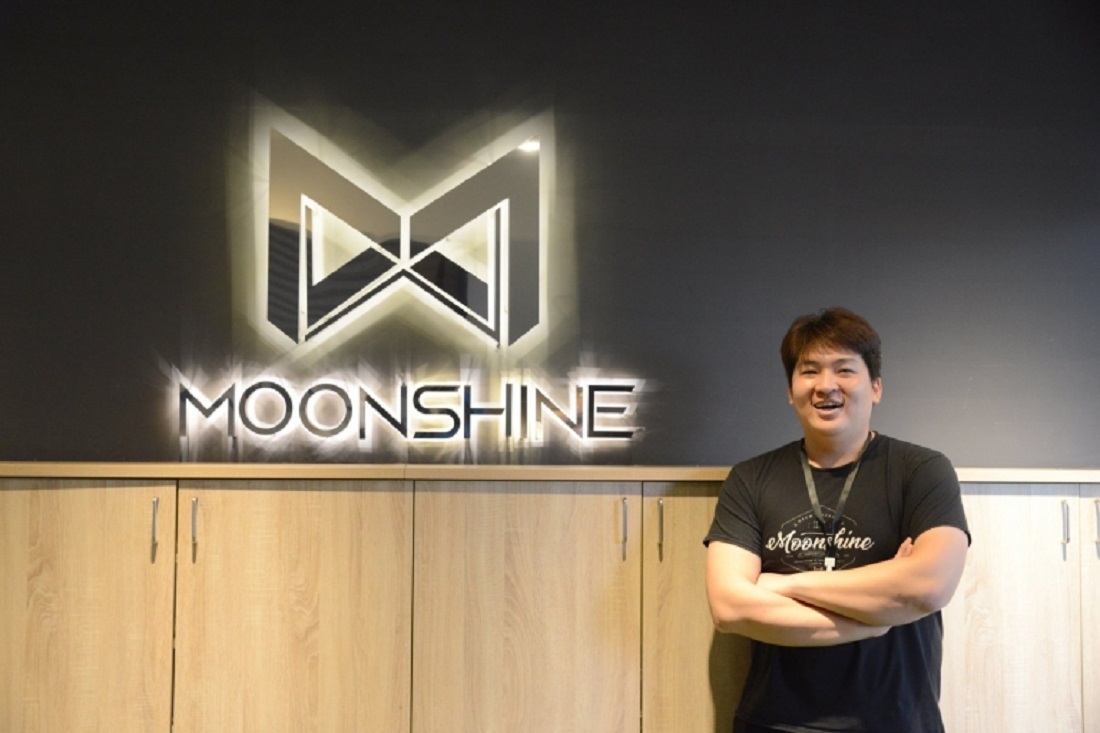
A visit to Moonshine Animation: an office that feels like a large Internet café, giving artists an enjoyable working environment
For a behind-the-scenes look
inside a major animation studio to see how they configure their computer
equipment and what role a newly purchased GIGABTYE server is playing, PCDIY!
will take you for a tour into Moonshine Animation’s Nangang head office,
featuring an exclusive interview with founder Mr. Lin to give you a deeper
understanding into the field of animation and visual effects and the computer
equipment required for these applications.

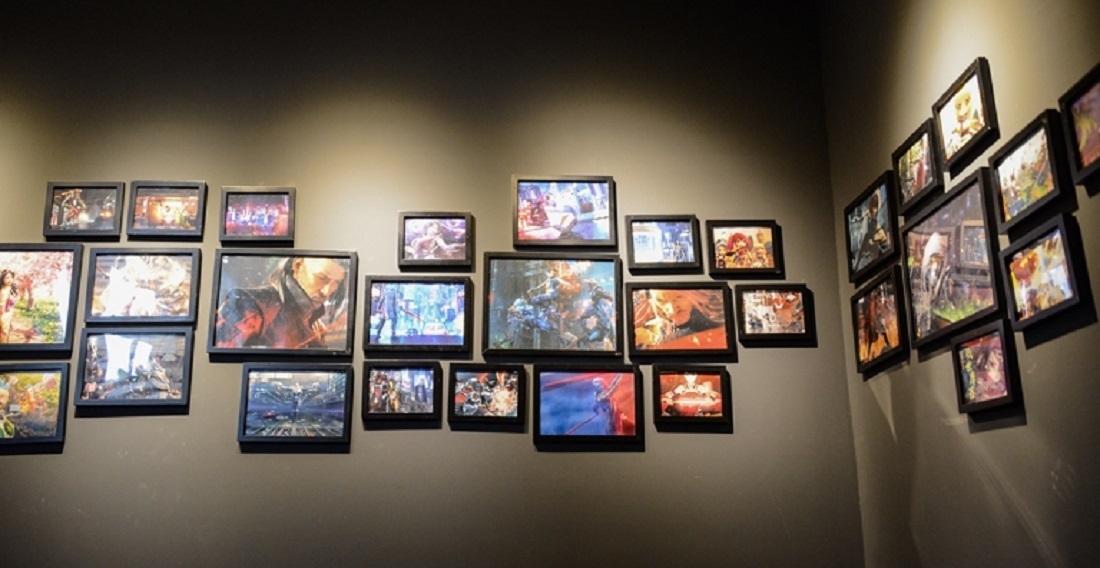
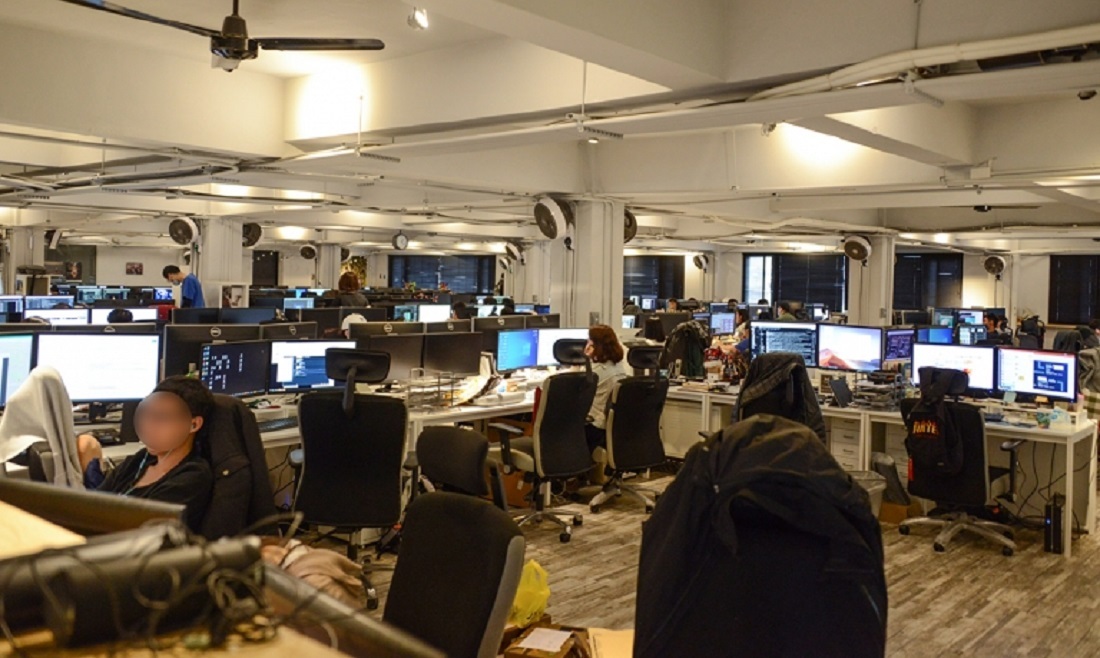

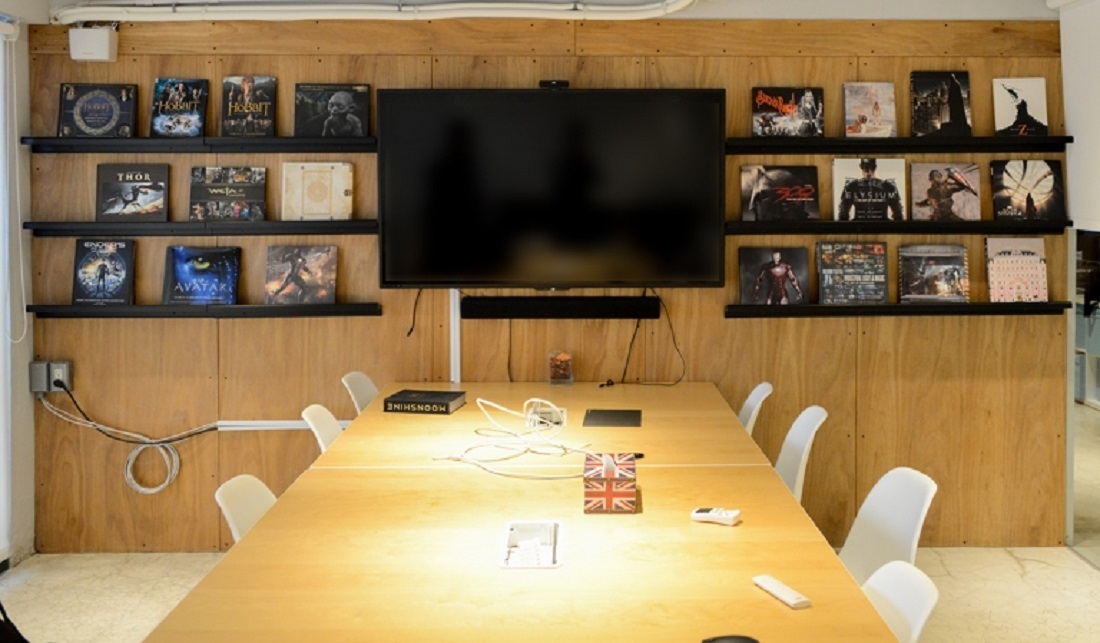
As readers may be unfamiliar with the business scope of an animation studio, Mr. Lin explains that Moonshine Animation can make concept maps, posters, 3D advertisements, animation and interactive content, as well as help with cultural content reconstruction, all of which is work an animation studio is usually expected to produce. Moreover, since many students and the public have become interested in animation production, the company will also hold online courses so that students can absorb animation-related knowledge via these classes.
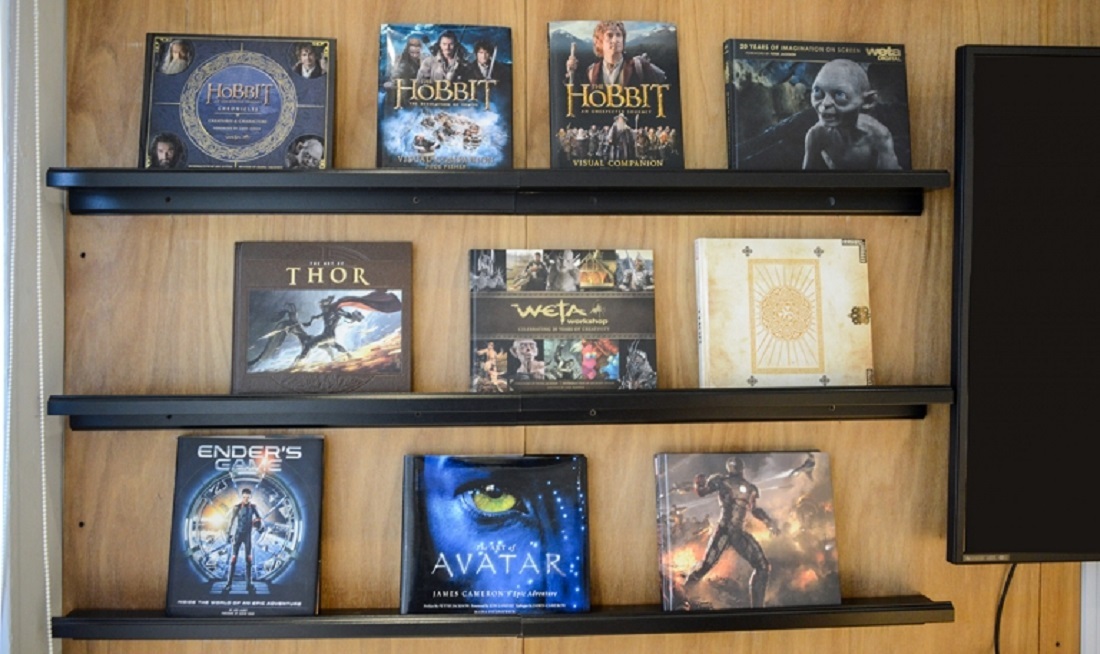
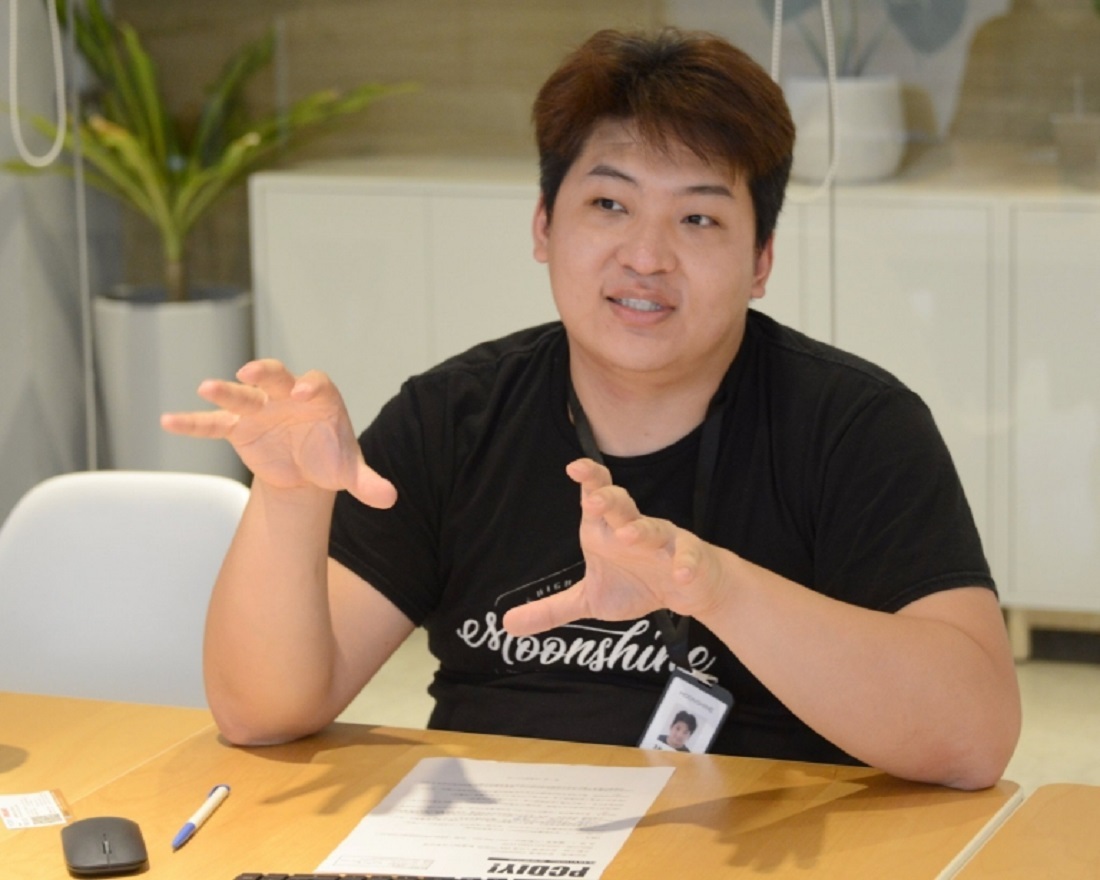
Animation production is not easy! A large amount of time and manpower is needed even just for a few seconds of footage
Mr. Lin explains that in addition to direct contact with customers, Moonshine also deals with third parties such as production companies and agents. Therefore, the resources devoted to a new project will usually depend on the project size and budget. A rough estimate is that a standard animation project will require around 20 to 30 staff and around half a year to complete. Since discussion and finalization of details at the beginning of the project takes a long time, the time of actual production takes only around 3 months.
For a relatively large-scale and well-known project meanwhile, Mr. Lin used a famous animated safety video made for a Taiwanese airline as an example. Almost 150 months’ worth of manpower was devoted to the entire project, as the execution period took a very long time: from conceptualization to actual completion required around 1 year. It could be said that the beginning stages of the project from definition, communication and discussion up to finalization of the visuals were a very tedious process, which resulted in the project taking a lot longer. After the characters, material design and visuals were actually finalized, the subsequent animation production period was quite fast.
During the production process, many vivid scenes were created by combining imagination and reality. Take the toilet or the safety door inside the aircraft cabin as an example: even though an actual aircraft was not yet available, the production team needed to draw these objects according to their real-life colors, with necessary details being very close to true scale, and having structural rationality. Only then would the customer and the audience feel like the scene is real.
During the interview Mr. Lin gave a presentation about Moonshine Animation, which introduced his company’s office setup, a history and a gallery of their work, and details of recent research & development into AI-assisted animation and design.
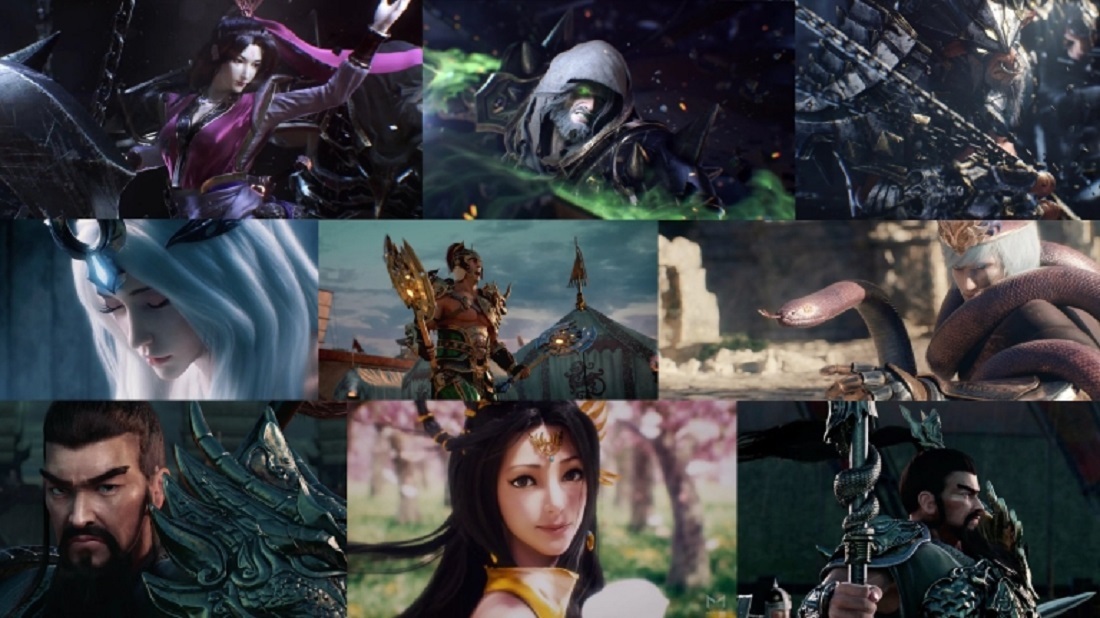
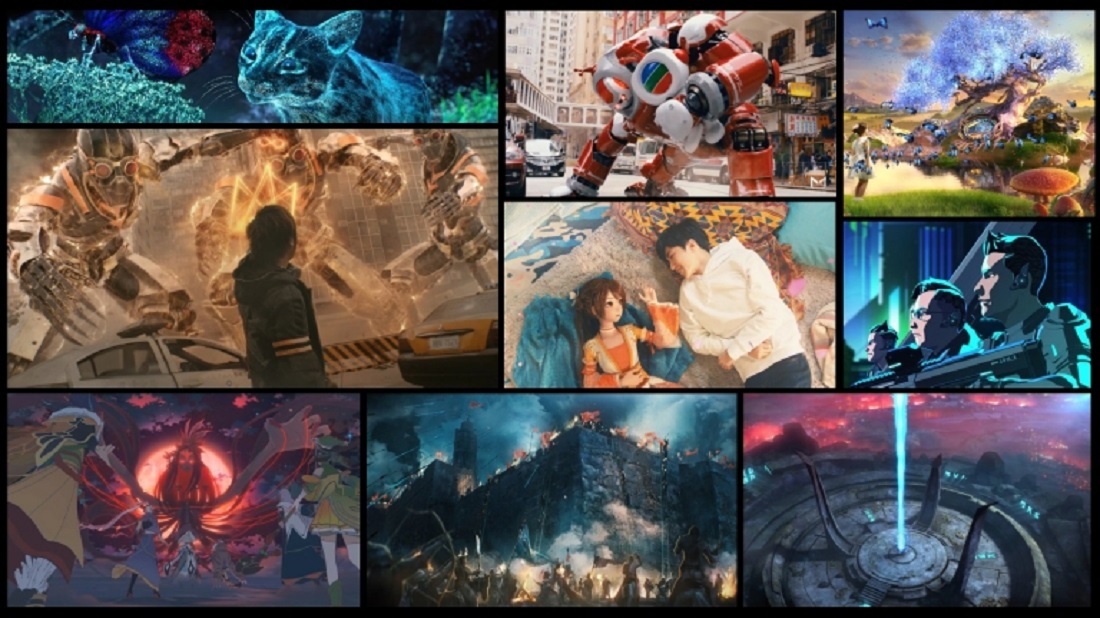
Using AI technology to assist in animation production leads to increased efficiency and great results!
As special effects in animation become
more advanced, many companies have been using AI (Artificial Intelligence) to
assist them with production. Moonshine Animation has also adopted AI
technology, and Mr. Lin briefly explained the general processes involved during
production of their work.
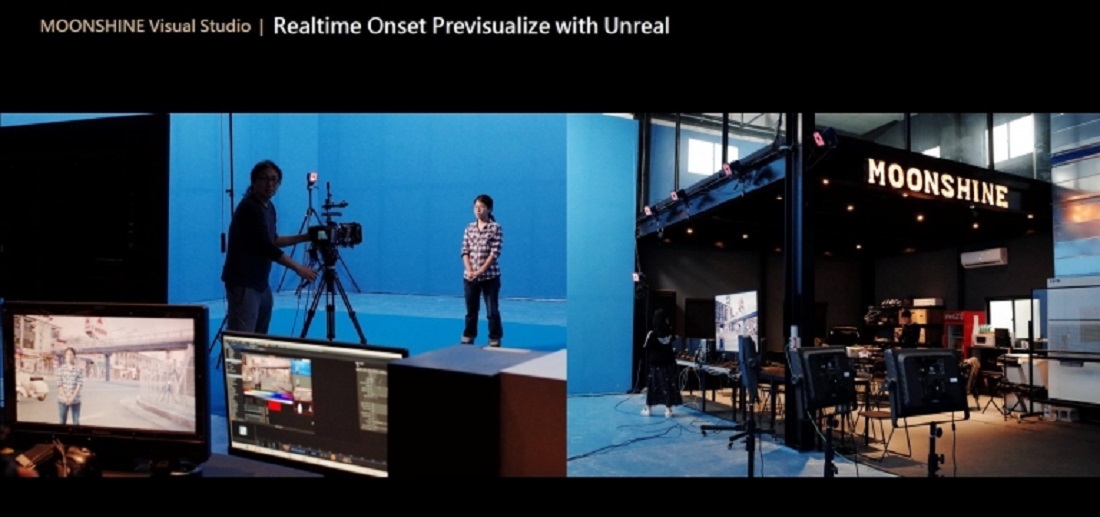
First of all, Moonshine Animation
has a virtual film studio in Neihu, where 3D motion capture (MoCap) is
performed and used to create video game content. During the process of creating
an animation, characters must be presented with a lifelike disposition, but a
computer cannot figure out by itself how to create human expressions, so this
can be done by training AI with deep learning to assist in the rendering process.
For example, the above images include some scenes illustrated using a Japanese gouache
method in the style of Hsueh-Hu Kuo (a famous Taiwanese painter). After undergoing
AI training, the computer is able to learn the illustration method including
brushstrokes so realistic pictures can be rendered, and the resulting effect
won’t look like a filter. With the help of new technology, Moonshine Animation hopes
to further improve other animation methods in the future.
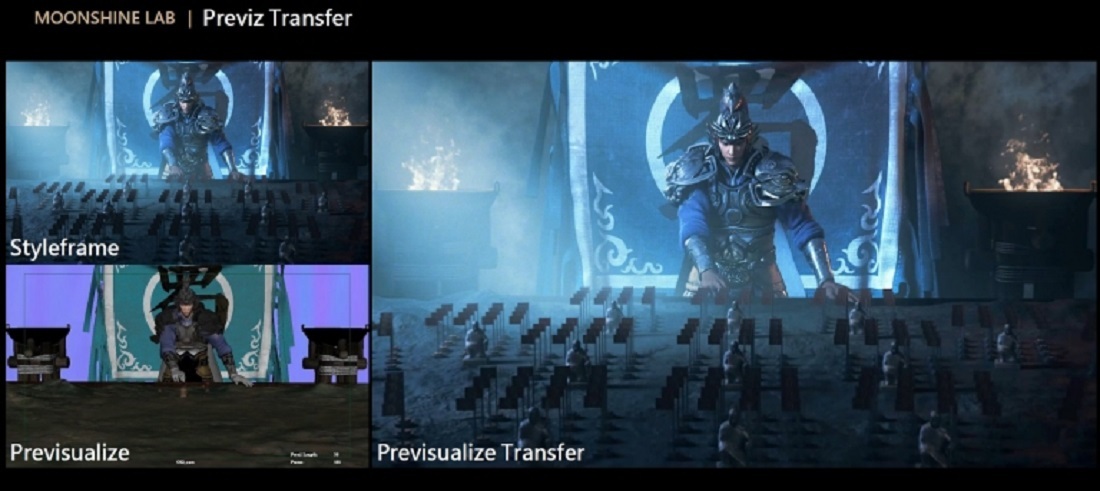
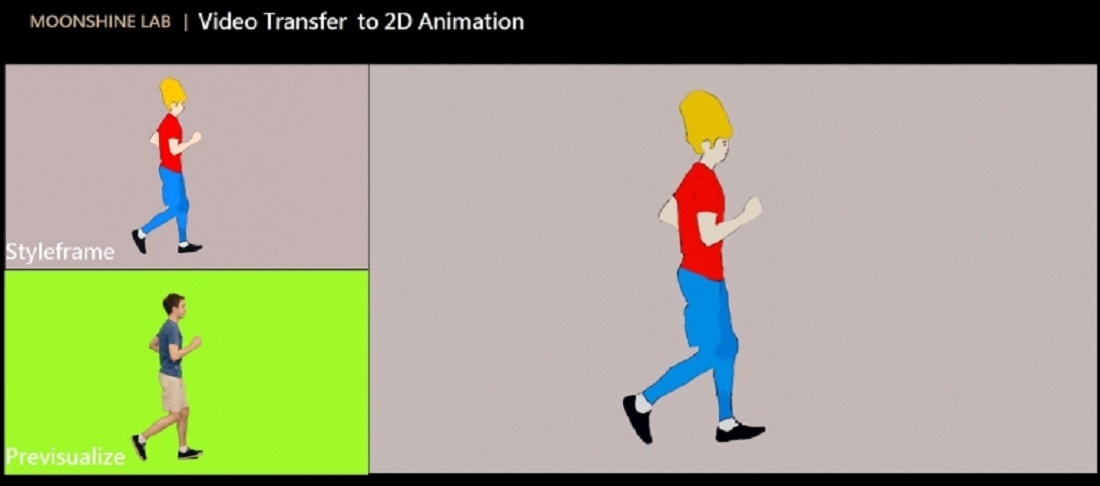
After that, a simulation of an animation
can generated in a preview pane, by first using a single “styleframe” to set an
illustration style and combining it with video footage of the scene we want to
create. Using AI the computer will apply the styleframe to the footage to
instantly present the desired result, and can even clearly depict light and
shadow details! A 2D-style of illustration can even be synthesized with
live-action motion capture footage to achieve a style of animation similar to
Japanese Manga cartoons, using a method known as “Toon Shading”. Of course, AI
technology can also be used to create “Deep Fake” imitations of people’s faces
and expressions.
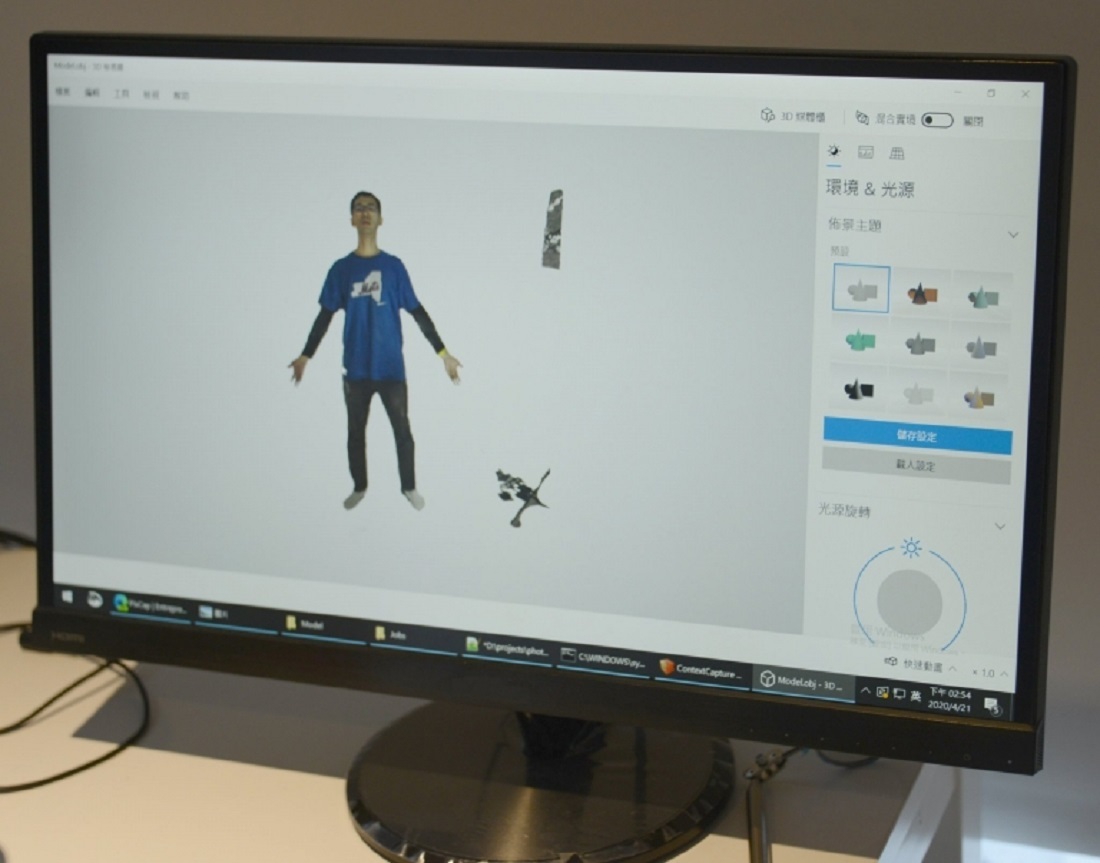
To put it simply, AI can simulate
the appearance of a finished piece of animation even before colors have been
painted in, reducing the amount of work previously required to draw each frame
one by one, and improving animation quality. Although it cannot completely
replace manual production, AI-based animation production can assist in creating
many scenes that previously required a huge amount of manual illustration (such
as animated scenes that haven’t been seen before, or scenery that does not
exist in the real world). So long as some allowance is first given to
creativity, data from the artist’s drawing methodology and illustration style
can be fed into the computer system, and after being trained with this data the
AI can then produce the desired animation.
Naturally, AI can also be used to
enhance an image from 2K to 4K resolution, and from black & white to color!
It could be said that this kind of disruptive technology will change animation production, not only solving problems that could not be solved in
the past, but also accelerating the completion of finished work. Therefore, AI
has become a major tool used in animated films.
Moonshine has two main uses for GIGABYTE’s HPC server – the first is for AI computing!
In addition, since the demand for using AI computing in animation production has been increasing steadily, GPU performance ratio will also now be included as part of any evaluation criteria in addition to CPU performance. Calculating GPU performance is a little more complicated; for a computer dedicated to AI computing, a GPU with a large amount of onboard memory is required. For example, AI used for facial simulation is very memory intensive - if you train on a GPU with not enough memory (such as less than 8GB), it may take up to 30 days to complete the run, but switching to a professional grade GPU with 48GB of memory will allow you to achieve the same result in 1 day! With this situation, you can easily see the effect of a performance gap.
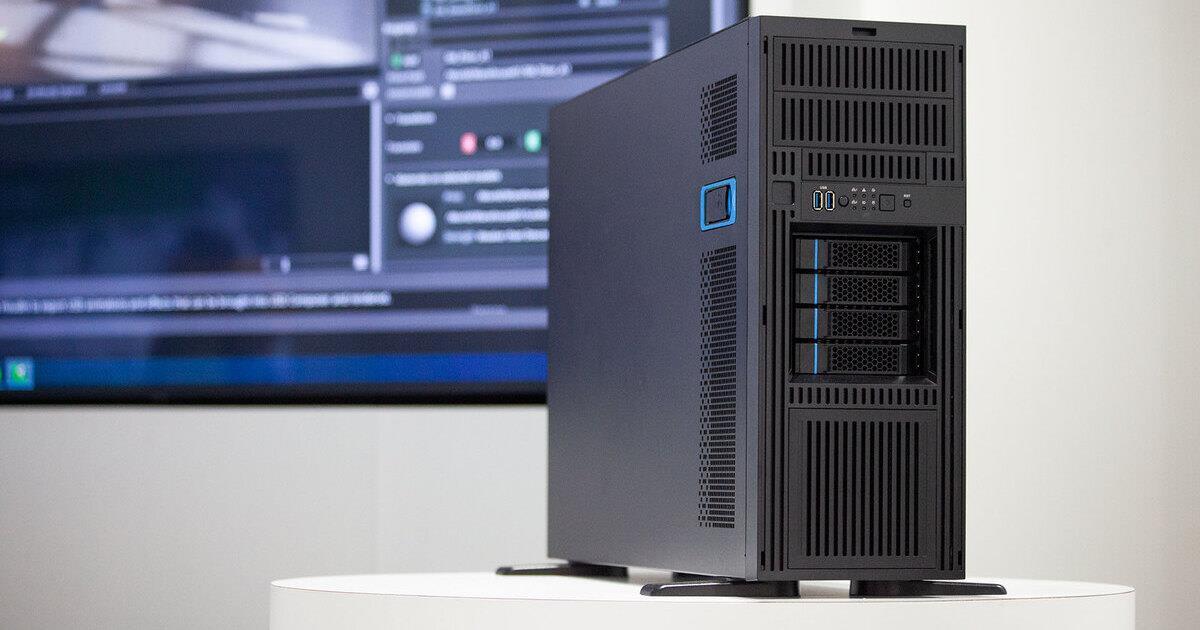
Mr. Lin explained that there are two main uses for the GIGABYTE G191 Series server they purchased, and the original purpose was to use it for AI computing. Most 1U servers can only support up to two graphics cards, but in a 1U form factor, GIGABYTE’s server can support up to four professional grade graphics cards. The design of this server is therefore quite remarkable, not only saving a great deal of space in the rack but also increasing computing performance. In addition, the server has a dual-socket processor configuration that can help it deliver a large number of threads (a total of 36 cores and 72 threads), and adopts a front to rear air-flow chassis design to maximize heat dissipation efficiency – so you can not only attain the best performance when using it for HPC, but also achieve maximum energy efficiency. For these reasons, Moonshine Animation purchased GIGABYTE’s G191 Series server to deploy it as a host for AI computing.
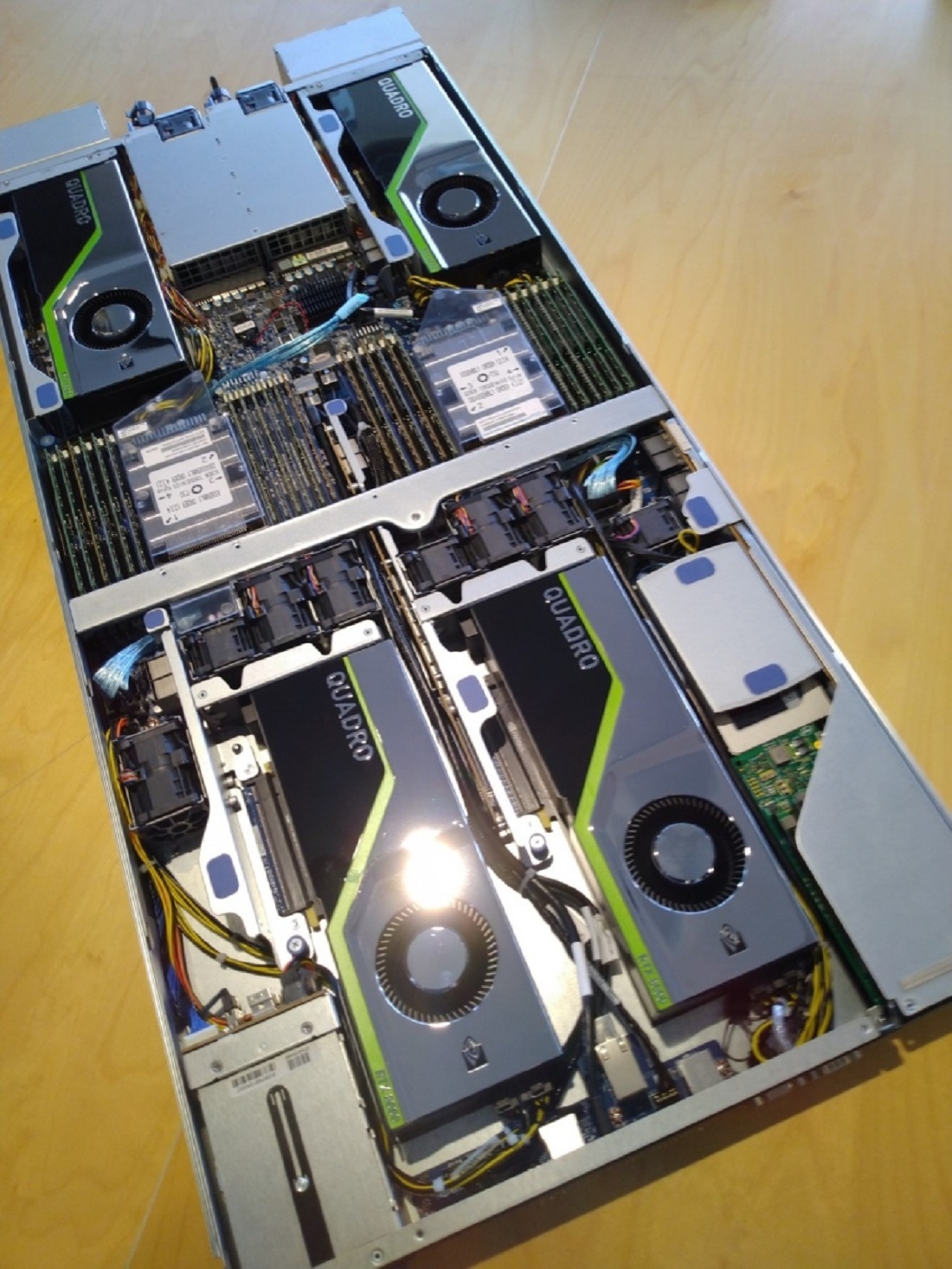
So why are there no Tesla-level graphics cards installed? Mr. Lin says that this is related to their different application scenario, as Tesla GPUs are used in industry fields that need to perform a huge amount of AI computing. However, they choose a Quadro GPU because it can already satisfy the needs of building their own graphics rendering farm – not only does the Quadro RTX series feature a large amount of onboard memory necessary for applications such as facial simulation as previously mentioned, but it also features ray-tracing capabilities, which helps them speed up animation production. For an employee’s personal computer meanwhile, using a GeForce gaming graphics card is fine! The main reason is that when animation software tools are running on the user’s local side, a GeForce GPU can provide enough graphics performance to improve visual effects and meet the needs of most other applications.
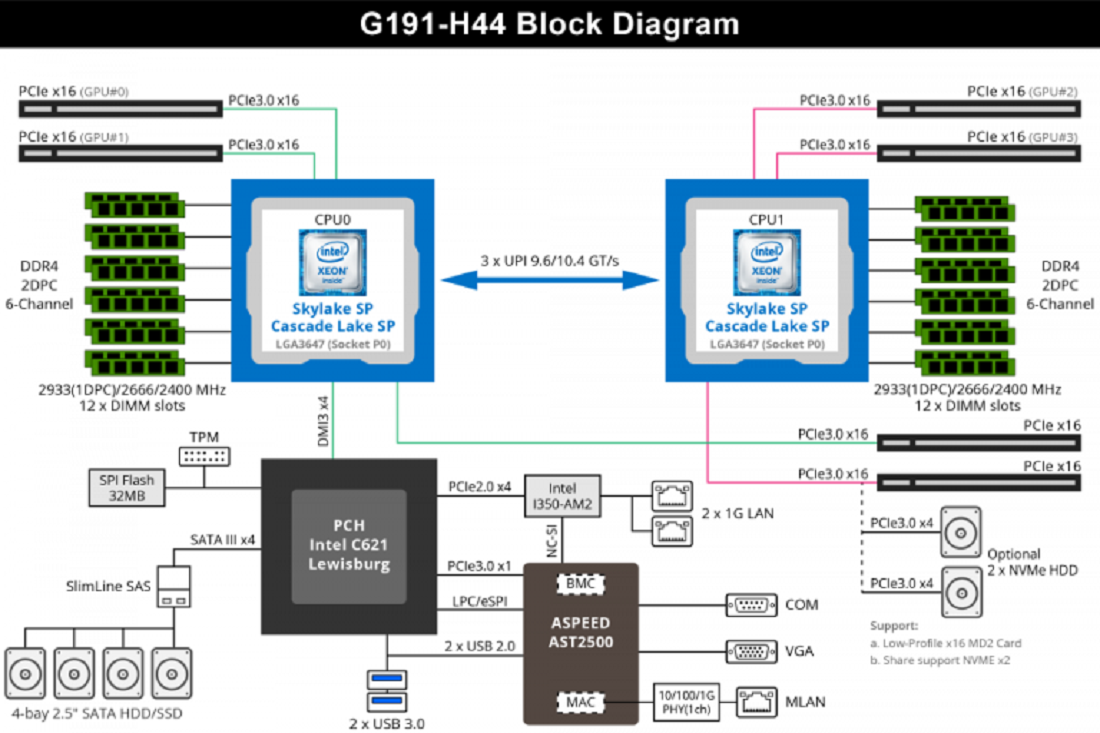
The most powerful use for GIGABTYE’s G191-H44: the best remote desktop server!
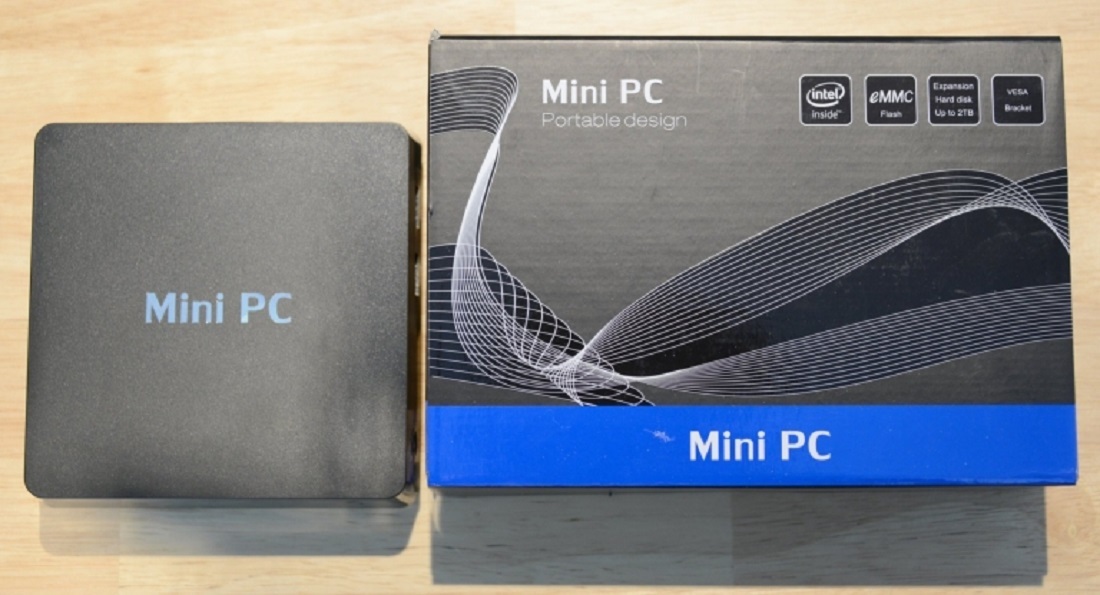
Mr. Lin revealed that Quadro graphics cards were also selected because of their requirement for remote desktop / Virtual Desktop Infrastructure (VDI) use, allowing users to connect to GIGABYTE’s server for remote animation production via the Internet using an entry-level Mini PC or Thin Client computer. An important consideration was that none of the current remote desktop solutions available (such as AnyDesk or TeamViewer) provide optimal compression processing or can utilize the advantages of hardware acceleration, which can result in a glitchy user experience. However, Quadro professional graphics cards and their drivers not only provide real-time video output, but the Quadro RTX6000 and above feature GRID (GPU virtualization) support. When combined together with Intel’s multi-core processors that are optimized for use with Adobe’s creator-related software suite, and CUDA hardware acceleration that is included in many professional-grade NVIDIA graphics cards and can provide acceleration even to virtualized GPUs, these features all complement each other to multiply performance several times over! In this way, a GPU-accelerated remote desktop environment can be built, making the G191-H44 a powerful remote desktop animation production server.
Mr. Lin says that their GIGABYTE server is mainly used for Virtual Desktop Infrastructure (VDI), allowing employees who are working remotely to use Microsoft RDP (remote desktop) tools to connect to the company’s server to run business critical GPU dependent software applications, so they can work on animation production at home. Even if they are not working on animation, employees can still use RDP to connect to the company’s server for secure Internet access and to complete paperwork.
(1) 24 professional-grade virtual machine accounts: each account can utilize an average of around 3 vCPUs, 32GB of vMEM, 768 CUDA cores, and 16GB of vGPUmem for animation production.
(2) 192 general-purpose virtual machine accounts: further splitting the resources of a single professional-grade account by eight, each can utilize a single 1GHz vCPU, 4GB of vMEM, 96 CUDA cores and 2GB of vGPUmem for general web browsing and office work as well as video streaming.
By using the resource allocation mentioned above, this single GIGABYTE server can provide the equivalent benefit of 24 professional workstations, allowing the employees who need them to all work from home. And as mentioned earlier, the server can also provide the equivalent computing power to 192 general purpose computers. The purpose for this second configuration is to help prevent attacks by hackers or harmful software (such as ransomware). A user’s local computer only allows Intranet (local network) connectivity, and in order to connect to the Internet (external network) to go online or for other external communication the user must use RDP to connect to their GIGABYTE server virtual machine account first. This layered management approach not only helps prevent computer virus infection, but also makes it easier for the IT department to create a safe working environment and enhance the information security level of the company.
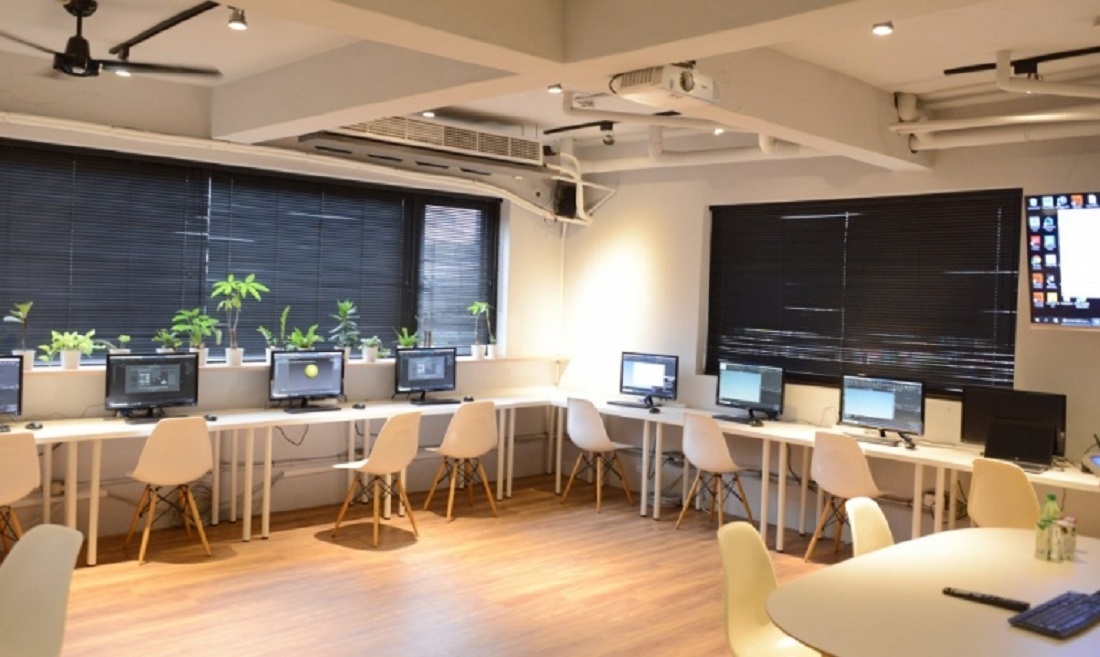
Moonshine Animation computer classroom: running animation software without any computers
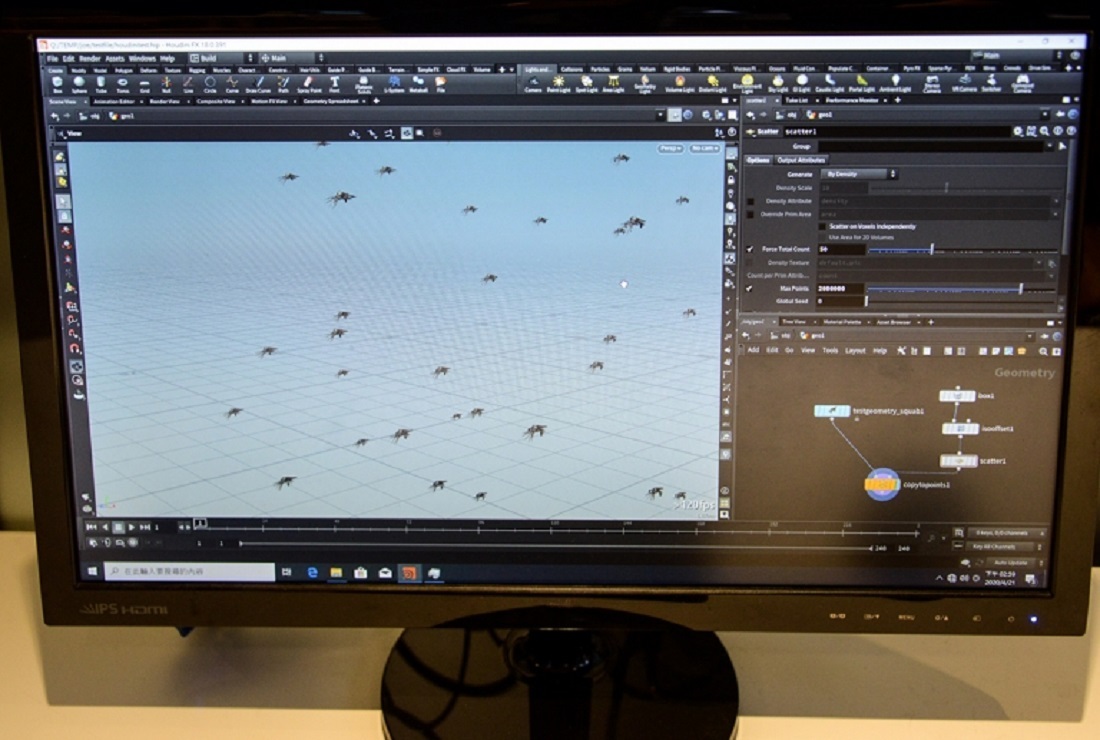
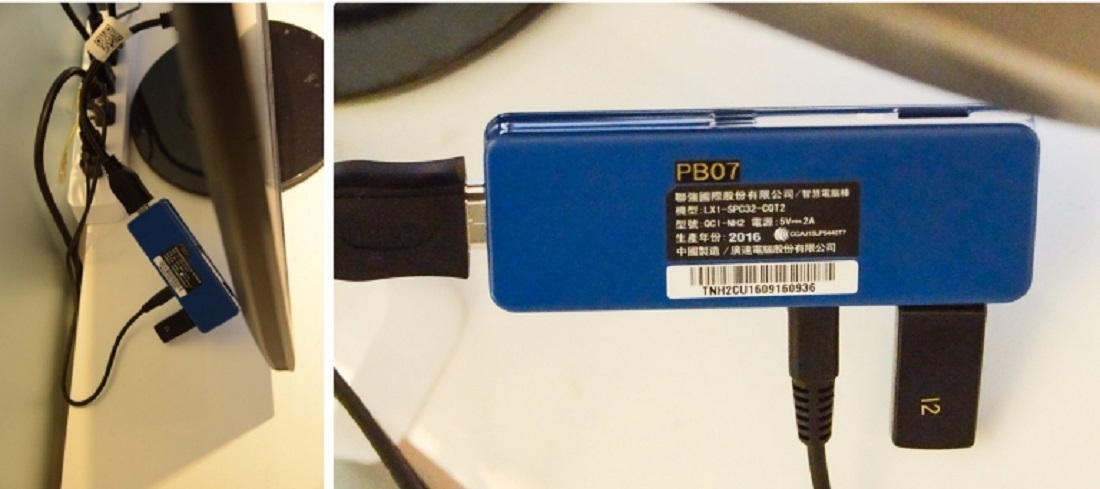
- Mr. Lin used an ultra-basic Compute Stick to connect to the GIGABYTE server and run 3D special effects production software Houdini FX for real-time rendering of multiple 3D models.
As for the benefits of deploying
this GIGABYTE server, how can it help increase productivity? Mr. Lin explains
that by dividing the resources of this server into 24 professional-grade
virtual machine accounts, the average cost of each virtual machine is only
around $25,000 NTD ($835 USD), but delivers the same capabilities of a
professional artist’s workstation. In addition, with VDI employees can now not
only use their own computer to perform animation production, but also continue
their working progress when they get home. If necessary, the company can also
dynamically allocate virtual machine resources based on the number of accounts
being used, greatly enhancing the efficiency of employees’ work.
Moonshine’s vision: to become a leader in the animation industry
Therefore, when Mr. Chia-Chi Lin founded Moonshine Animation, the projects he took on were less OEM-based and more biased towards retaining creative control (ODM-based), including having role as a director or creative consultant and even making decisions about the product design and script. The finished work could then be co-credited to Moonshine to help promote their own brand. With this approach, Moonshine Animation expects to be listed in their customer’s “behind-the-scenes” team, and will stand at the forefront of the creative supply chain.
From this interview, we have found that Moonshine Animation is not only realizing their dream of creating a professional grade animation studio but doing it with a very pragmatic attitude. Moreover, they are determined to become a leading force in the animation industry, and impressing their peers in the industry by adopting an innovative combination of hardware and software technology. Take the deployment of GIGABYTE’s G191-H44 1U high-performance server as an example - equipped with dual Xeon processors and NVIDIA Quadro graphics cards, its original purpose was for AI computing. However, it was reassigned to support VDI, providing employees working from home a perfect environment for remote animation production and secure Internet access, and making Moonshine a pioneer in their industry by creating unlimited possibilities for remote work.
Of course, Moonshine Animation has built their remote VDI configuration not only for the purpose of employee health and illness prevention, but also for use when they establish their Kaohsiung branch and connect it back to their Taipei head office. It has allowed them to create an environment where they can animate anywhere, at any time and using any device.