What is Sovereign AI? Why is It Essential to Your AI Strategy?

Why Sovereign AI Matters: National Security and Market Competitiveness
The concept of sovereign AI is inextricably linked to "AI sovereignty", which itself is rooted in older ideas like "data sovereignty" and "sovereign cloud". The logic behind these terms is consistent: since information technology (IT) transcends borders, governing bodies must work to control or govern IT so that it plays by their rules and is conducive to the national interest. Generative AI (and by extension, agentic AI) complicates matters because AI training involves the utilization of deep learning on massive quantities of accumulated data. If the data is in a foreign language or reflective of another country's norms, the AI that comes out might not be a perfect fit for local users. Conversely, if a population's data was collected to create AI that the people won't have access to, one might argue that a more assertive stance on sovereign AI would have guarded their interests better. For these reasons, governments have a prerogative to strengthen AI sovereignty, and corporations have both the duty and the incentive to be an active participant in this pursuit.
Of course, doing things the right way can incur an opportunity cost; sovereign AI is no different. While AI development has hitherto thrived on a relatively laissez-faire approach to how the process should be managed, sovereign AI requires a significant commitment to exerting control and ensuring that AI products and services adhere to jurisdictional requirements throughout their lifecycles. Understandably, many organizations have been hesitant to take the first step. However, it should be noted that first-movers can look forward to enjoying a sizeable competitive advantage, as well as influence on how AI sovereignty is pursued going forward. Meanwhile, those who held back for too long may end up forfeiting their chance at sovereign AI leadership, which could lead to a harder fight to regain their AI momentum further down the line.
Learn More:
《Tech Guide: What is Agentic AI? Are You On Track to Profit from It?》
《The Power of AI: How to Benefit from AI in the Healthcare & Medical Industry》
Conventional AI vs. Sovereign AI
|
|
|---|---|
Definition Generative AI, agentic AI, reasoning AI, etc., based on transformer models and deep learning | Definition Government maintains oversight and control over AI to protect and advance the national interest |
Requirements AI training: Data centers and AI factories AI inference: Ubiquitous computing platforms | Requirements Public sector: Invests in data, infrastructure, talent Private sector: Complies with regulations, invests in infrastructure |
Output Easily accessible, low-cost AI products and services, such as AIGC and AI agents | Output Bespoke AI products and services that best fit the local market |


Sovereign AI is not a new type of AI technology, but rather a concentrated effort to regulate the AI lifecycle so that its goods and services are beneficial to the national interest. Governments and corporations alike should work together to strengthen AI sovereignty.
What are the Requirements and Benefits of AI Sovereignty?
The fact of the matter is, unless you reside in a few specific locations on the planet, a lot of the AI we rely on was developed on someone else's infrastructure. When a nation or a company embarks on the journey toward AI sovereignty, it may find itself bewildered by the cost and complexity of erecting its own AI infrastructure. The questions of how to optimize cost-efficiency and how to chart a roadmap that accounts for growing AI model sizes and user demand—all of this is a lot to chew on, especially when governance frameworks are still on the drawing board. For some, these hurdles may appear insurmountable.
But the benefits of achieving AI sovereignty cannot be understated. Sovereign AI grants governments greater authority over AI development, distribution, and management, so that AI becomes an asset to national policies rather than a latent source of risk. Companies in compliance with sovereign AI guidelines can limit their exposure, while also improving brand reputation and product differentiation. AI inventions crafted to local needs and preferences will have a higher chance of gaining an edge over AI made by global tech giants—who may have deeper pockets, but less in-depth market engagement.
GIGABYTE Technology, an end-to-end AI solutions provider with decades of industry experience and a brimming portfolio of L12 hardware and software, can help you find your place in the emerging era of sovereign AI. If you wish to explore how you can establish AI infrastructure—whether from scratch or as an extension of existent IT infrastructure—GIGABYTE has got you covered. Our offerings include AI data enters, AI factories, and modular data centers, as well as integrated AI systems and software ready for installation. With GIGABYTE in your corner, any public or private organization, no matter the size, can make headway toward adopting sovereign AI.
Learn More:
《Want to Build Your Own Data Center? GIGABYTE Can Be Your All-in-one Partner》
《All Your Data Can Be AI Value—Upgrade Your Data Center to AI Factory》
The Benefits Outweigh the Costs…

Without Sovereign AI
- Subject to price fluctuations or disruptions from AI providers
- Lower risk mitigation, higher exposure to outside influence
- Suboptimal AI for local market requirements
- Widening gap between domestic AI capabilities versus international competitors

With Sovereign AI
- Independent, sovereign control over AI development & distribution
- Can direct AI to advance the national interest
- Bespoke AI products & services for the local market
- Long-term nurturing of domestic AI capabilities, including talent & infrastructure
GIGABYTE Can Help You Become a Leader in Sovereign AI
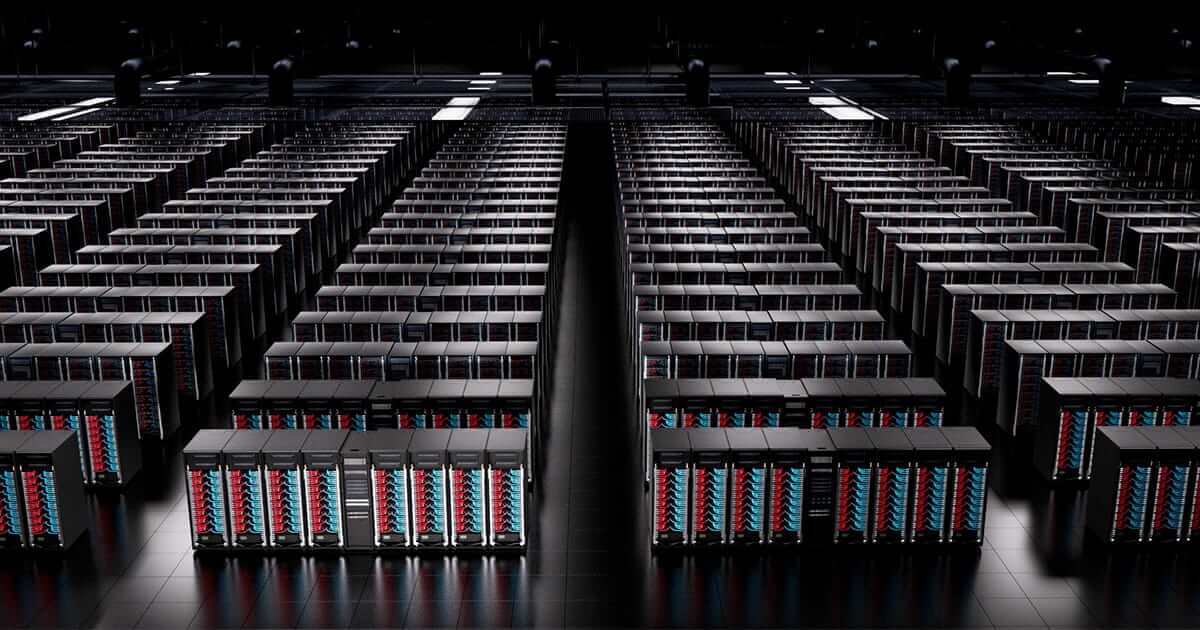
GIGABYTE can also help construct AI factories, which are a special kind of data center that focuses on minimizing Time to First Token (TTFT) and monetizing AI through GPU-centric cluster computing. In 2026, GIGABYTE launched GIGABYTE AI Factory Accelerator (GAIFA): our self-designed, self-built AI factory, which stands as a testament to GIGABYTE's ability to realize centralized computing at scale and optimize for peak performance. Esteemed customers can request access to GAIFA and use our facilities to test and validate their own AI projects, resulting in faster, more seamless AI infrastructure rollout.
For clients who want a faster way to get their AI pipeline up and running, GIGABYTE can change the game with GIGABYTE Accelerated Deployment Unit (GADU). GADU is a new class of prefabricated, containerized, modular data center that pushes the envelope on on-demand integration for sovereign AI strategies that prioritize rapid expansion. By packing AI servers into standardized containers and supporting them with modules for power and cooling, GADU achieves the vision of plug and play AI infrastructure that can adapt to variable environments. Setup can be 400% faster than brick-and-mortar data centers, and the computing resources within GADU can be specified by the customer. GADU can operate independently or as additional nodes supporting a hyperscale data center, empowering AI leaders with new options for scaling up or scaling out their supercomputing facilities.
Learn More:
《How to Balance Performance and Cost in AI Infrastructure? Cooling is Key》
《GIGABYTE Supports JHPC-quantum Project in Japan's RIKEN Center for Computational Science》

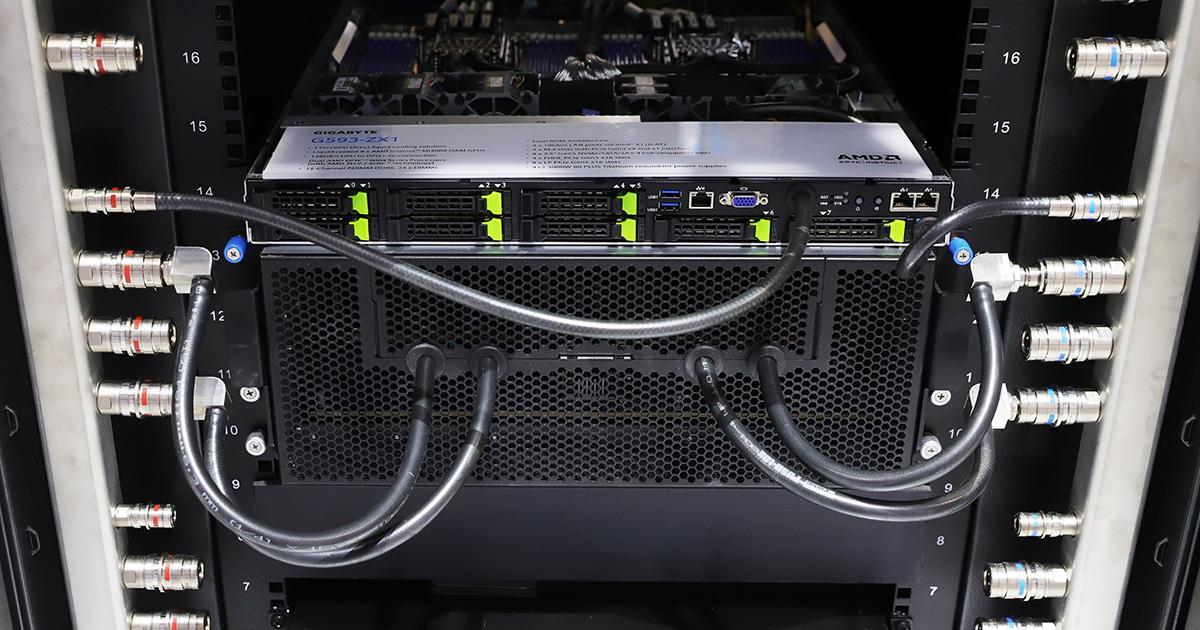
GIGABYTE's partnership with AMD, Intel, and NVIDIA gives our customers access to the latest AI growth engines. Case in point, GIGABYTE provides Vera Rubin platforms for next-gen AI data centers, so that the brightest minds tasked with upholding AI sovereignty can compete on equal terms with their peers around the world. As for individual systems installed in micro data centers, server rooms, or network nodes to execute disparate tasks in AI development and deployment, GIGABYTE impresses with bespoke servers for every conceivable function: our GPU Servers leverage parallel computing to tackle trillion-parameter AI models; our Blade Servers boast extreme compute density and are ideal for high-performance computing (HPC); and our General-purpose Rack Servers shore up gaps in compute, networking, and storage to ensure not an inch of space in the data center goes to waste. For smaller organizations such as SMEs or research teams, GIGABYTE provides Workstations, the AI TOP series of local AI development platforms, and AI TOP ATOM based on NVIDIA DGX Spark to ensure that even a modest staff of ten or twenty professionals can incorporate RAG or AI agents in their on-premises AI computing. GIGABYTE is dedicated to designing AI solutions ranging from clusters and racks to servers and workstations because we believe that organizations of all sizes can contribute to sovereign AI—if they possess the infrastructure to bring their AI vision to fruition.
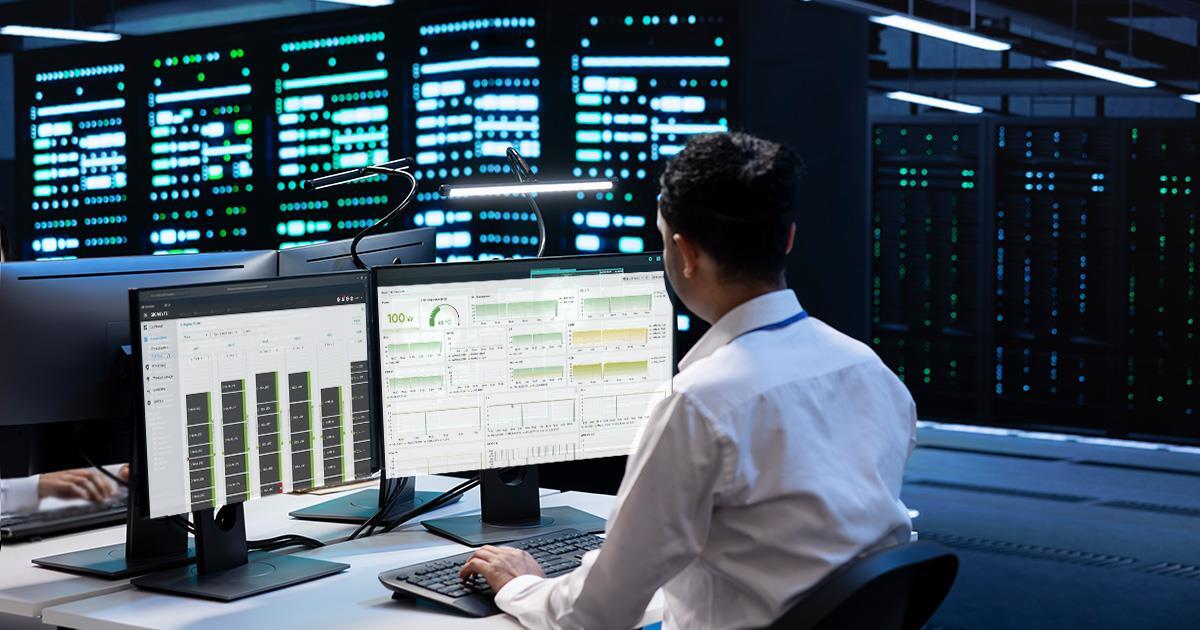
Lastly, we would be remiss if we didn't introduce the software that complements our AI hardware. Through GIGABYTE POD Manager (GPM), we offer full-stack support covering real-time monitoring, workload orchestration, and automation, as well as data center infrastructure management (DCIM) and AIOps to enhance operational efficiency, streamline management, and optimize resource utilization. GPM also includes NVIDIA's AI software options, such as NVIDIA AI Enterprise (NVAIE), NVIDIA Mission Control, and NVIDIA Omniverse. In addition, GIGABYTE pinpoints our customers' pain points and collaborates with third-party software to troubleshoot common infrastructure problems before they even pop up. GIGABYTE partners with VAST Data and WEKA to empower operators with software-defined data platforms for AI factory operations. We work with cybersecurity leaders to minimize exposure during AI model development and real-time AI inference, while also establishing a safe environment for introducing agentic AI into established workflows. These solutions help to streamline the AI pipeline and generate faster returns on your AI infrastructure investments.
Thank you for reading our article on sovereign AI; we hope it has been helpful and insightful. For further consultation on how you can incorporate GIGABYTE solutions in your AI infrastructure, we welcome you to reach out to our representatives at marketing@gigacomputing.com.
Learn More:
《Ready or Not? The Era of AI Factory Has Arrived!》
《DCIM x AIOps: The Next Big Trend Reshaping AI Software》