NVMe

What is it?

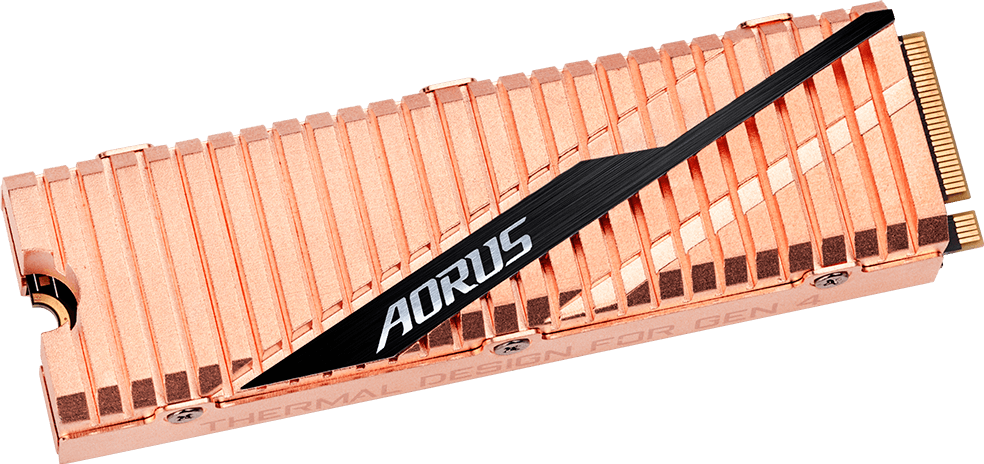
NVMe is a type of software interface used for solid state drives (SSD), and stands for “Non-Volatile Memory - Express” (Non-Volatile Memory is a common form of flash memory found in SSD). The formal name of NVMe is the Non-Volatile Memory Host Controller Interface Specification. Compared to the older AHCI (Advanced Host Controller Interface) used for traditional mechanical spinning SATA hard disks, NVMe is adapted for use with SSD through a PCIe hardware interface, resulting in a much faster disk interface protocol.

Why do you need it?

Intel had previously developed ACHI for traditional high-latency spinning hard disks, but by 2009 SSDs were rapidly gaining popularity as a storage medium. The adoption of SSD resulted however in a performance bottleneck since the maximum transmission bandwidth of ACHI could not handle the transmission speeds possible for SSD devices. Therefore, NVMe was developed using a PCIe (Peripheral Component Interconnect Express) hardware interface. While ACHI can only support a maximum queue depth of 1 with 32 commands each, NVMe can support up to 64K queues with 64K commands each, thus breaking through the previous performance bottleneck of transmission bandwidth and speed.

Early SSDs were connected through a PCIe bus, but required a customized software interface for communication with the operating system. With the standardized software interface, the operating system requires only a single driver to communicate with all SSD devices that conform to the NVMe specification. In a data center that features multiple storage servers or that handles a large amount of data, speeding up data transmission and minimizing latency / delay are highly important considerations.

How is GIGABYTE helpful?

In addition to meeting consumer market demand for NVMe SSDs, GIGABYTE also provides enterprise solutions such as the R282-Z92, which can be used to build an All Flash Array with a capacity for 24 hot-plug 2.5" NVMe drives in a single 2U server system. And this 2nd Generation AMD EPYC (Rome) server also supports PCIe Gen 4.0 – which has doubled the bandwidth and transmission rates of PCIe Gen 3.0 to 64GB/s and 16GT/s respectively, resulting in much faster data transfer speeds between the CPU and peripherals such as accelerator cards, NVMe SSDs or high-speed networking cards.

Recommended Reading

Qualcomm Solution for Inferencing

Qualcomm Solution for Inferencing

For heavy inferencing workloads, GIGABYTE has developed the G292-Z43 that can support up to sixteen Qualcomm Cloud AI 100 accelerators in a 2U chassis with room for additional networking.
Giga Computing Announces New Server Built on NVIDIA GB200 NVL4 Platform at SCA/HPC Asia 2026

Giga Computing Announces New Server Built on NVIDIA GB200 NVL4 Platform at SCA/HPC Asia 2026

Giga Computing Announces New Server Built on NVIDIA GB200 NVL4 Platform at SCA/HPC Asia 2026
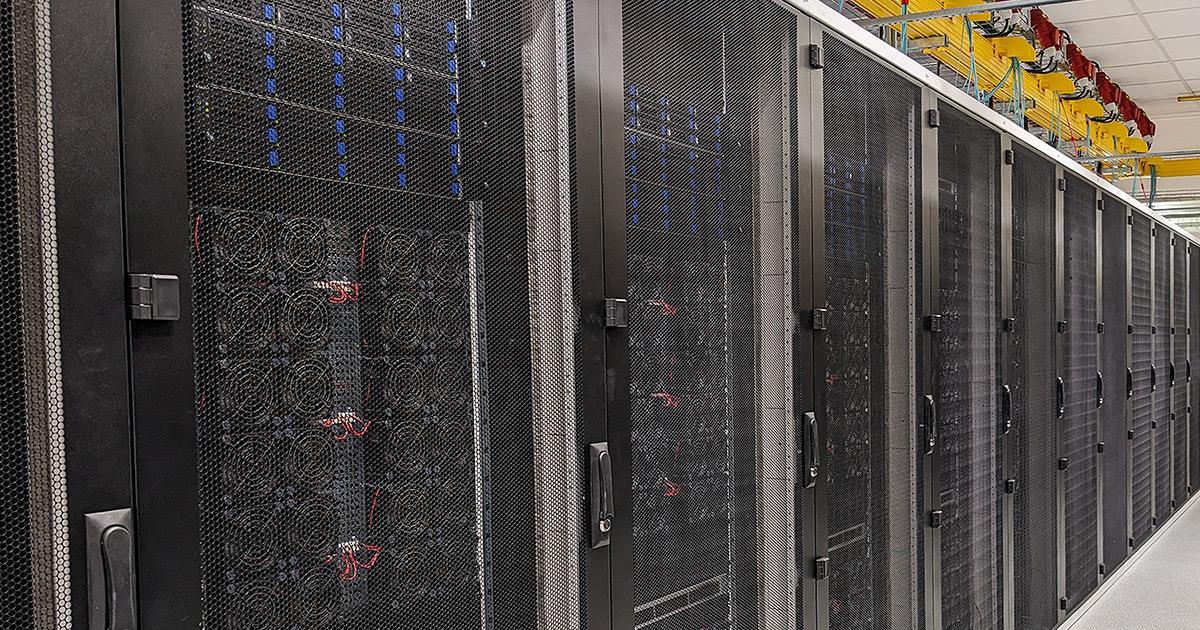
The University of Barcelona Gets a Computing Boost with GIGABYTE Servers
Article

The University of Barcelona Gets a Computing Boost with GIGABYTE Servers

The Institute of Theoretical and Computational Chemistry at the University of Barcelona has increased the capacity of their on-campus data center by over 40% with a new cluster of GIGABYTE servers. Hundreds of researchers will benefit from the computing power of AMD EPYC™ processors. Administrators can easily manage the cluster with GIGABYTE Server Management (GSM), a proprietary multiple server remote management software platform provided for free by GIGABYTE.
Spain’s IFISC Tackles COVID-19, Climate Change with GIGABYTE Servers
Article

Spain’s IFISC Tackles COVID-19, Climate Change with GIGABYTE Servers

By using GIGABYTE, Spain’s Institute for Cross-Disciplinary Physics and Complex Systems is pitting the world’s foremost server solutions against some of the world’s most pressing issues, including the effects of climate change, pollution, and COVID-19. GIGABYTE servers are up to the diverse and daunting tasks, because they are designed for high performance computing, intensive numerical simulations, AI development, and big data management.
The EPYC Rise of AMD’s New Server Processor
Article

The EPYC Rise of AMD’s New Server Processor

Czech’s biggest search engine builds infrastructure on top of GIGABYTE solutions
Article

Czech’s biggest search engine builds infrastructure on top of GIGABYTE solutions

Seznam, a major player in the Czech Republic internet market, in a search to upgrade its hardware infrastructure, found in GIGABYTE the ideal hardware solution partner to increase scalability and performance of its online services, resulting in major improvements in efficiency.
What is a Server? A Tech Guide by GIGABYTE
Article

What is a Server? A Tech Guide by GIGABYTE

In the modern age, we enjoy an incredible amount of computing power—not because of any device that we own, but because of the servers we are connected to. They handle all our myriad requests, whether it is to send an email, play a game, or find a restaurant. They are the inventions that make our intrinsically connected age of digital information possible. But what, exactly, is a server? GIGABYTE Technology, an industry leader in high-performance servers, presents our latest Tech Guide. We delve into what a server is, how it works, and what exciting new breakthroughs GIGABYTE has made in the field of server solutions.
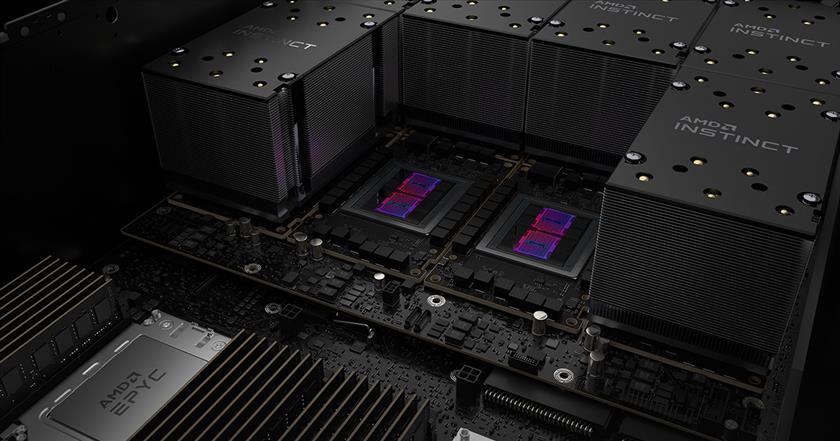
AMD Instinct MI200 Series Platform

AMD Instinct MI200 Series Platform

Bringing Exascale-Class Technologies to Mainstream HPC and AI
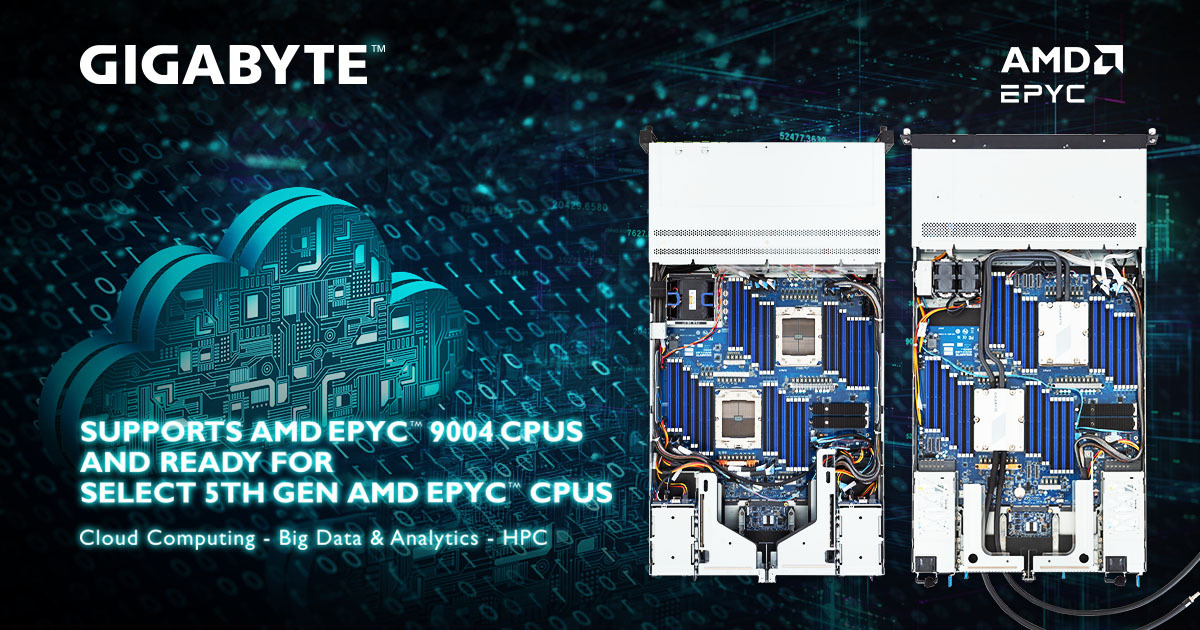
GIGABYTE Rolls Out High Memory Capacity Servers for Cloud Computing and Big Data Using AMD EPYC™ 9004 Processors and Ready for Select 5th Generation AMD EPYC CPUs

GIGABYTE Rolls Out High Memory Capacity Servers for Cloud Computing and Big Data Using AMD EPYC™ 9004 Processors and Ready for Select 5th Generation AMD EPYC CPUs

48 DIMMs on one node for CPU and memory-intensive applications
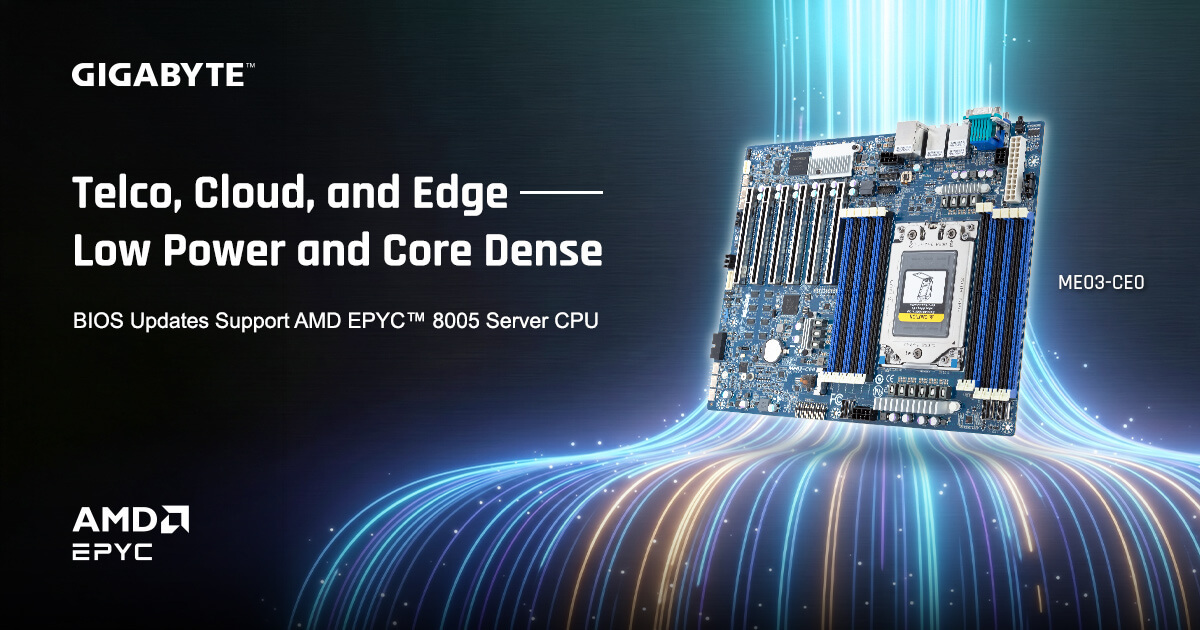
Giga Computing Enhances Telco/Edge and Cloud Storage Solutions with AMD EPYC™ 8005 Server CPU

Giga Computing Enhances Telco/Edge and Cloud Storage Solutions with AMD EPYC™ 8005 Server CPU