V2V (Vehicle-to-Vehicle)
What is it?
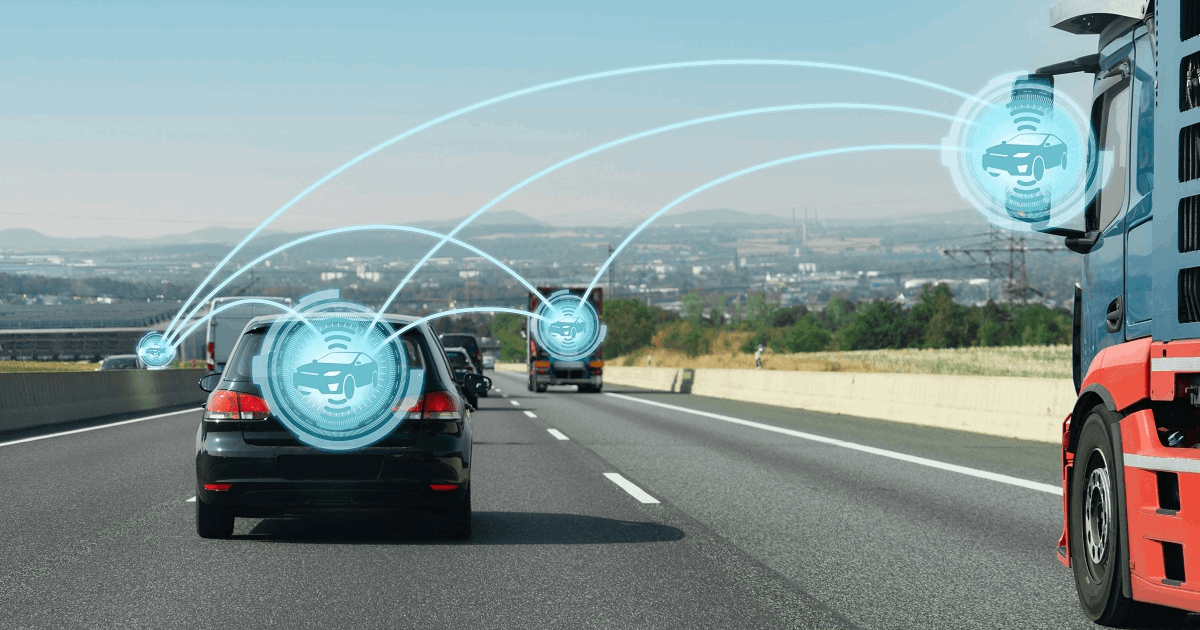
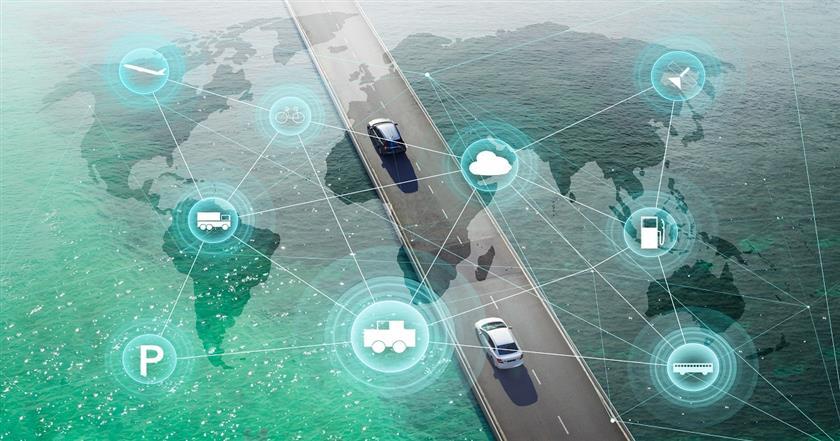
Vehicle-to-vehicle (V2V) is the inter-vehicular application of telematics and vehicle-to-everything (V2X) technology, in which vehicles connect with one another using anything from dedicated short-range communications (DSRC) to 5G, so that they form an IoT (Internet of Things) on wheels. The vehicles can share information about their respective speed, location, direction of travel, etc.
As autonomous vehicles hit the road around the world, establishing a V2V network has become increasingly pertinent. Once Advanced Driver Assistance Systems (ADAS) have progressed to the highest level of autonomy, vehicles will not only be able to relay the information they receive to the driver, they will also be able to make decisions and execute actions to ensure a smooth and safe journey.
As autonomous vehicles hit the road around the world, establishing a V2V network has become increasingly pertinent. Once Advanced Driver Assistance Systems (ADAS) have progressed to the highest level of autonomy, vehicles will not only be able to relay the information they receive to the driver, they will also be able to make decisions and execute actions to ensure a smooth and safe journey.
Why do you need it?
The advantages of V2V are largely the same as V2X: safer, more convenient travel, and lower fuel consumption as a result of a more efficient traffic system. However, V2V also has some unique benefits that cannot be attained in any other way.
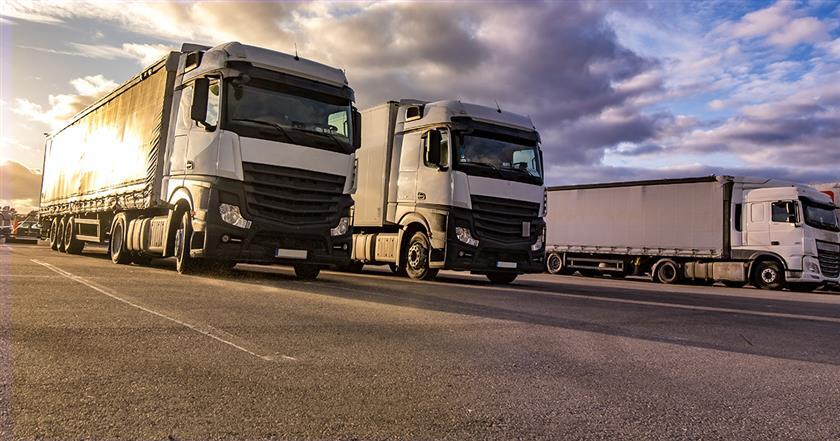
First of all, V2V communication is in real time. This allows vehicles to respond immediately to road situations and data from other vehicles. It also paves the way for innovative intelligent transportation system (ITS) applications. For example, "flocking" or "platooning" is the technique of having a chain of vehicles drive one after another, like wagons in a train. Headway between each vehicle can be greatly reduced thanks to V2V technology. This will decrease air resistance and enhance fuel economy.
Secondly, and perhaps more importantly, V2V is a critical building block of the truly autonomous self-driving vehicle. The control unit of a self-driving car needs to process many different kinds of data from a wide range of peripheral systems, such as cameras, LiDAR, and other sensors. V2V communication can help provide a more complete picture of the vehicle's surroundings, further improving travel safety and convenience.
First of all, V2V communication is in real time. This allows vehicles to respond immediately to road situations and data from other vehicles. It also paves the way for innovative intelligent transportation system (ITS) applications. For example, "flocking" or "platooning" is the technique of having a chain of vehicles drive one after another, like wagons in a train. Headway between each vehicle can be greatly reduced thanks to V2V technology. This will decrease air resistance and enhance fuel economy.
Secondly, and perhaps more importantly, V2V is a critical building block of the truly autonomous self-driving vehicle. The control unit of a self-driving car needs to process many different kinds of data from a wide range of peripheral systems, such as cameras, LiDAR, and other sensors. V2V communication can help provide a more complete picture of the vehicle's surroundings, further improving travel safety and convenience.
How is GIGABYTE helpful?
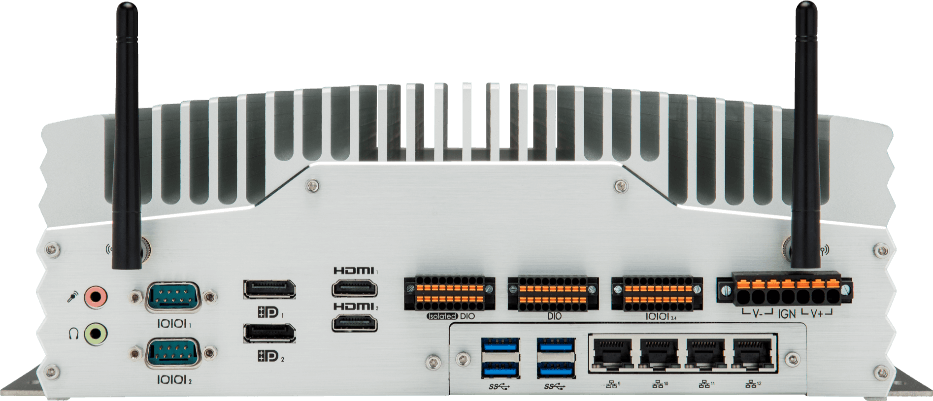
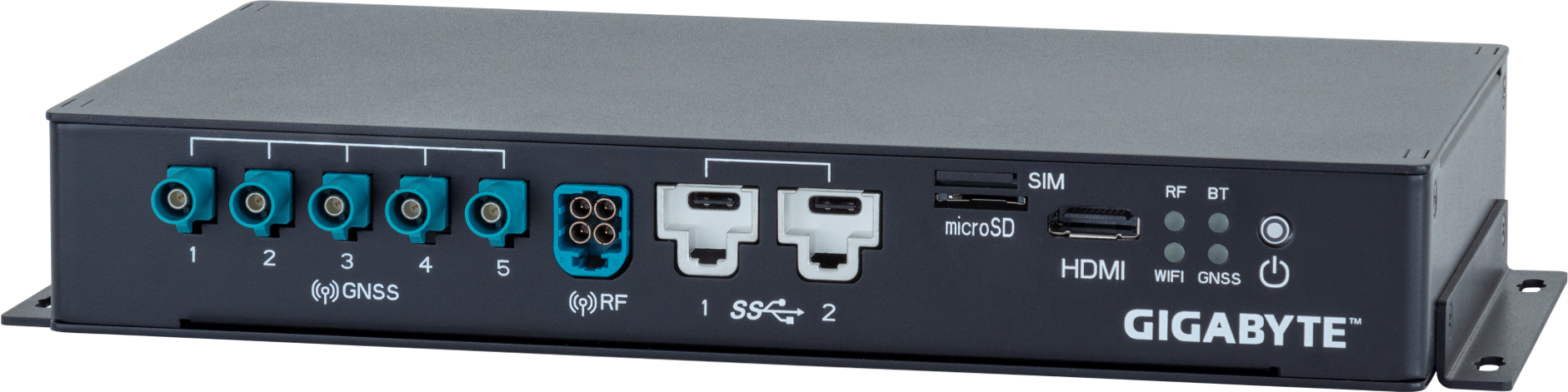
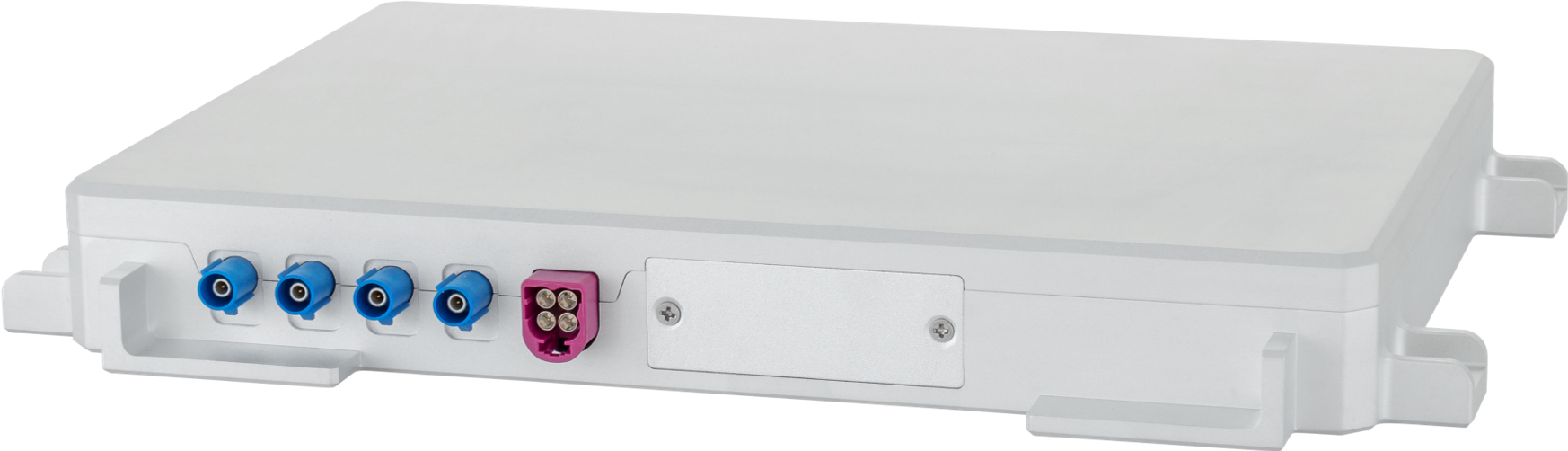
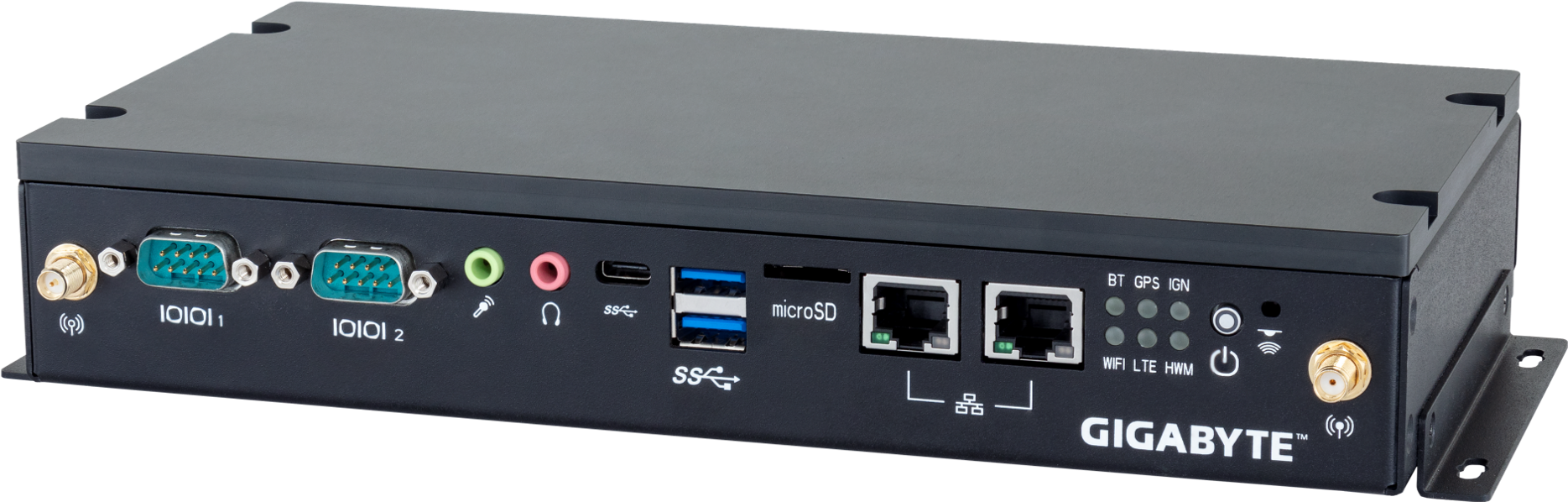
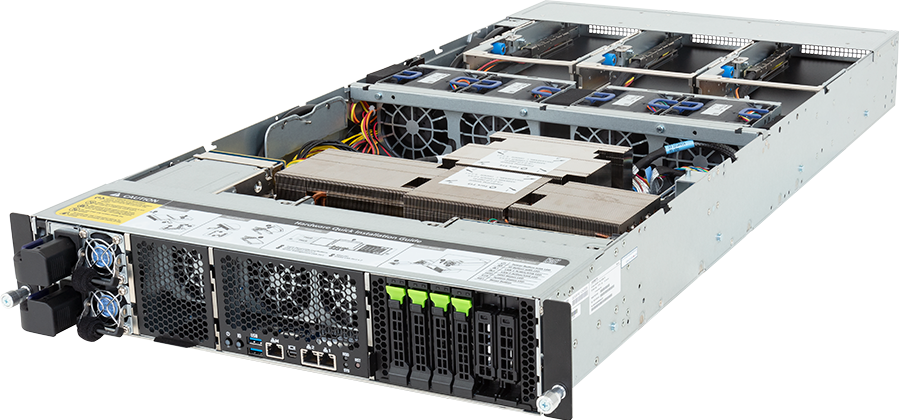
As with V2X, V2V relies heavily on a vehicle’s telematics unit. GIGABYTE Technology provides the In Vehicle Telematics Controller and IIOT Gateway, also known as the In-Vehicle Telematics Control Unit (TCU); and the Telematics Module, a single board computer (SBC). Both of these products may be used as the vehicle’s on-board computer. For autonomous vehicles, GIGABYTE provides the GIGABYTE PILOT series of products, which are Automated-Driving Control Units (ADCUs) that can serve as the AI Mobile Edge Computing Platform that’s the brain of the self-driving car.
The TCU is an ARM-based computing platform that supports Android or Linux OS. It combines highly integrated telematics technology with high-speed network interfaces to enable real-time communication between the vehicle and other devices. It also offers a wide range of I/O and expansion options that can be used with different sensors and peripheral modules. Its built-in Wi-Fi, Bluetooth 5.0, E-compass and optional 5G, 4G/LTE, GNSS, etc., are suitable for different fields of application. The Telematics Module is smaller than the TCU but possesses most of the core functions. It may be installed in vehicles other than motor vehicles, such as Automated Guided Vehicles (AGV) and Autonomous Mobile Robots (AMR).
GIGABYTE's ADCUs are impressive AI systems that are powered by cutting-edge Intel processors and GPU/VPU acceleration. Self-driving AI models developed in data centers can be installed in the ADCU to help navigate autonomous vehicles. The ADCU comes with a rich combination of I/O ports and integrated CAN bus that serve as high-speed interfaces for sensors such as LiDAR, cameras, and radar; it also supports various types of communication interfaces, such as CAN, Bluetooth 5.0, 4G or 5G LTE, Wi-Fi, C-V2X, etc. The ADCU can endure vibrations, wide temperature ranges, and other challenging environmental factors. It is housed in a fan-less chassis with a highly efficient thermal exchange design to ensure smooth operation. It may be used for vehicles other than self-driving cars, such as AMRs and AGVs.
The TCU is an ARM-based computing platform that supports Android or Linux OS. It combines highly integrated telematics technology with high-speed network interfaces to enable real-time communication between the vehicle and other devices. It also offers a wide range of I/O and expansion options that can be used with different sensors and peripheral modules. Its built-in Wi-Fi, Bluetooth 5.0, E-compass and optional 5G, 4G/LTE, GNSS, etc., are suitable for different fields of application. The Telematics Module is smaller than the TCU but possesses most of the core functions. It may be installed in vehicles other than motor vehicles, such as Automated Guided Vehicles (AGV) and Autonomous Mobile Robots (AMR).
GIGABYTE's ADCUs are impressive AI systems that are powered by cutting-edge Intel processors and GPU/VPU acceleration. Self-driving AI models developed in data centers can be installed in the ADCU to help navigate autonomous vehicles. The ADCU comes with a rich combination of I/O ports and integrated CAN bus that serve as high-speed interfaces for sensors such as LiDAR, cameras, and radar; it also supports various types of communication interfaces, such as CAN, Bluetooth 5.0, 4G or 5G LTE, Wi-Fi, C-V2X, etc. The ADCU can endure vibrations, wide temperature ranges, and other challenging environmental factors. It is housed in a fan-less chassis with a highly efficient thermal exchange design to ensure smooth operation. It may be used for vehicles other than self-driving cars, such as AMRs and AGVs.