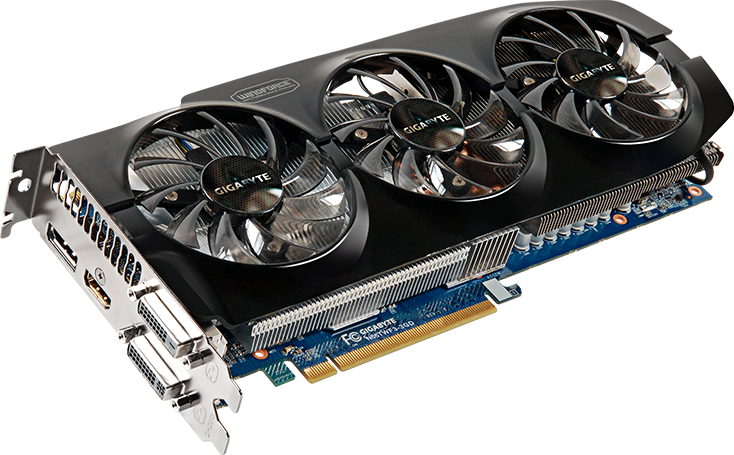

GV-N66TWF3-3GD
GIGABYTE Ultra Durable VGA Series
Specifications
- Graphics Processing
- GeForce GTX 660 Ti
- I/O
- Dual-link DVI-I*1
DVI-D*1
DisplayPort*1
HDMI*1
- Core Clock
- Base clock: 915 MHz
Boost clock: 980 MHz
- Process Technology
- 28 nm
- Memory Clock
- 6008 MHz
- Memory Size
- 3072 MB
- Memory Type
- GDDR5
- Memory Bus
- 192 bit
- Card Bus
- PCI-E 3.0
- Digital max resolution
- 4096 X 2160(via a single HDMI connector and not supported with two DVI connectors)
- Multi-view
- 4
- Card size
- H=42 mm,L=285 mm,W=137 mm
- PCB Form
- ATX
- DirectX
- 11.1
- OpenGL
- 4.3
- Recommended PSU
- 450W
- Analog max resolution
- 2048 x 1536
- Tools
- N/A
- Graphics Processing
- GeForce GTX 660 Ti
- I/O
- Dual-link DVI-I*1
DVI-D*1
DisplayPort*1
HDMI*1
- Core Clock
- Base clock: 915 MHz
Boost clock: 980 MHz
- Process Technology
- 28 nm
- Memory Clock
- 6008 MHz
- Memory Size
- 3072 MB
- Memory Type
- GDDR5
- Memory Bus
- 192 bit
- Card Bus
- PCI-E 3.0
- Digital max resolution
- 4096 X 2160(via a single HDMI connector and not supported with two DVI connectors)
- Multi-view
- 4
- Card size
- H=42 mm,L=285 mm,W=137 mm
- PCB Form
- ATX
- DirectX
- 11.1
- OpenGL
- 4.3
- Recommended PSU
- 450W
- Analog max resolution
- 2048 x 1536
- Tools
- N/A

* The terms HDMI, HDMI High-Definition Multimedia Interface, HDMI Trade dress and the HDMI Logos are trademarks or registered trademarks of HDMI Licensing Administrator, Inc.
* The entire materials provided herein are for reference only. GIGABYTE reserves the right to modify or revise the content at anytime without prior notice.
* Advertised performance is based on maximum theoretical interface values from respective Chipset vendors or organization who defined the interface specification. Actual performance may vary by system configuration.
* All trademarks and logos are the properties of their respective holders.
* Due to standard PC architecture, a certain amount of memory is reserved for system usage and therefore the actual memory size is less than the stated amount.
* Advertised performance is based on maximum theoretical interface values from respective Chipset vendors or organization who defined the interface specification. Actual performance may vary by system configuration.
* All trademarks and logos are the properties of their respective holders.
* Due to standard PC architecture, a certain amount of memory is reserved for system usage and therefore the actual memory size is less than the stated amount.