AIDC (AI Data Center)
What Is an AIDC (AI Data Center)?
AIDC stands for AI Data Center, a data center specifically designed to support artificial intelligence workloads. It is used for applications such as AI model training, fine-tuning, and inference, as well as generative AI and agentic AI.
The core of an AIDC is not any single computing component. Instead, it integrates CPUs, GPUs, and other AI accelerators with memory, storage, networking, power, cooling, and management software based on the requirements of different AI workloads. From large-scale model training and real-time inference to agentic AI that continuously performs reasoning, accesses data, and calls external tools, each application places different demands on computing resources and system architecture.
Compared with traditional data centers that primarily support general-purpose workloads such as enterprise IT, databases, and virtualization, AIDCs place greater emphasis on high-density computing, high-speed data movement, and coordinated design across computing, storage, networking, and energy infrastructure. This enables resources to be allocated and scaled more efficiently according to AI workload requirements. The industry also commonly uses the term “AI Factory” to describe this type of infrastructure, which transforms data and computing resources into AI-powered services and applications.
Why Do We Need AI Data Centers?
The scale of AI models and the way AI applications operate are rapidly reshaping data center infrastructure.
Earlier generative AI applications were largely based on individual prompts and responses. With the development of reasoning AI and agentic AI, AI systems may need to perform multi-step reasoning, call external tools, collaborate with other AI agents, and operate continuously for extended periods. As a result, AI computing is evolving beyond one-time interactions toward more complex and automated workloads.
Different AI applications also have varying requirements for computing, memory, storage, and networking resources. Data centers therefore need greater flexibility in resource allocation and scalability to accommodate growing AI computing demands. McKinsey estimates that cumulative global data center capital expenditures could approach US$7 trillion by 2030, with AI computing demand being one of the key drivers.
What Challenges Do AIDCs Face?
As AI clusters grow in scale and power density, their power and cooling requirements increase accordingly. Electricity is therefore becoming an increasingly important constraint on AIDC expansion. Deloitte estimates that power demand from AI data centers in the United States could rise from approximately 4 GW in 2024 to 123 GW by 2035, an increase of more than 30 times.
With power and infrastructure resources becoming increasingly constrained, the focus of AIDC development is no longer simply on deploying more GPUs or adopting higher-end hardware. The greater challenge is improving overall system efficiency so that more AI workloads can be processed with the same available resources while reducing operating costs.
For generative AI inference, for example, Tokens per Watt can be used to measure token output efficiency relative to power consumption, while Cost per Million Tokens reflects the cost of generating one million AI tokens. Together, these metrics provide a broader view of real-world performance by reflecting the combined effects of computing resources, networking, memory, software optimization, energy efficiency, and system utilization.
GIGABYTE’s AIDC Solutions
GIGABYTE is an AI solution and data center infrastructure provider that helps customers build AIDCs tailored to different AI workloads and deployment requirements. By integrating computing, networking, power, cooling, and management software, GIGABYTE provides a comprehensive hardware and software architecture that helps enterprises transform existing IT infrastructure into highly scalable AI computing platforms.
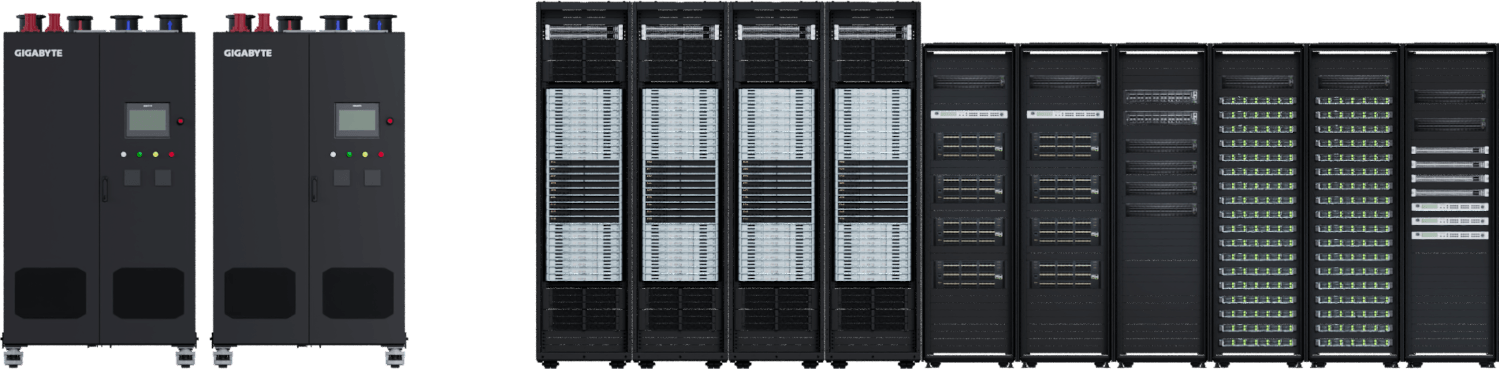
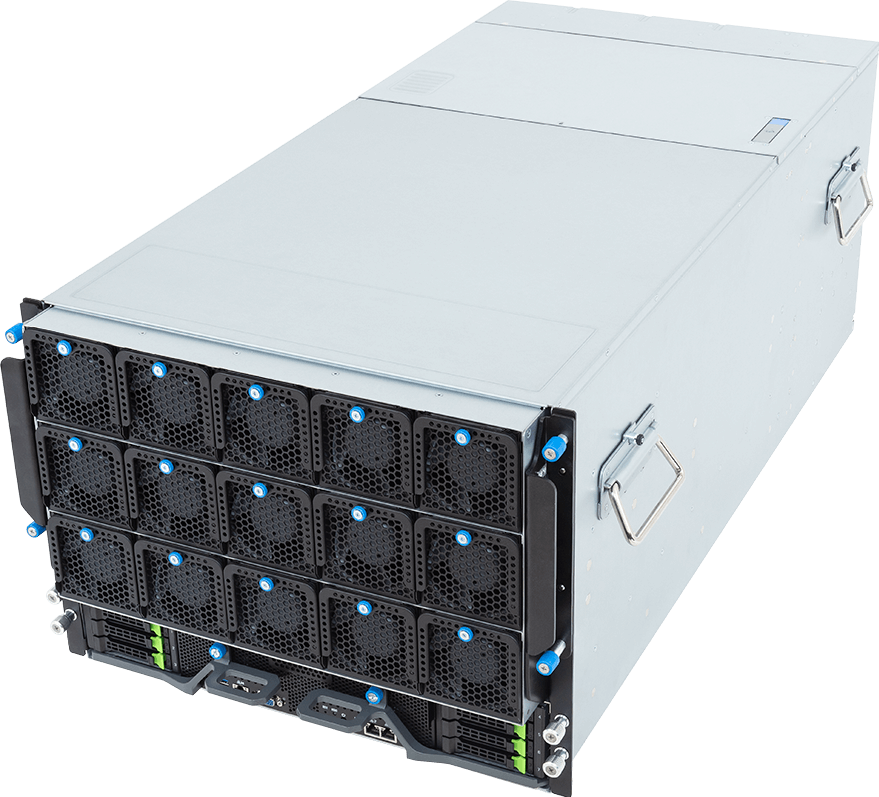
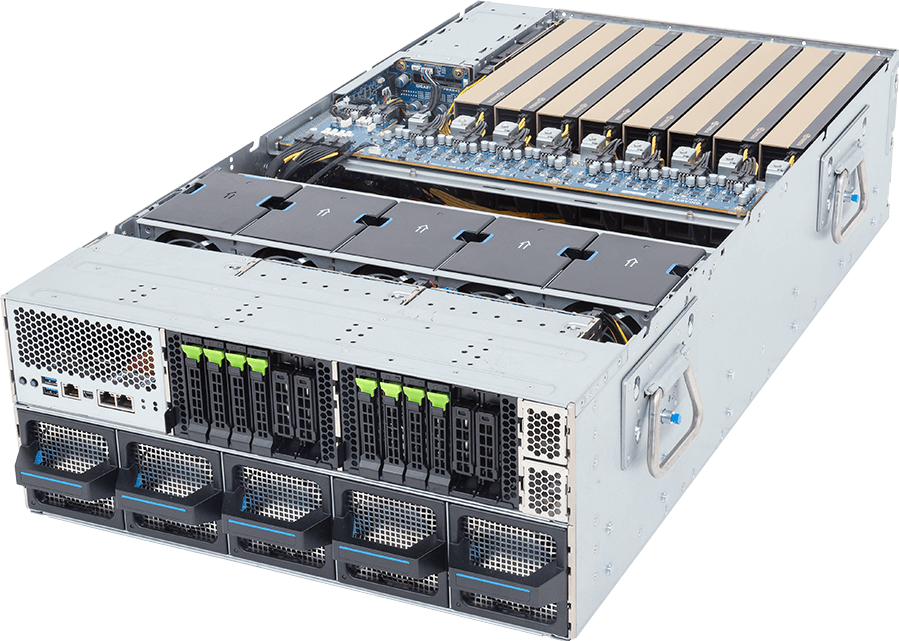
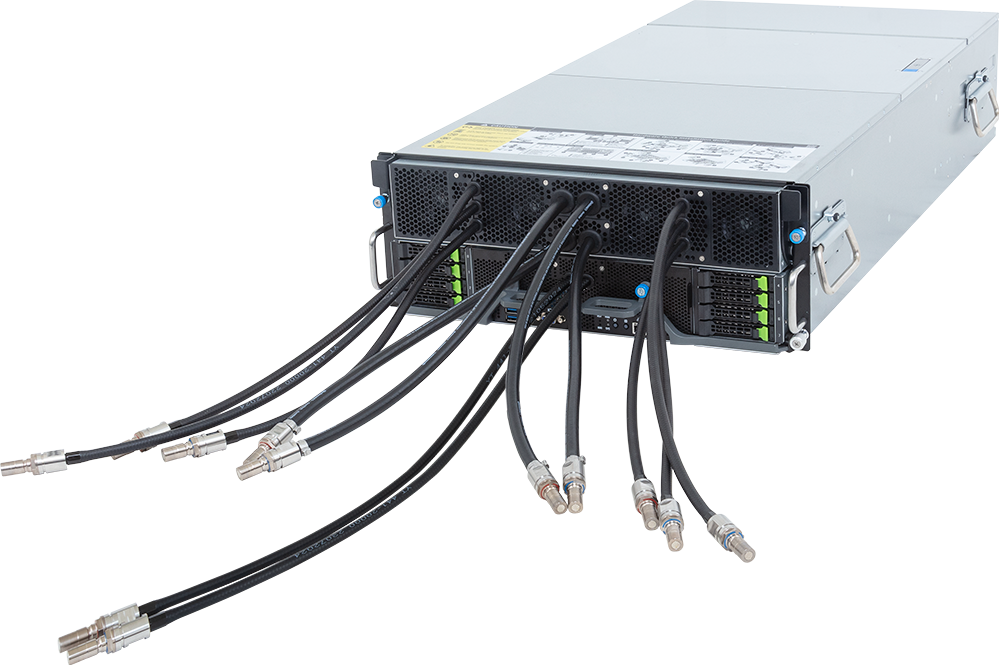
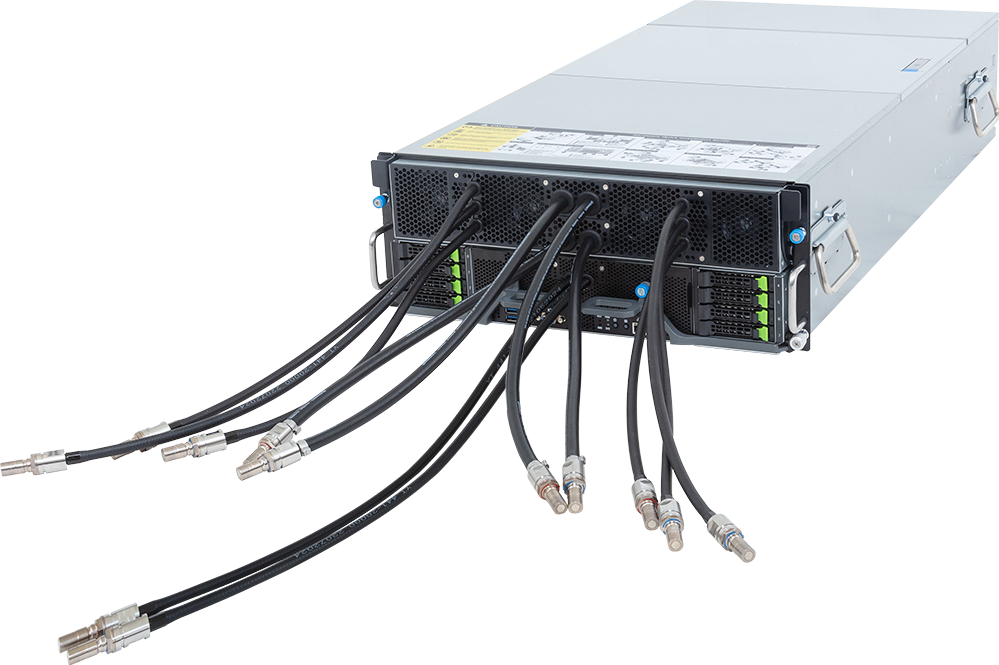
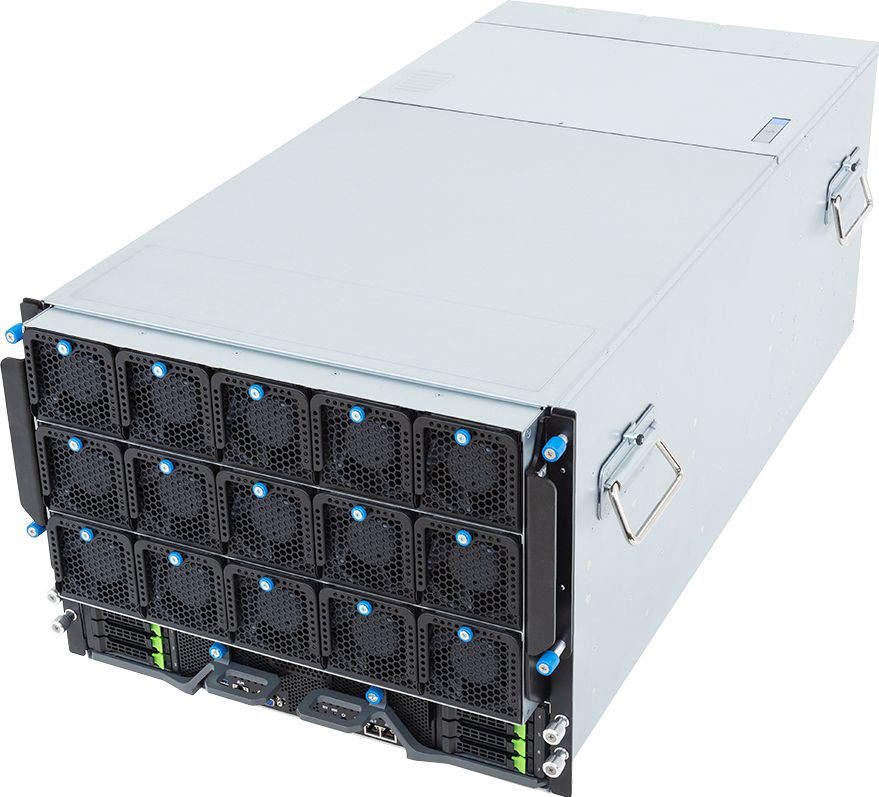
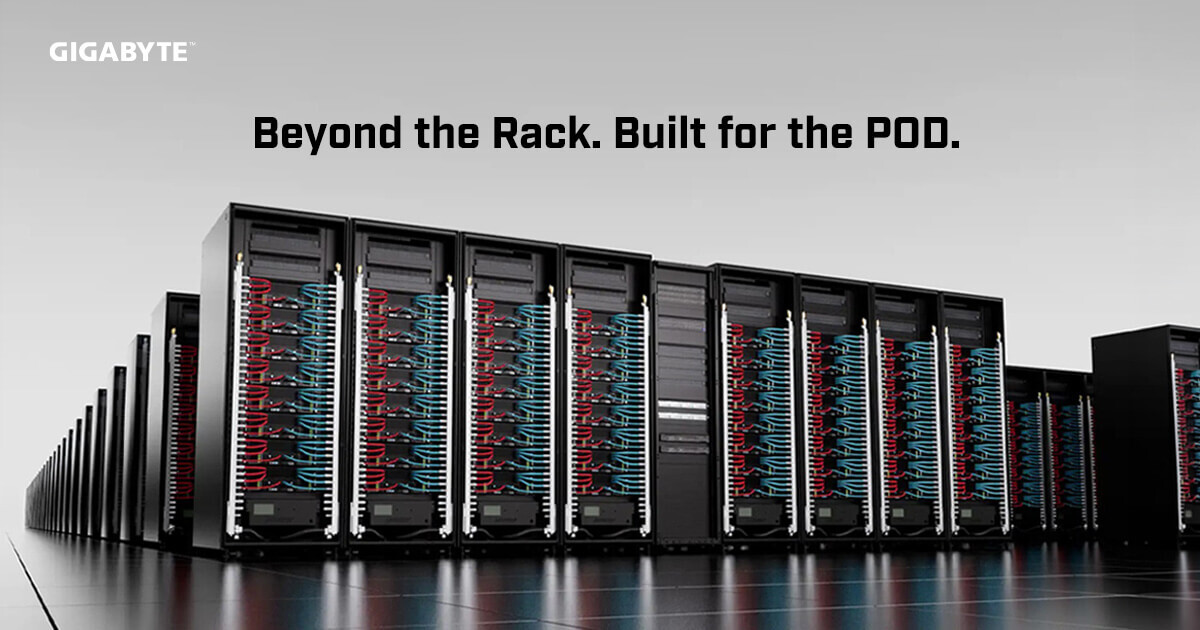
The GIGAPOD solution uses high-speed interconnect architectures to integrate large numbers of CPUs, GPUs, and AI accelerators into high-performance computing clusters, supporting large-scale parallel computing and AI workloads. It also supports both air-cooled and liquid-cooled configurations, allowing customers to balance performance, energy efficiency, and total cost of ownership.
Beyond GPU computing servers, GIGAPOD can also provide centralized management of cooling systems and power distribution equipment. Together with GIGABYTE POD Manager (GPM), it further provides capabilities such as Data Center Infrastructure Management (DCIM), workload scheduling, and system monitoring.
From individual servers and computing clusters to rack-scale and data center-scale deployments, GIGABYTE provides comprehensive AIDC solutions that help enterprises accelerate the deployment of AI factories tailored to their specific requirements and prepare their infrastructure for the next stage of AI adoption and expansion.