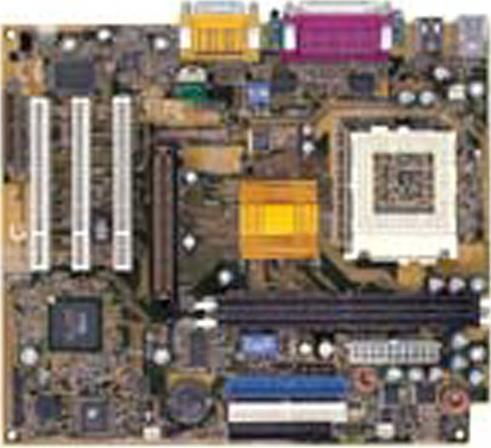
GA-6VM7A+ (Rev. 3.2)
Specyfikacja
- Procesor
- Socket 370 for Intel® and other compatible processors
- Supports CPU multiplier 3.0~8.0 for future processors
- Auto/66/75*/83*/100/112*/124*/133/140*/150* MHz FSB
- AUTO detect CPU voltage
- Chipset
- VIA Apollo Pro Family AGPset
- Creative CT5880 PCI sound chip
- Pamięć
- 8MB to 1GB SDRAM size
- 2 x 3.3V DIMM sockets
- Supports 8/16/32/64/128/256/512 MB SDRAM DIMM module
- Supports ECC type DIMM module (72bits)
- Złącza rozszerzeń
- 1 x AMR (Audio Modem Riser) slot (Inversely AMR card)
- 1 x AGP slot supports 2X mode
- 3 x PCI slots support 33MHz & PCI 2.2 compliant
- Kontroler I/O
- 2 x Ultra DMA 33/66 Bus Master IDE ports on board
- 1 x FDD, 2 x COM, 1 x LPT, PS/2 Keyboard, PS/2 Mouse on board
- 1 x Joystick, 1 x Line-in, 1 x Line-out, 1 x MIC on board
- 2 x USB ports on board
- IrDA TX / RX Header ready
- Monitoring sprzętowy
- Auto speed down and alarm when CPU overheat or fan failure (OS independent & driverless)
- 3 fan power & speed detection connectors
- System health status detect & report by BIOS
- H/W detect +5V, +12V, CPU voltage & CMOS battery status
- BIOS
- 2Mbit flash RAM
- AMI BIOS with enhanced ACPI feature for PC98/Win98/Win2000 compliance, Green, PnP, DMI, INT13 (>8.4GB) & Anti-Virus functions
- IDE#1~#4, SCSI, LS120, ZIP & CD-ROM bootable
- AC recovery ON/OFF control
- Wymiary
- Micro ATX , 4 layer PCB (24.4*21.0 cm)
- Driver
- VIA 4 in 1 service pack utility
- Hardware monitor utility
- Creative PCI sound driver
- Other Features
- Poly fuse for keyboard, USB & game overcurrent protection
- Power
- ATX power connector
- Power-on by RTC, modem & switch
- Power-off by Windows 95/98/2000 Shut down & Switch
- Procesor
- Socket 370 for Intel® and other compatible processors
- Supports CPU multiplier 3.0~8.0 for future processors
- Auto/66/75*/83*/100/112*/124*/133/140*/150* MHz FSB
- AUTO detect CPU voltage
- Chipset
- VIA Apollo Pro Family AGPset
- Creative CT5880 PCI sound chip
- Pamięć
- 8MB to 1GB SDRAM size
- 2 x 3.3V DIMM sockets
- Supports 8/16/32/64/128/256/512 MB SDRAM DIMM module
- Supports ECC type DIMM module (72bits)
- Złącza rozszerzeń
- 1 x AMR (Audio Modem Riser) slot (Inversely AMR card)
- 1 x AGP slot supports 2X mode
- 3 x PCI slots support 33MHz & PCI 2.2 compliant
- Kontroler I/O
- 2 x Ultra DMA 33/66 Bus Master IDE ports on board
- 1 x FDD, 2 x COM, 1 x LPT, PS/2 Keyboard, PS/2 Mouse on board
- 1 x Joystick, 1 x Line-in, 1 x Line-out, 1 x MIC on board
- 2 x USB ports on board
- IrDA TX / RX Header ready
- Monitoring sprzętowy
- Auto speed down and alarm when CPU overheat or fan failure (OS independent & driverless)
- 3 fan power & speed detection connectors
- System health status detect & report by BIOS
- H/W detect +5V, +12V, CPU voltage & CMOS battery status
- BIOS
- 2Mbit flash RAM
- AMI BIOS with enhanced ACPI feature for PC98/Win98/Win2000 compliance, Green, PnP, DMI, INT13 (>8.4GB) & Anti-Virus functions
- IDE#1~#4, SCSI, LS120, ZIP & CD-ROM bootable
- AC recovery ON/OFF control
- Wymiary
- Micro ATX , 4 layer PCB (24.4*21.0 cm)
- Driver
- VIA 4 in 1 service pack utility
- Hardware monitor utility
- Creative PCI sound driver
- Other Features
- Poly fuse for keyboard, USB & game overcurrent protection
- Power
- ATX power connector
- Power-on by RTC, modem & switch
- Power-off by Windows 95/98/2000 Shut down & Switch
* Terminy „HDMI” oraz „ HDMI High-Definition Multimedia Interface ”, charakterystyczny kształt produktów HDMI (HDMI trade dress) oraz Logo HDMI stanowią znaki towarowe lub zastrzeżone znaki towarowe spółki HDMI Licensing Administrator, Inc.
* Zamieszczony materiał został udostępniony jedynie w celach informacyjnych. GIGABYTE zastrzega sobie prawo do wprowadzania zmian w specyfikacji produktu i udostępnionych informacji o produkcie bez wcześniejszego powiadomienia.
* Przedstawiane dane są oparte na maksymalnych teoretycznych wydajnościach przedstawionym przez producentów chipsetów lub organizacji określających zakres tych specyfikacji. Rzeczywista wydajność może się różnić w zależności od konfiguracji systemu.
* Wszystkie znaki towarowe są własnością ich właścicieli.
* Z uwagi na budowę systemu, zakres pamięci może się różnić.
* Przedstawiane dane są oparte na maksymalnych teoretycznych wydajnościach przedstawionym przez producentów chipsetów lub organizacji określających zakres tych specyfikacji. Rzeczywista wydajność może się różnić w zależności od konfiguracji systemu.
* Wszystkie znaki towarowe są własnością ich właścicieli.
* Z uwagi na budowę systemu, zakres pamięci może się różnić.