The European Organization for Nuclear Research Delves into Particle Physics with GIGABYTE Servers
Success Case by GIGABYTE
The European Organization for Nuclear Research (CERN) bought GIGABYTE's high-density GPU Servers outfitted with 2nd Gen AMD EPYC™ processors. Their purpose: to crunch the massive amount of data produced by subatomic particle experiments conducted with the Large Hadron Collider (LHC). The impressive processing power of the GPU Servers’ multi-core design has propelled the study of high energy physics to new heights.
4 min read
Founded in 1954, the European Organization for Nuclear Research (CERN) is the largest laboratory for particle physics in the world. It combines advanced scientific instruments with a crack team of scientists to carry out some of the most important physics experiments on the planet. Their aim is to uncover new knowledge beyond our current understanding of the Standard Model of particle physics.
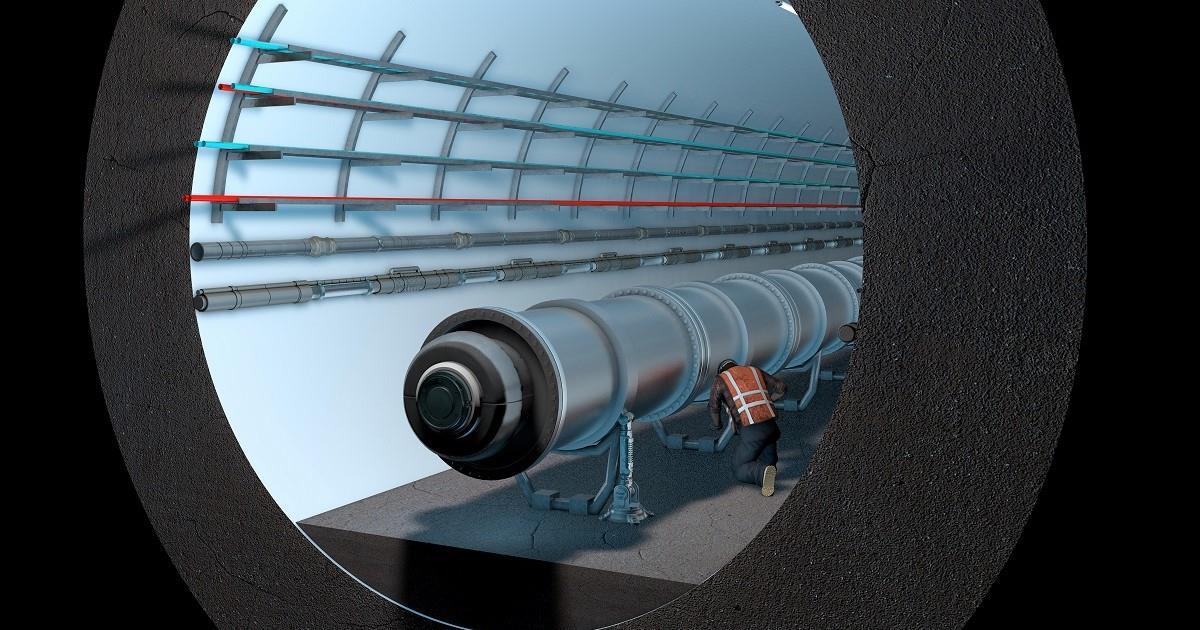
Of CERN's many projects, the biggest and most energy-intensive is its particle accelerator: the Large Hadron Collider (LHC). In order to detect the subatomic particle known as the beauty (or bottom) quark more quickly, CERN has decided to invest in additional computing equipment to analyze the massive quantities of raw data produced by the LHC.
Of CERN's many projects, the biggest and most energy-intensive is its particle accelerator: the Large Hadron Collider (LHC). In order to detect the subatomic particle known as the beauty (or bottom) quark more quickly, CERN has decided to invest in additional computing equipment to analyze the massive quantities of raw data produced by the LHC.
GIGABYTE is the Only Choice for Industry-Leading HPC Technology
When CERN looked for ways to expand their data processing equipment, the top priority was to acquire High Performance Computing (HPC) capabilities. They specifically wanted servers equipped with 2nd Gen AMD EPYC™ processors and multiple graphics accelerators. The servers should also support PCIe Gen 4.0 Computing Cards. GIGABYTE was the only company with the solution to match their demand. CERN selected the GIGABYTE G482-Z51, a model that supports up to eight PCIe Gen 4.0 GPGPU cards in a 4U chassis. 《Recommended for you: The EPYC Rise of AMD's New Server Processor》
GIGABYTE has plenty of experience in HPC applications. When AMD began offering PCIe Gen 4.0 technology on their x86 platforms, GIGABYTE immediately responded by leveraging technological know-how and expertise to design the first GPU Servers capable of supporting PCIe Gen 4.0. GIGABYTE optimized the server’s integrated hardware design, from the electronic components and PCB all the way down to the high-performance power delivery system. Signal integrity was maximized by minimizing signal loss in high-speed transmissions between CPU and GPU, and between GPUs. This resulted in a GPU Server that features lower latency, higher bandwidth, and unsurpassed reliability.
To effectively process huge quantities of data with HPC technology, more than the CPU and GPU's combined computing power comes into play. High-speed transmission is crucial; whether it relates to the computing and storage of data between multiple server clusters, or the accelerated processing and communication of data between devices linked through the internet. The GIGABYTE G482-Z51 overcame this challenge with its PCIe Gen 4.0 interface, which supports high performance network cards. The increased bandwidth enables high-speed data transmission, which in turn enhances the performance of the entire HPC system, making it possible to process the 40 terabytes of raw data that the particle accelerator generates every second.
Recommended for you:
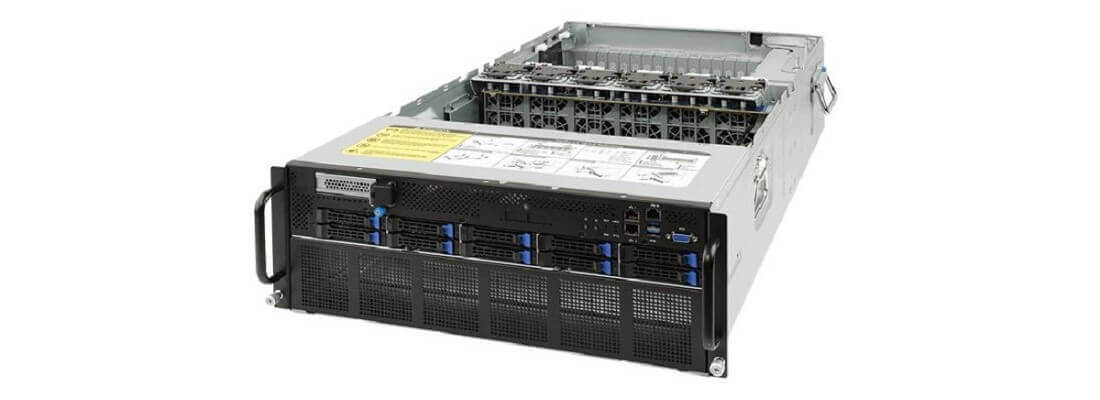
GIGABYTE's G482 Series of GPU Servers showcases an outstanding high density design that provides incredible computing power, RAM speed, and bandwidth.
Custom-Designed Servers Provided CERN with Cutting-Edge Computing Power
In order to quickly analyze the massive quantities of data generated by experiments conducted with the LHC, CERN independently developed its own powerful computer cards to handle all the calculations. They paired these cards with graphics cards designed for image processing. The combined might of these specialized tools became the last word in cutting-edge computing.
GIGABYTE customized the G482-Z51 to meet the client's specific requirements:
GIGABYTE customized the G482-Z51 to meet the client's specific requirements:
- Specially designed expansion slots and minute adjustments to the BIOS
- An advanced heat dissipation solution
A. Specially designed expansion slots and minute adjustments to the BIOS
To account for CERN's self-developed computer cards, GIGABYTE customized the expansion slots of the G48-Z51. GIGABYTE also ran data simulations and made minute adjustments to the BIOS to better link all the computer cards to the motherboard, so that each card could achieve the maximum PCIe Gen 4.0 speed.
B. An advanced heat dissipation solution
CERN had special specifications for just about everything, from the power supply to the network interface cards to the arrangement of the eight GPGPU cards. The heat consumption of these interwoven I/O devices is not all the same. GIGABYTE leveraged its expertise in heat dissipation designs and integration techniques to successfully channel airflow inside the servers, so excessive heat would not become a problem.
GIGABYTE Worked Closely with AMD to Expand the Horizon for HPC Applications
One of the most noteworthy advantages of the AMD CPU is its multi-core design. In the push to solidify the AMD EPYC™ processor's position in the server market, GIGABYTE has an important part to play. By creating an AMD EPYC™ Server that showcases top performance, system stability, and steadfast quality, GIGABYTE was able to satisfy CERN's need for a solution capable of analyzing large amounts of data and completing HPC workloads.
GIGABYTE's responsive customization services and in-depth experience in research and development were just what the client needed to meet their specific requirements. By pushing computing power to the limit with state-of-the-art technological prowess, GIGABYTE has taken an impressive stride forward in the application of HPC solutions to academic research and scientific discovery.
Learn More: