HPC (High Performance Computing)
What is HPC (High Performance Computing)?
The term HPC, which stands for High Performance Computing, refers to the ability to process data and perform calculations at very high speeds. This is especially true in systems capable of exceeding a trillion floating point operations per second (teraFLOPS). Today’s top supercomputers operate at the petaFLOPS scale (quadrillions of operations per second), with the next milestone being exascale computing, which reaches beyond a quintillion operations per second (exaFLOPS).
Learn more : 《What is HPC? A Tech Guide by GIGABYTE》
Learn more : 《What is HPC? A Tech Guide by GIGABYTE》
How does HPC work?
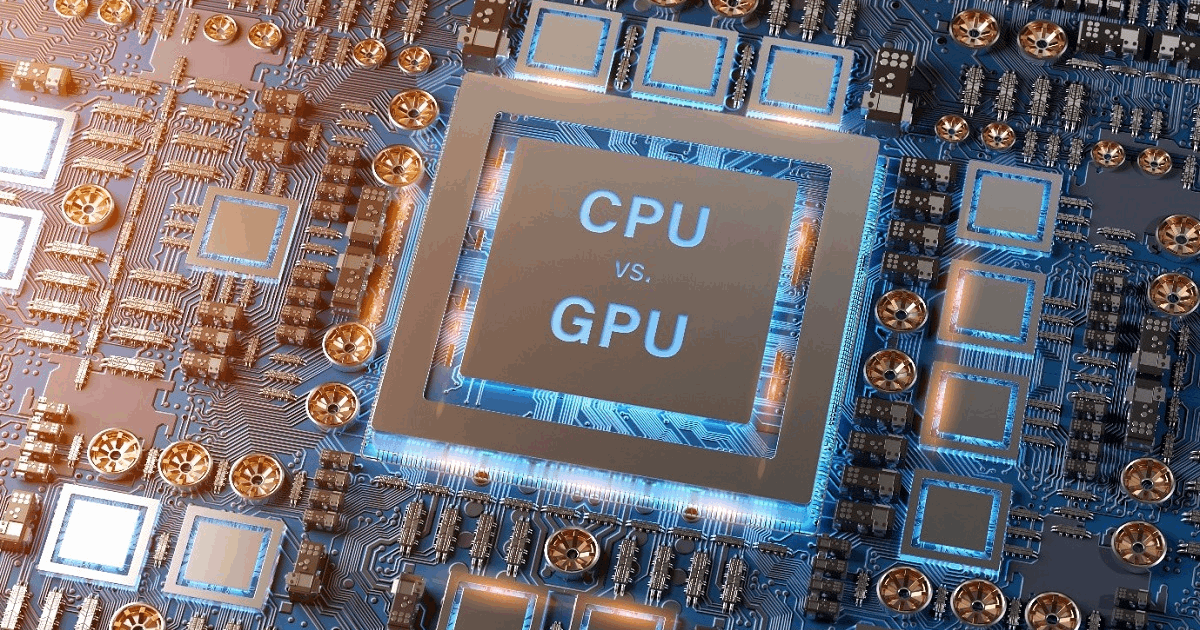
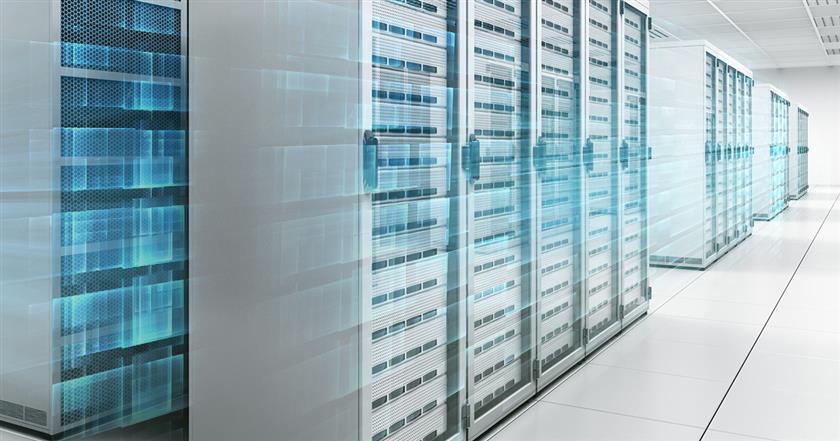
To achieve this level of performance, parallel computing across a number of CPUs or GPUs is required. One common type of HPC solutions is a computing cluster, which aggregates the computing power of multiple computers (referred to as "nodes") into a large group. A cluster can deliver much higher performance than a single computer, as individual nodes work together to solve a problem larger than any one computer can easily solve.
Why is HPC important? Uses for HPC
Acquiring HPC capabilities for your organization is important, whether it is through a computing cluster or high-end mainframe computer. HPC can solve problems in science, engineering, or business. It improves efficiency, increases uptime, enhances scalability, and significantly speeds up task completion. Examples include:
Science: HPC is used by scientists at universities and research institutes to understand the formation of our universe, conduct research into particle physics, or simulate and predict climate and weather patterns.
Media & Entertainment: HPC solutions such as render farms can be used to render animations and special effects, edit feature films, or livestream special events globally.
Artificial Intelligence: A particular subset of HPC that is currently very popular is machine learning, which is used to develop a myriad of artificial intelligence applications, such as generative AI, self-driving vehicles, facial recognition software, speech recognition and translation, or drone technology.
Oil and Gas: HPC is used to process data such as satellite images, ocean floor sonar readings, etc., in order to identify potential new deposits of oil or gas.
Financial Services: HPC is used to track stock trends and realize algorithmic trading, or analyze patterns to detect fraudulent activity.
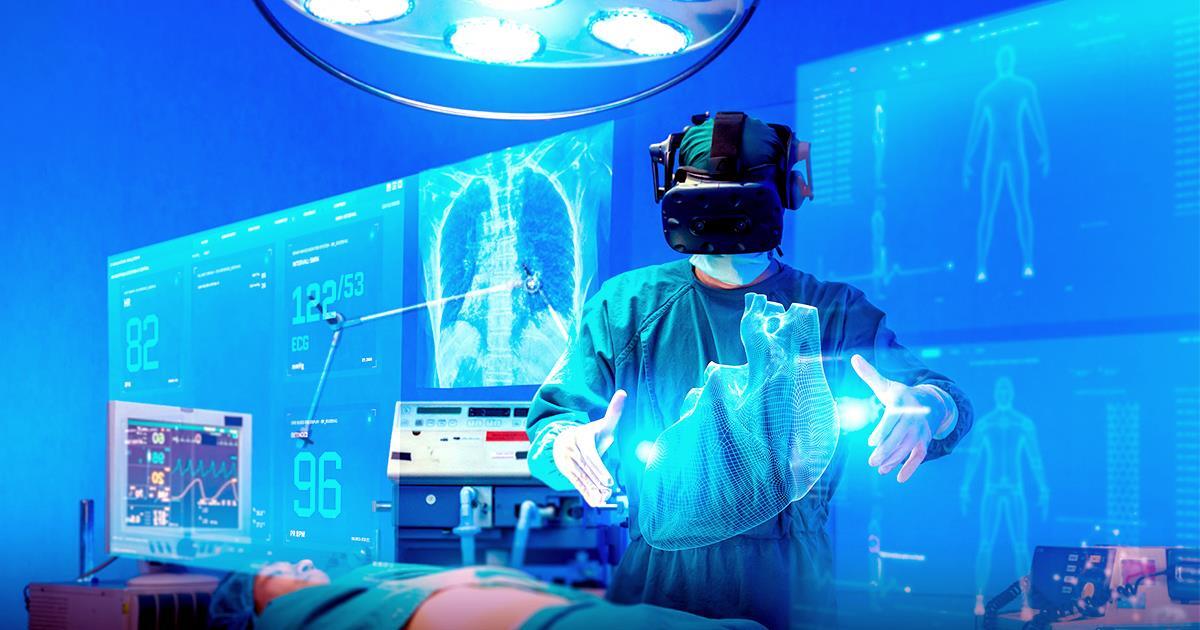
Medicine: HPC is used to help develop cures for diseases like diabetes, or to enable faster and more accurate diagnosis methods, such as cancer screening techniques.
Science: HPC is used by scientists at universities and research institutes to understand the formation of our universe, conduct research into particle physics, or simulate and predict climate and weather patterns.
Media & Entertainment: HPC solutions such as render farms can be used to render animations and special effects, edit feature films, or livestream special events globally.
Artificial Intelligence: A particular subset of HPC that is currently very popular is machine learning, which is used to develop a myriad of artificial intelligence applications, such as generative AI, self-driving vehicles, facial recognition software, speech recognition and translation, or drone technology.
Oil and Gas: HPC is used to process data such as satellite images, ocean floor sonar readings, etc., in order to identify potential new deposits of oil or gas.
Financial Services: HPC is used to track stock trends and realize algorithmic trading, or analyze patterns to detect fraudulent activity.
Medicine: HPC is used to help develop cures for diseases like diabetes, or to enable faster and more accurate diagnosis methods, such as cancer screening techniques.
How is GIGABYTE helpful?
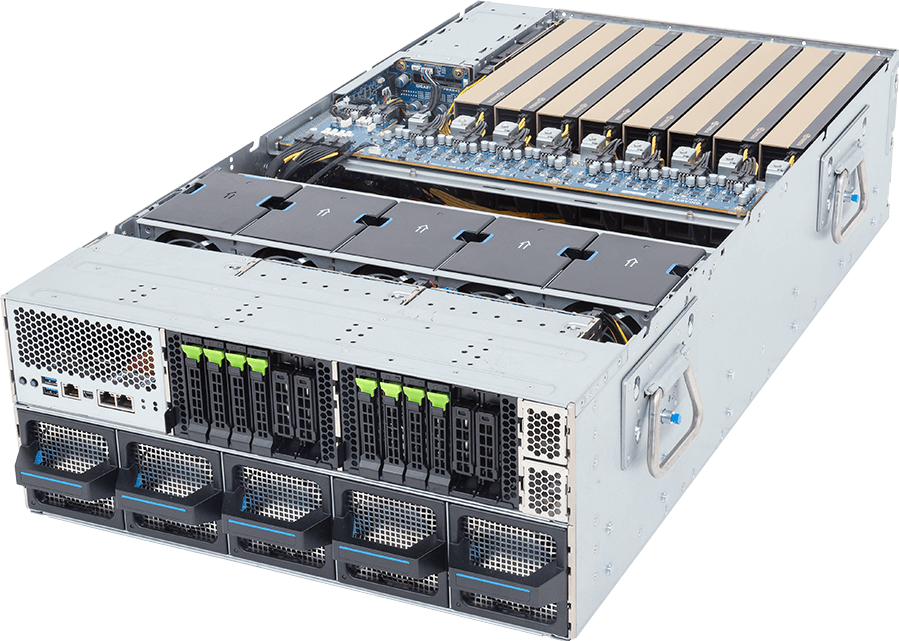
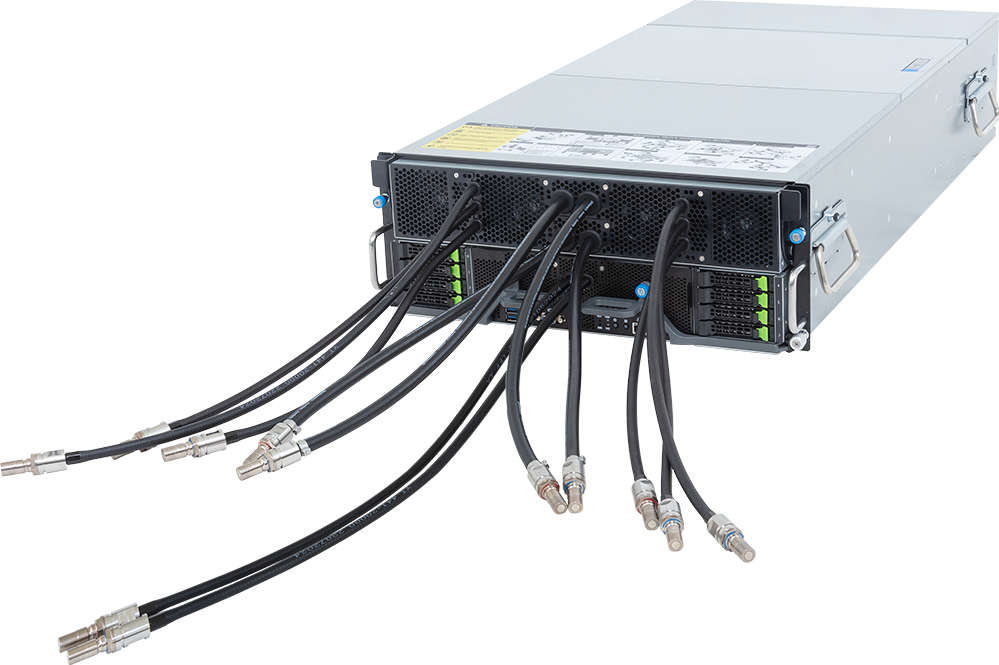
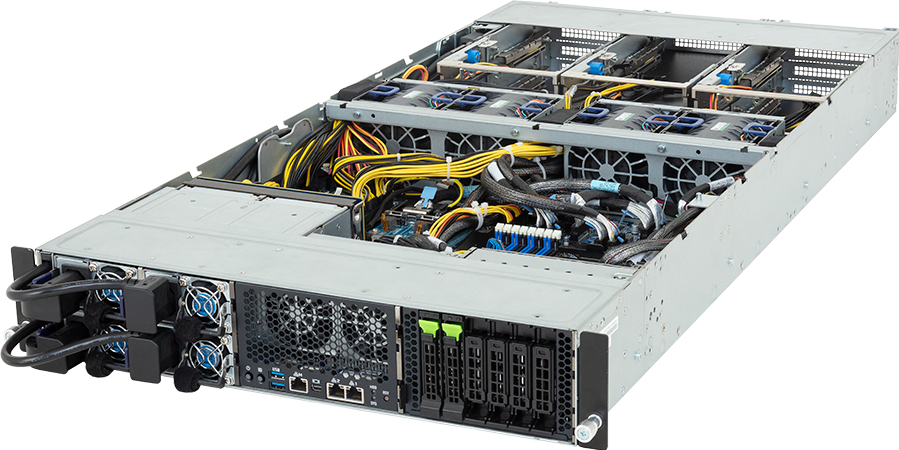
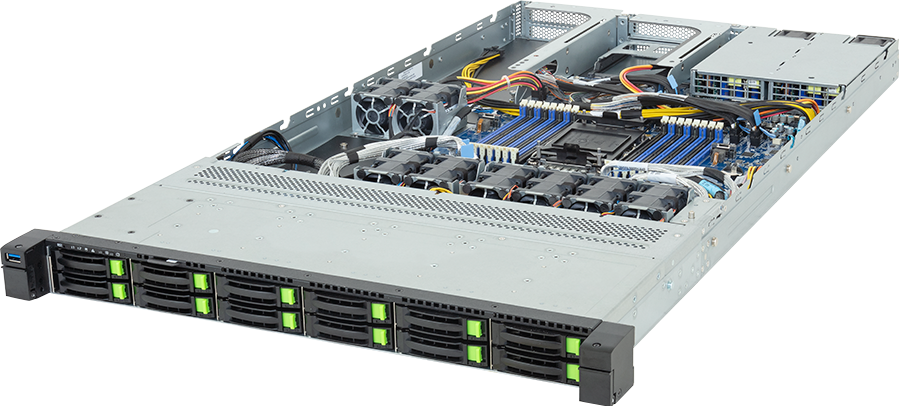
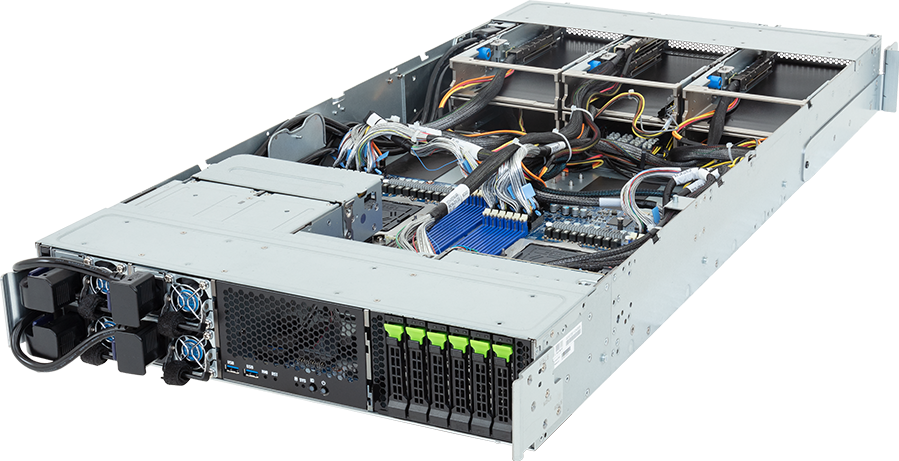
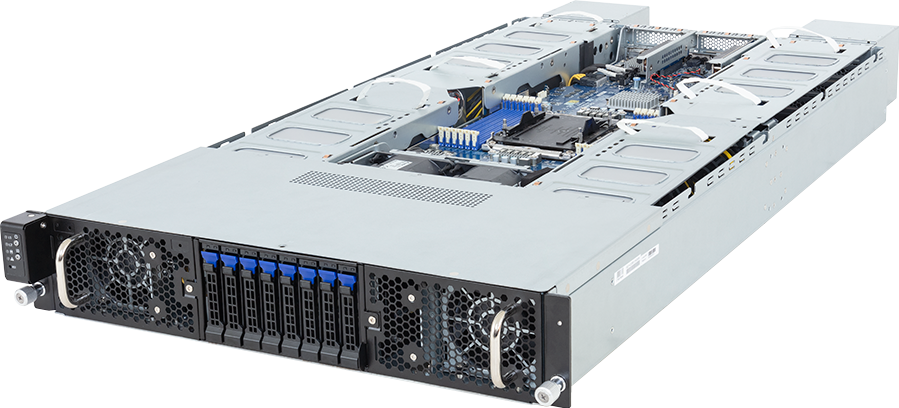
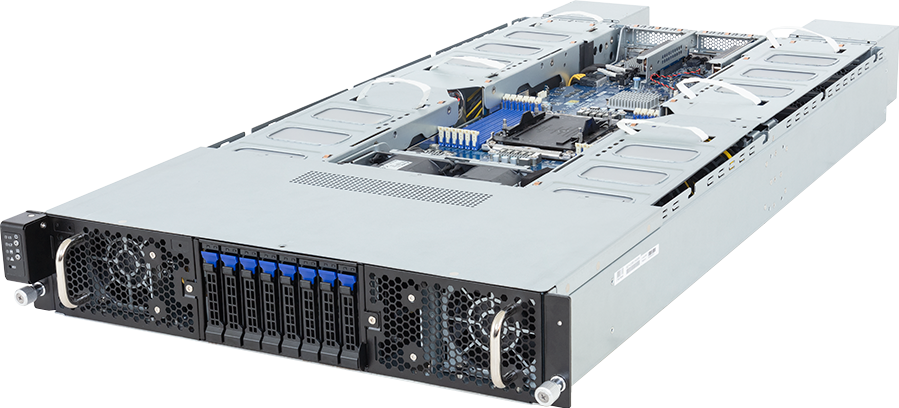
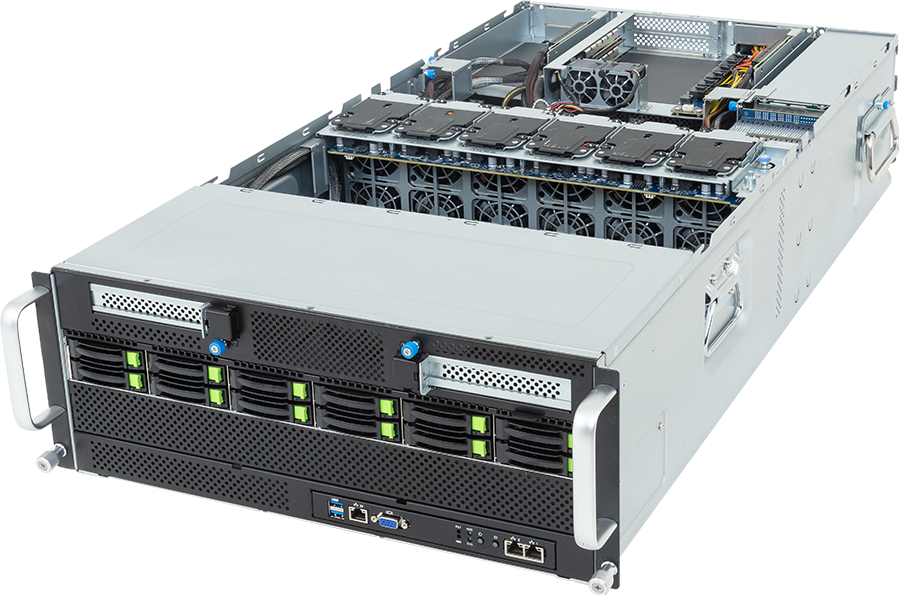
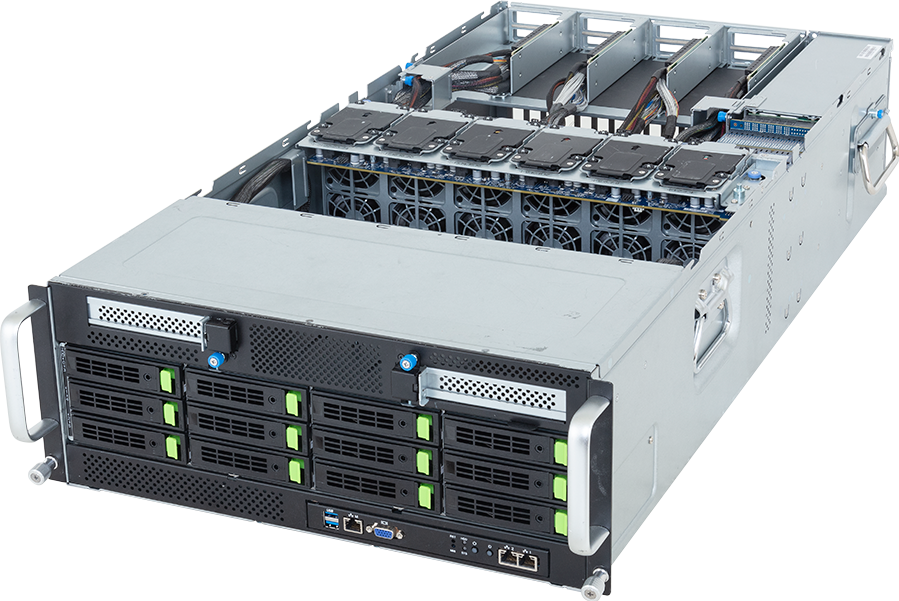
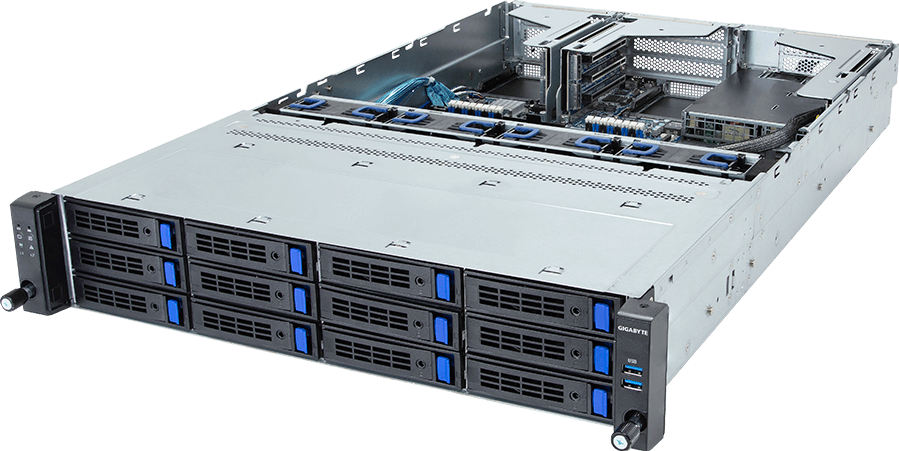
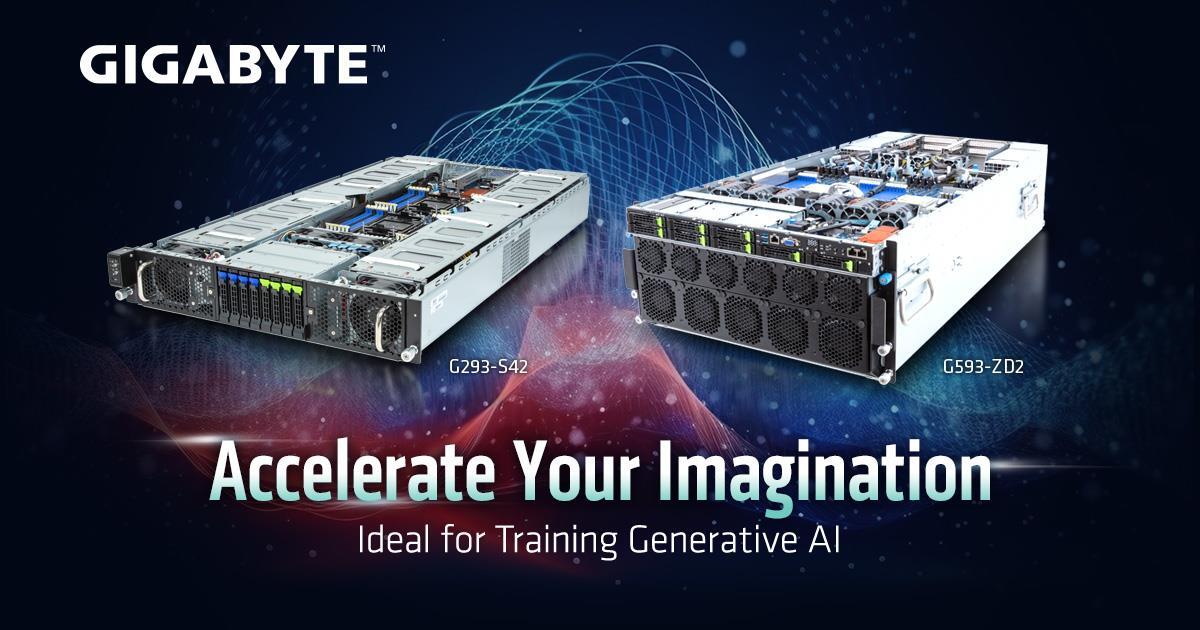
GIGABYTE Technology offers a comprehensive line of HPC Servers, which comprise H-Series High Density Servers, G-Series GPU Servers, R-Series Rack Servers, and more. These solutions are optimal for HPC applications because they provide impressive computing power in chassis with sizes ranging from 1U to 5U. The servers can be linked into a cluster via interconnects such as Ethernet, Infiniband, or Omni-Path.
An example of GIGABYTE's HPC server solution is the H263-Series, which support NVIDIA's Grace Superchip or Grace Hopper architecture. The G593-Series integrates NVIDIA HGX H100 8-GPU, one of the most powerful computing modules in the world, to create an advanced server solution for AI training. The general-purpose R263-Series is powered by the latest AMD EPYC™ 9004 or 4th Gen Intel® Xeon® CPUs and can be employed for various tasks of the client's choosing.
An example of GIGABYTE's HPC server solution is the H263-Series, which support NVIDIA's Grace Superchip or Grace Hopper architecture. The G593-Series integrates NVIDIA HGX H100 8-GPU, one of the most powerful computing modules in the world, to create an advanced server solution for AI training. The general-purpose R263-Series is powered by the latest AMD EPYC™ 9004 or 4th Gen Intel® Xeon® CPUs and can be employed for various tasks of the client's choosing.