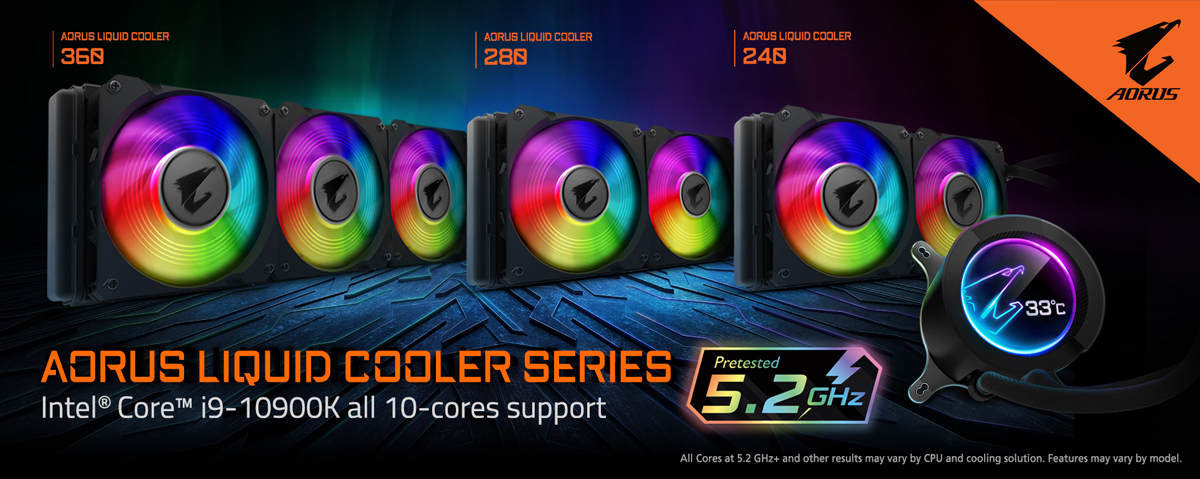
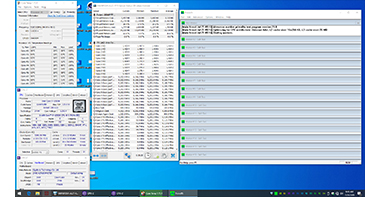
Taipei, Taiwan, July 1st, 2020 – GIGABYTE TECHNOLOGY Co. Ltd, a leading manufacturer of motherboards graphics cards, and hardware solutions, today announced the whole AORUS LIQUID COOLER Series can support Intel® i9 10900K CPUs running at all cores 5.2GHz and pass the long-period burning test of Prime95 benchmark with super high loading. This proves that the superior quality and performance of AORUS LIQUID COOLER not only provide optimized overclocking ability to enthusiast using Intel Z490 platform with Intel® Core™ i9 10900K processors, but also bring general users ultra cool, ultra performance, and ultra durable experience.
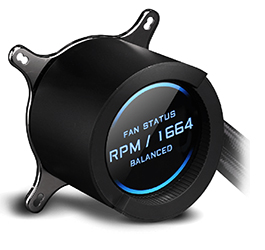
“AORUS LIQUID COOLER met with praise right after released. Following the verification of AMD Ryzen™ Threadripper™ 3990X on 360 models, this time the whole series pass the heavy loading burning test and overclocking with Intel® Core™ i9 10900K CPUs at all cores 5.2GHz, has further testified the quality of AORUS LIQUID COOLER and the efforts of GIGABYTE engineers. “said Jackson Hsu, Director of the GIGABYTE Channel Solutions Product Development Division. “The success under the heavy loading test shows it’s more than enough for general use. In addition to the durability, superior performance, and high capacity, the LCD display and RGB lighting design of AORUS LIQUID COOLER provide users a controllable system and unique system style which can be synchronized with peripherals.
Multicore CPUs are the norm for latest high-end builds, but faster clock speeds can generate excess heat which slows performance. AORUS LIQUID COOLER is designed specifically to handle the heat generated by latest generation CPUs. With an Asetek Gen6 Pump and AORUS special designed fans that deliver ultra-efficient and silent cooling, CPUs can run fluidly even under high frequency and heavy loads.
For more information on GIGABYTE products, please visit the official GIGABYTE website:
https://www.gigabyte.com/Motherboard
*The super high loading burning setting of Prime95 benchmark is over 30 mins. The test result is based on the lab, and the actual result may vary from CPUs, system software and hardware, and environment settings.