Point Cloud
What is a Point Cloud?
In 3D modeling, a point cloud is a set of data points in a 3D coordinate system—commonly known as the XYZ axes. Each point represents a single spatial measurement on the object's surface. Taken together, a point cloud represents the entire external surface of an object. If the RGB value of each point is recorded, color information can also be added to the point cloud. A point cloud is created using a 3D scanner, lidar, or photogrammetry software. It can be converted into the familiar formats of mesh models, CAD models, or NURBS surface models through a process known as surface reconstruction.
Why do you need it?
As more and more things from our everyday lives are copied into the digital realm, point clouds offer a faster way to accurately generate a virtual replication of an existing object. The number of possible applications are endless. Here are a few examples:
Education & entertainment: A real-world location, such as Buckingham Palace or the Great Wall of China, can be scanned and recorded as point cloud data. A render farm can be used to create an exquisitely detailed digital model, which can be used in a feature film for special effects, or to conduct virtual tours for online visitors.
Preservation & restoration: Historical monuments need not vanish into the sands of time. Point clouds can be used to record them for prosperity, or even restore them after an unfortunate accident. Such was the case of Notre-Dame de Paris: after a fire damaged it in 2019, a point cloud consisting of a billion data points was consulted to help with restoration efforts.
Safety inspections: Another way to use point clouds that is coming into vogue is safety inspections during a construction project. At key milestones of the project, a point cloud can be created to check if builders are precisely following the architect's blueprint. These records can be consulted if there are problems with the building in the future.
Autonomous vehicles: These self-driving cars of the future rely on sensors to collect point cloud information. This will help develop machine learning and deep learning algorithms, which in turn will make ADAS technology more sophisticated, until complete automation is achieved.
Education & entertainment: A real-world location, such as Buckingham Palace or the Great Wall of China, can be scanned and recorded as point cloud data. A render farm can be used to create an exquisitely detailed digital model, which can be used in a feature film for special effects, or to conduct virtual tours for online visitors.
Preservation & restoration: Historical monuments need not vanish into the sands of time. Point clouds can be used to record them for prosperity, or even restore them after an unfortunate accident. Such was the case of Notre-Dame de Paris: after a fire damaged it in 2019, a point cloud consisting of a billion data points was consulted to help with restoration efforts.
Safety inspections: Another way to use point clouds that is coming into vogue is safety inspections during a construction project. At key milestones of the project, a point cloud can be created to check if builders are precisely following the architect's blueprint. These records can be consulted if there are problems with the building in the future.
Autonomous vehicles: These self-driving cars of the future rely on sensors to collect point cloud information. This will help develop machine learning and deep learning algorithms, which in turn will make ADAS technology more sophisticated, until complete automation is achieved.
How is GIGABYTE helpful?
As can be imagined, a point cloud may consist of millions, or even billions of data points. For example, the point cloud of the nearly 400-year-old State Temple of the Martial God in Tainan, Taiwan is composed of a billion points. Powerful processors and state-of-the-art parallel computing capabilities are necessary to work with large-scale point clouds on a regular basis.
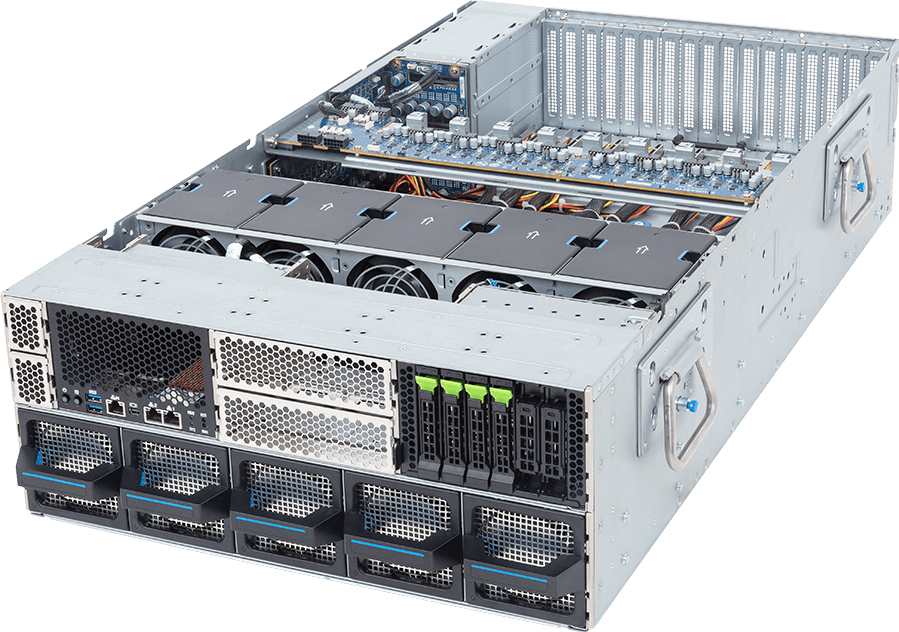
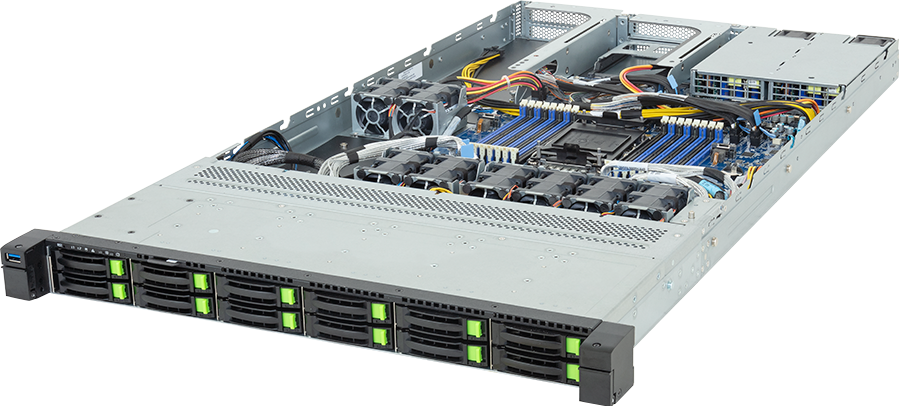
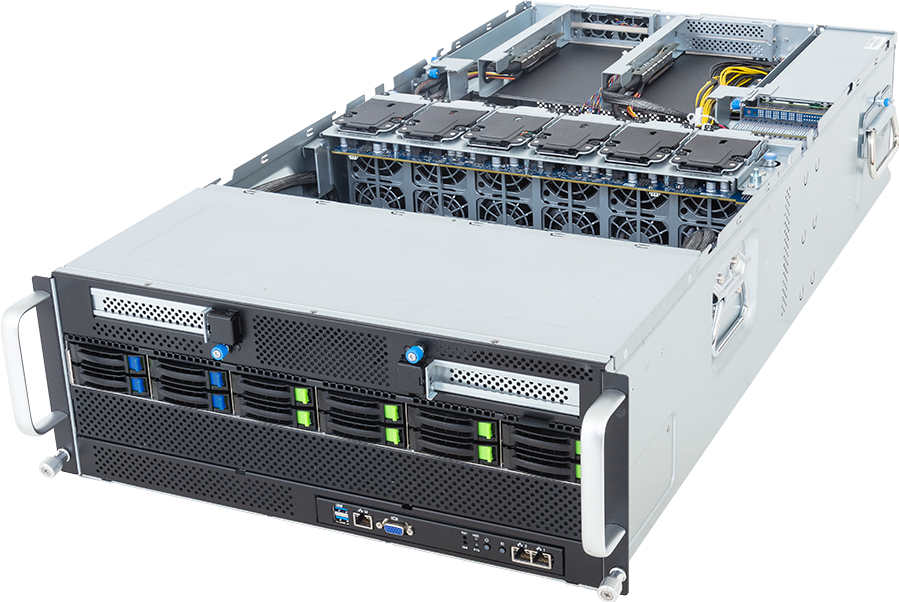
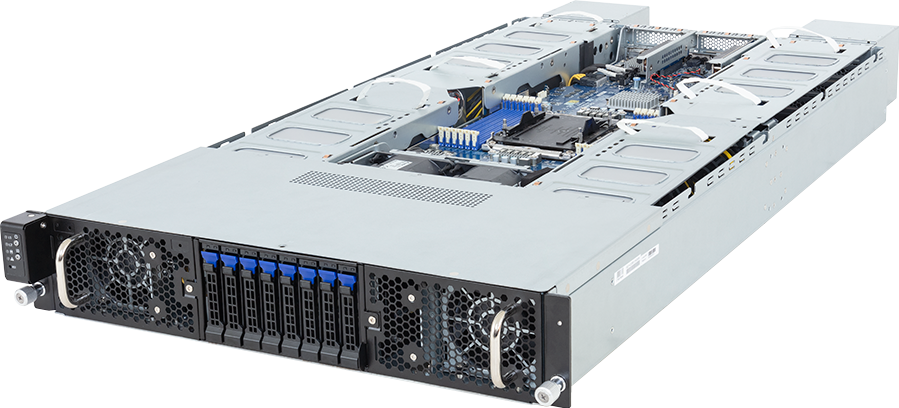
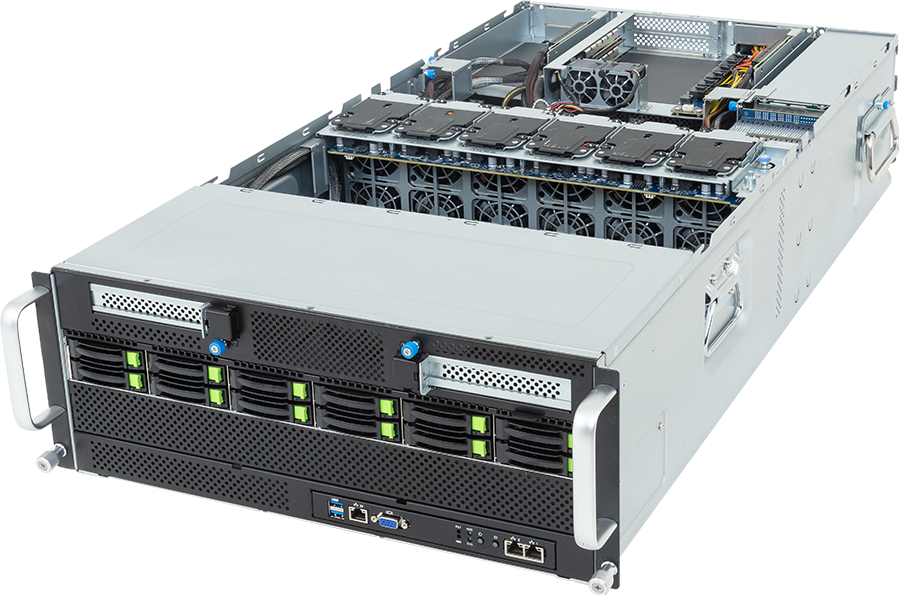
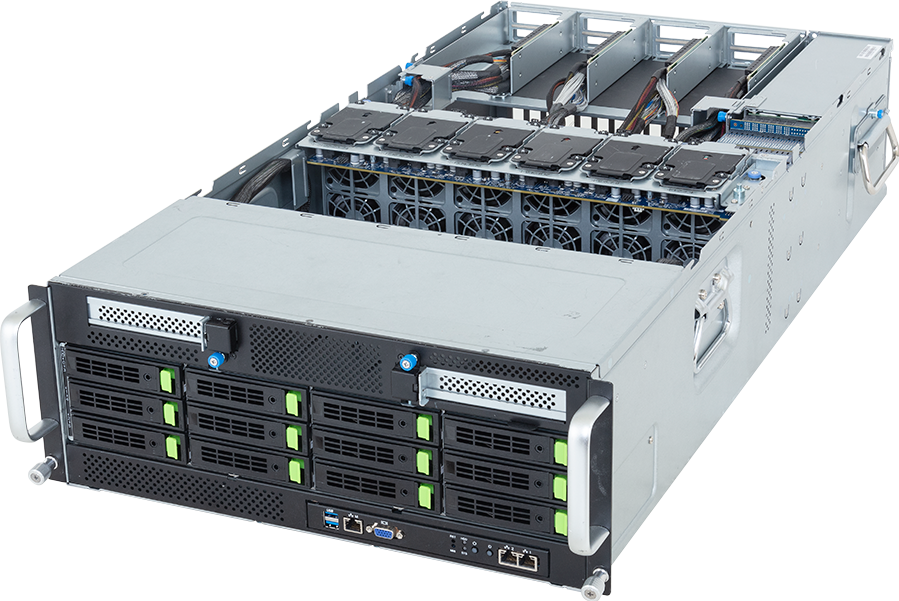
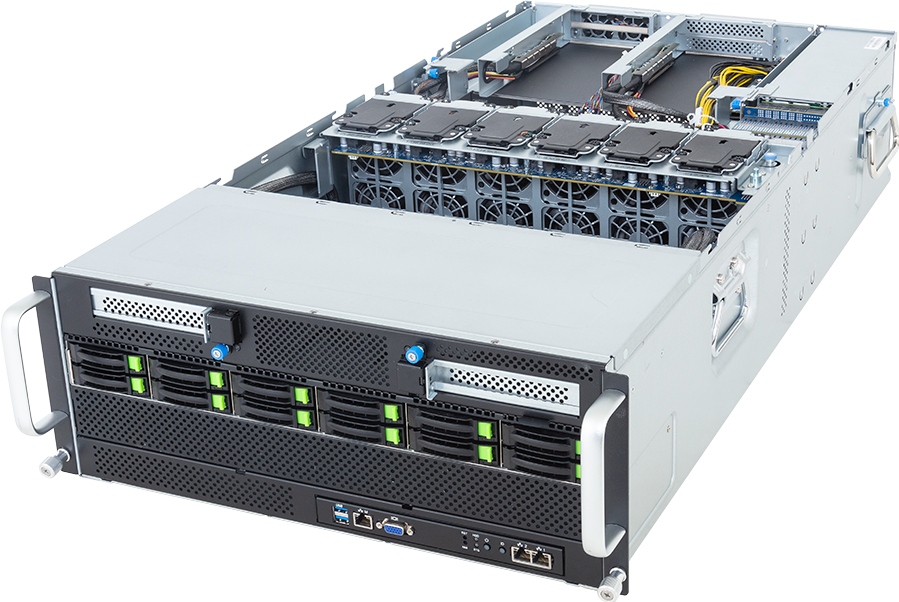
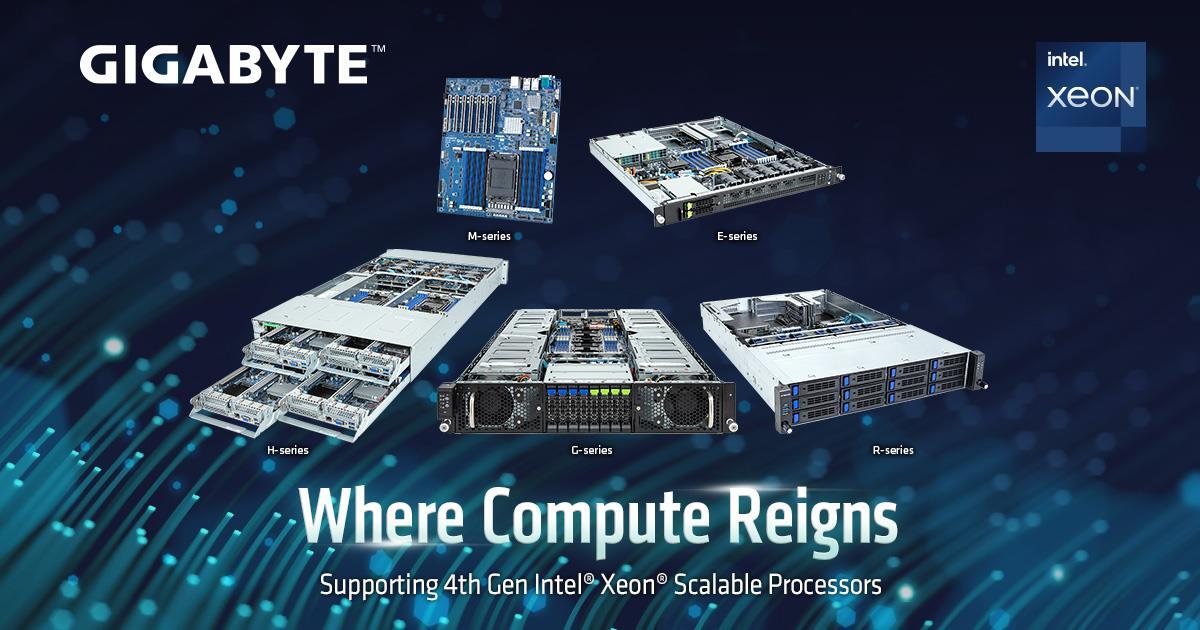
This is where GIGABYTE comes in. GIGABYTE's G-Series GPU Servers lead the industry with some of the densest configuration of GPU accelerators on the market, making it a breeze to perform complex calculations and process large amounts of data through parallel computing. Taiwan's National Center for High-performance Computing (NCHC) selected GIGABYTE's 1U 4-node G191-H44 and 4U 8-node G481-S80 to build their cloud-based render farm, which also provides point cloud calculation services. The G481-S80 boasts high-density parallel computing capabilities, while the G191-H44 is noted for its low-latency, excellent internet connectivity, and compatibility with 5G network infrastructure. Both servers were rigorously tested to ensure their performance and stability in high stress scenarios, such as when dozens of users simultaneously log in to process a 4K high-definition video.
This is where GIGABYTE comes in. GIGABYTE's G-Series GPU Servers lead the industry with some of the densest configuration of GPU accelerators on the market, making it a breeze to perform complex calculations and process large amounts of data through parallel computing. Taiwan's National Center for High-performance Computing (NCHC) selected GIGABYTE's 1U 4-node G191-H44 and 4U 8-node G481-S80 to build their cloud-based render farm, which also provides point cloud calculation services. The G481-S80 boasts high-density parallel computing capabilities, while the G191-H44 is noted for its low-latency, excellent internet connectivity, and compatibility with 5G network infrastructure. Both servers were rigorously tested to ensure their performance and stability in high stress scenarios, such as when dozens of users simultaneously log in to process a 4K high-definition video.