uCPE

What is it?

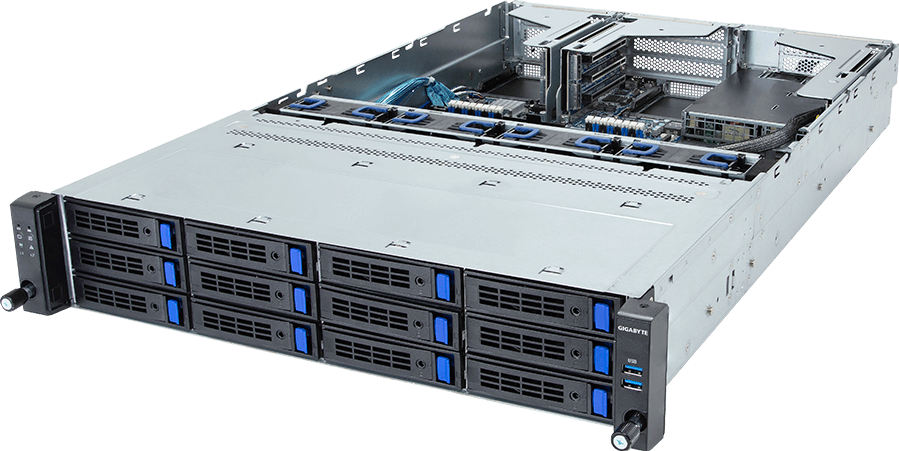
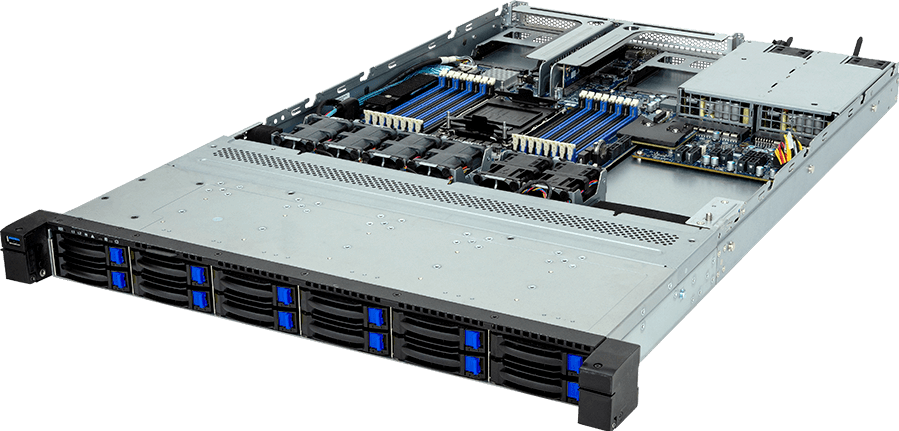
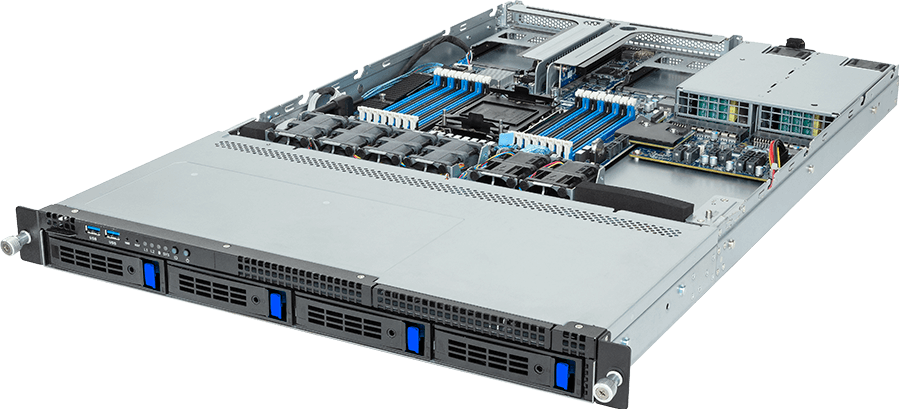
Universal Customer Premises Equipment (uCPE) is a general purpose “white box” networking device, usually distributed by a telecommunications or networking service provider and located at the customer edge (such as a branch office or house), hence the name “Customer Premises Equipment”. The uCPE uses software to run Virtualized Network Functions (VNFs) and replaces traditional hardware-based Customer Premises Equipment (CPE). A uCPE running VNF as software can be used to deliver network connectivity, management and security functionality (such as a router or firewall), create SD-WANs (Software-Defined Wide Area Networks) or support any other type of networking function that can be virtualized, hence the name “Universal”.

Why do you need it?

Traditionally, telecommunications and networking services have been provided to customers with specialized hardware devices that perform dedicated network functions (such as a router, firewall, WAN accelerator or wireless LAN controller). For each function, the service provider needs to source, configure, install, test and maintain a separate device at the customer premises, which is not only time and resource consuming, but also expensive.

A uCPE allows for all these different functions to be deployed on a single, standard hardware device. And once it has been delivered and installed at the customer’s premises, new networking services or functionality can be delivered to the customer on demand as they are developed, without needing to send a technician to install a new piece of hardware or remove an old one. This is because these functions are all now software-based, and can be virtually deployed and updated, helping reduce both capital (CAPEX) and operating expenditure (OPEX) for the network operator, who can then pass on these cost savings to the customer.
Recommended Reading

5G MEC Networking Platform

5G MEC Networking Platform

A MEC (Multi-access Edge Computing / Mobile Edge Computing) platform based on GIGABYTE's server hardware provides an effective way to support a new generation of 5G services such as eMBB for high bandwidth content streaming, URLLC for autonomous driving or mMTC for a smart city IoT network
GIGABYTE will enable your solutions of tomorrow and bring smart to life
Article

GIGABYTE will enable your solutions of tomorrow and bring smart to life

Seize New Business Opportunities with Practical Applications of 5G
Article

Seize New Business Opportunities with Practical Applications of 5G

Recently, 5G communications technology has been frequently talked about in relation to various major industries – it even seems that in order to keep up with technology trends, everything should be connected with 5G! When discussing 5G however, key features such as high bandwidth, low latency and high connection density must definitely be mentioned. As the coming of 5G will revolutionize our future lives, let’s understand more clearly about 5G directly from some real-world examples! And what key role does GIGABYTE play in this next generation communications technology?
Storage Systems are Extremely Important for Business Continuity
Article

Storage Systems are Extremely Important for Business Continuity

In an era of increasing technological advancement, an important issue for enterprises and the key to maintaining business continuity is how to prevent important data from being accidentally lost due to human error, deliberately deleted or even stolen.
5G MEC Networking Platform

5G MEC Networking Platform

Quick Access and Easy Deployment Solution for 5G Infrastructure
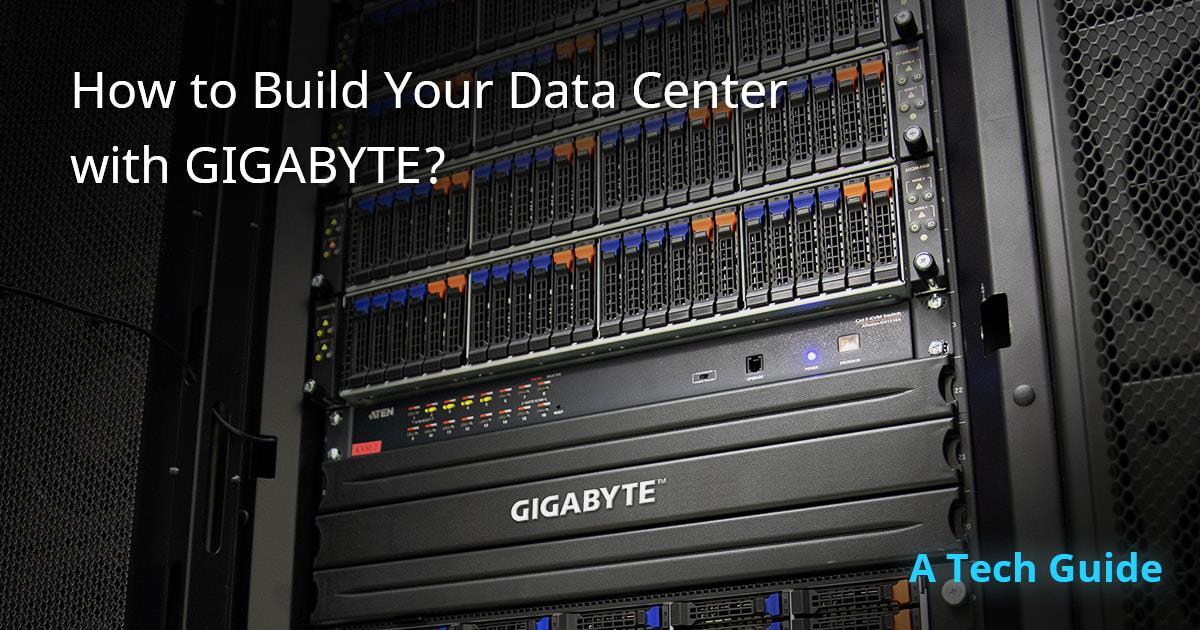
How to Build Your Data Center with GIGABYTE? A Free Downloadable Tech Guide
Article

How to Build Your Data Center with GIGABYTE? A Free Downloadable Tech Guide

GIGABYTE is pleased to publish our first long-form “Tech Guide”: an in-depth, multipart document shedding light on important tech trends or applications, and presenting possible solutions to help you benefit from these innovations. In this Tech Guide, we delve into the making of “Data Centers”—what they are, who they are for, what to keep in mind when building them, and how you may build your own with products and consultation from GIGABYTE.
Ushering in a New Era of Smart Healthcare Applications with 5G-based MEC
Article

Ushering in a New Era of Smart Healthcare Applications with 5G-based MEC

A new epoch of smart medicine has been made possible with the proliferation of 5G. Healthcare has advanced from the treatment of symptoms to the early detection of disease and the tracking of each individual’s condition. GIGABYTE Technology offers the highly scalable, high-density E-Series Edge Servers for edge computing; by working with Alpha Networks Inc., GIGABYTE has brought the benefits of multi-access edge computing (MEC) to wearable devices and other Internet of Things (IoT) applications that will help to realize the vision of smart medicine. The compilation of big data, coupled with the low-latency characteristics of MEC, allow for faster data integration and analysis that will help healthcare providers offer customized, predictive care for their patients.
Broadcom Add-on Card Solutions

Broadcom Add-on Card Solutions

Alternatives to a complete upgrade in storage and networking
The Data Revolution in AI Factories: Driving High-Speed Networking Forward
Article

The Data Revolution in AI Factories: Driving High-Speed Networking Forward

Generative AI is accelerating the evolution of traditional data centers into next-generation AI Factories - massive, high-performance infrastructures purpose-built for intelligent workloads. In our first article, 《Ready or Not? The Era of AI Factory Has Arrived! AI Factory Era》, we introduced how GIGABYTE is redefining AI infrastructure with a holistic approach to reengineering AI infrastructure, enhancing compute performance, cooling efficiency, and system management. The second article, 《Revolutionizing the AI Factory: The Rise of CXL Memory Pooling》, highlighted that beyond powerful compute and memory, AI factories also demand reliable and ultra-fast data transmission. In this third installment, we focus on the backbone of AI infrastructure: high-speed networking. From single server interconnects to full-scale data center topologies, we’ll explore how cutting-edge transmission technologies enable massive GPU clusters, unlock seamless scalability, and power the AI workloads of tomorrow.