vEPC (Virtual Evolved Packet Core)
What is vEPC (Virtual Evolved Packet Core)?
A Virtual Evolved Packet Core (vEPC) is a framework for mobile networks' voice and data processing and switching that is implemented by Network Functions Virtualization (NFV), which virtualizes the functions of an Evolved Packet Core (EPC). The vEPC framework has been in use for 4G LTE mobile networks and will also form a key part of upcoming 5G network architecture.
1G mobile networks utilized voice functions only. 2G and 3G network architectures processed and switched voice and data through two separate sub-domains, complicating network management and restricting functionality for the end user. 4G introduced EPC, unifying voice and data on the same backbone Internet Protocol (IP) service architecture, allowing "always on" internet connectivity for mobile users and simplifying management for mobile network operators.
However, implementing an EPC required expensive proprietary hardware & software infrastructure. Network Functions Virtualization moves the functions of the EPC to the software domain and allows it to be run on low-cost Commercial Off-The-Shelf (COTS) servers.
Why you need vEPC ? Who needs it?
By virtualizing Evolved Packet Core (EPC) functionality, mobile providers can theoretically customize networks to meet the unique requirements of individual customers, mixing and matching individual network components as needed. vEPC can also lower CAPEX and OPEX by reducing reliance on specialized hardware, while speeding up service delivery, and allowing for on-demand scalability and responding to real-time network conditions and user needs.
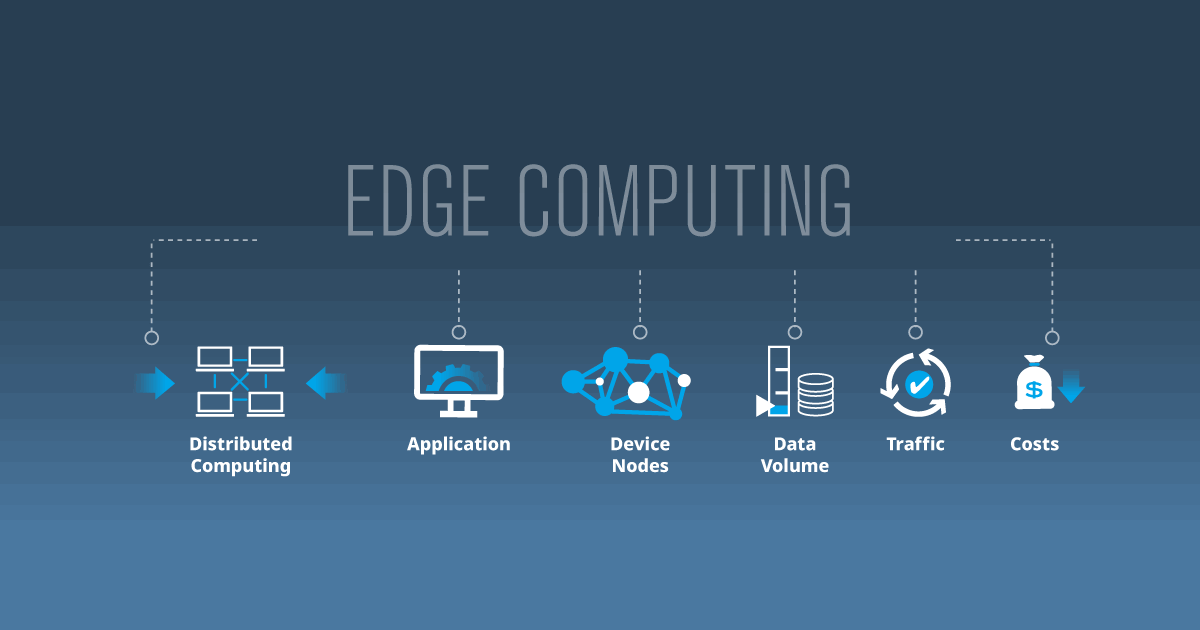
The vEPC framework shall form a key component of upcoming 5G network architectures being planned or implemented worldwide, and supporting associated platforms such as MEC (Multi-access Edge Computing).
How is GIGABYTE helpful?
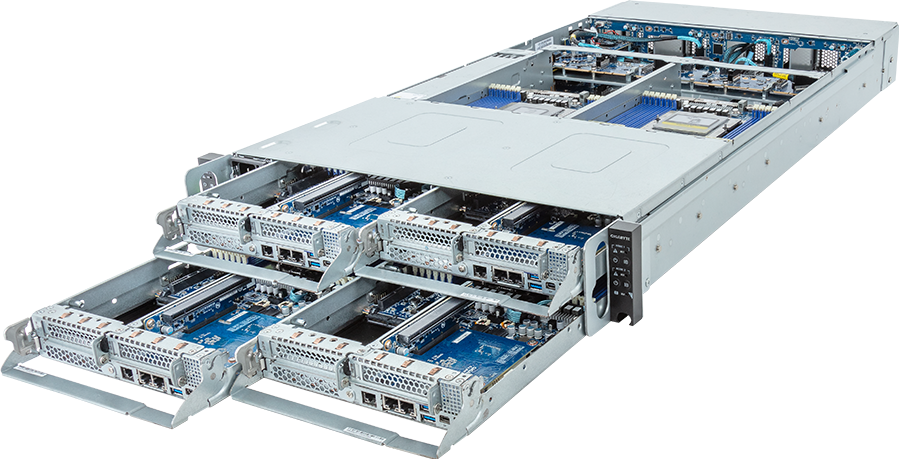
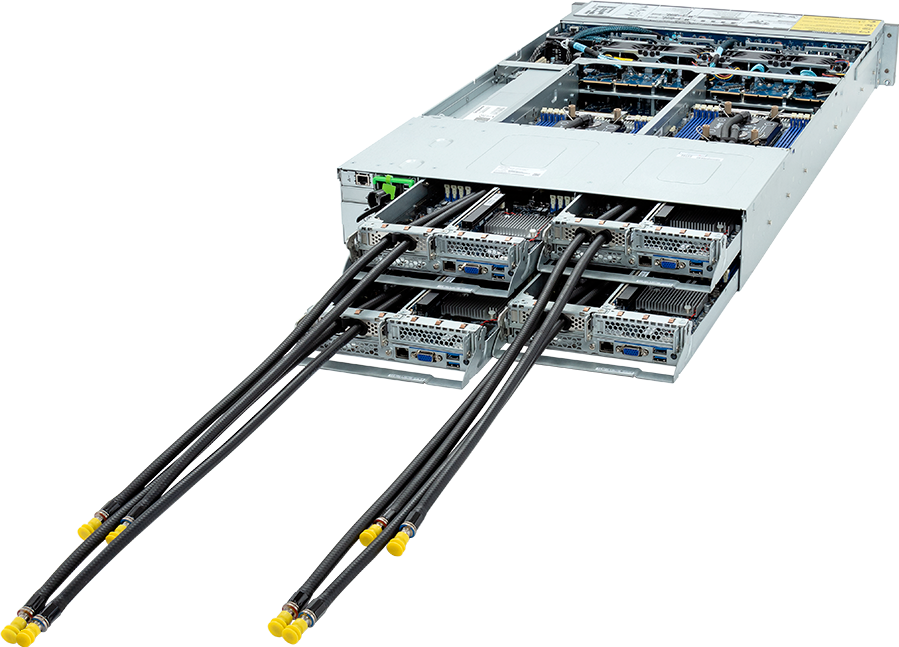
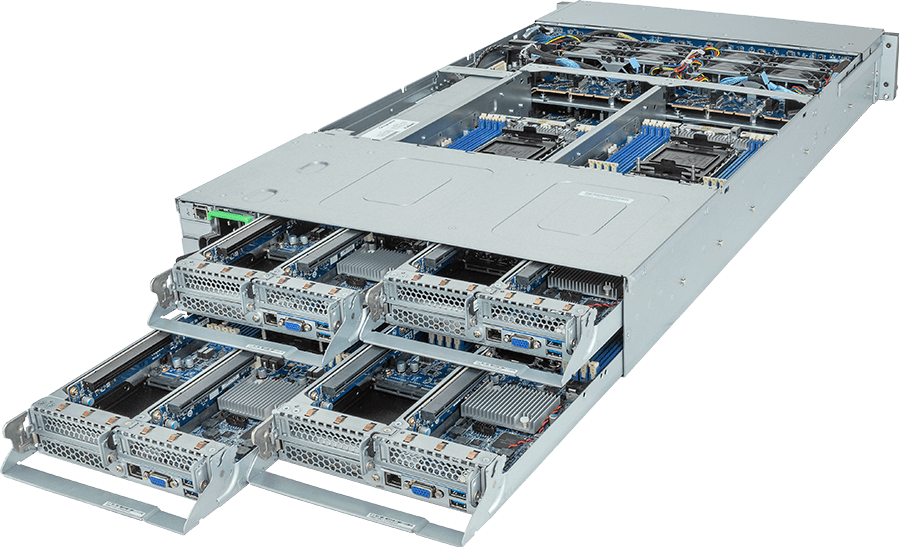
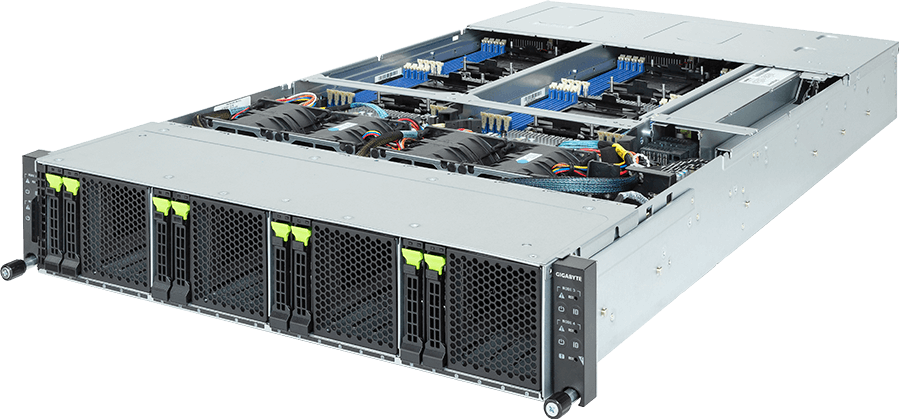
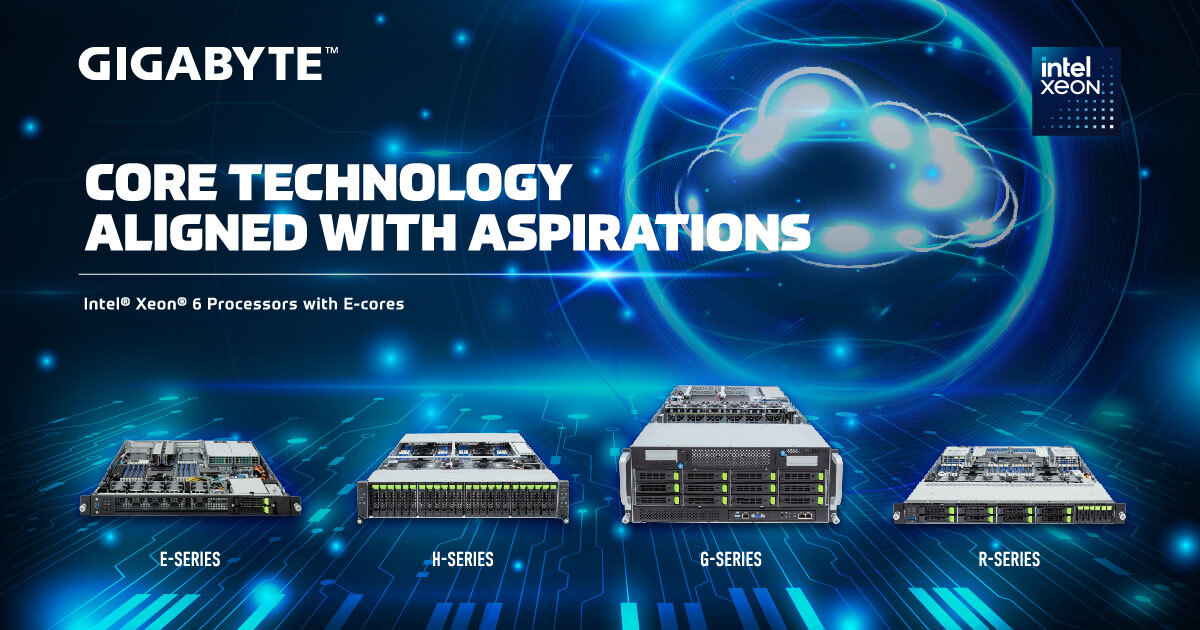
GIGABYTE's H281-PE0 is an ideal COTS to be utilized as the hardware base for a vEPC server. The H281-PE0 combines a 2U 4 node CPU density optimized architecture with an industry leading number of expansion slots, with 3 x low profile PCIe Gen3 x16 slots and 1 x OCP mezzanine slot per node available, allowing up to 14 networking ports (1GbE / 10GbE / 25GbE / 40Gbe / 100GbE) per node / 56 networking ports per 2U chassis.