
Be More with Artificial Intelligence
Explore GIGABYTE's AI portfolio and achieve new milestones in your AI journey.

·
Rethink Your World with AI
GIGABYTE helps you make the most of AI by transforming cutting-edge computing power into purpose-built platforms that evolve alongside your AI goals. From AI infrastructure to industry-specific solution portfolios, from AI that boosts productivity to AI that enriches creativity and entertainment, GIGABYTE is committed to advancing AI everywhere, for the benefit of everyone.

Gen AI Accelerates Discovery
Generative AI powered by deep learning can uncover patterns and connections that spur breakthroughs in computer science, mathematics, medicine, and beyond.

AI Agents Improve Productivity
Agentic AI frameworks can brainstorm solutions and act on them with minimal human intervention, amplifying the synergistic output of an AI-empowered workforce.
Sovereign AI Ensures Autonomy
Control over AI infrastructure fosters an ecosystem where local investment can translate into world-class AI products, while also broadening participation in the AI economy.
AI Infrastructure: The Groundwork for Success
Building new infrastructure is an opportunity to align your investment with your AI ambitions. GIGABYTE can craft the optimal launchpad for your AI strategy, with solutions ranging from GIGABYTE AI Factory Accelerator (GAIFA) for hyperscale AI development and GIGABYTE Accelerated Deployment Unit (GADU) for on-demand AI compute to tailor-made portfolios for key industries.
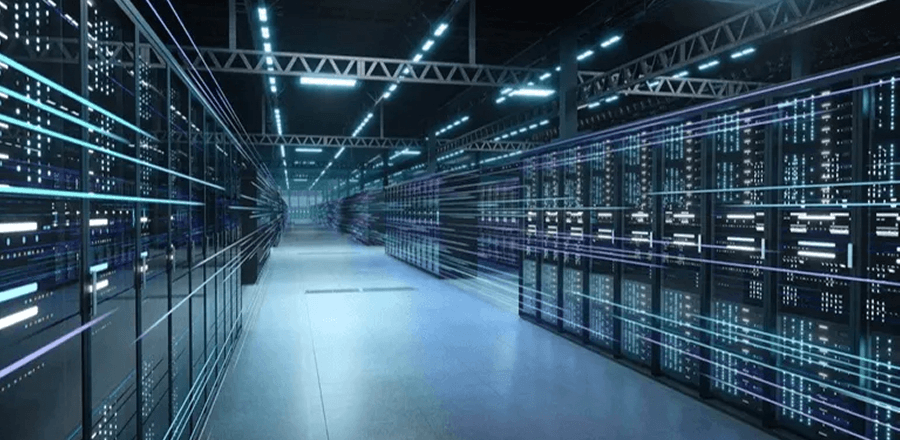
GAIFA: GIGABYTE AI Factory Accelerator
GAIFA is GIGABYTE's self-designed, Taiwan-based AI computing center and a proving ground where customers can validate their AI infrastructure in real time. It embodies a tried-and-true methodology distilled from our years of experience building AI factories, backed by our expansive AI solution portfolio. If you are in the market for hyperscalable AI compute, GAIFA is your number one choice.

One-Stop Data Center Provider
GIGABYTE's end-to-end AI solutions and data center architecture services can simplify deployment, optimize performance, and enhance efficiency for data centers of any scale. From site planning and digital twin-powered blueprinting through hardware and software installation to bringing the facility online to generate value, GIGABYTE can help you get superb returns on your investment.
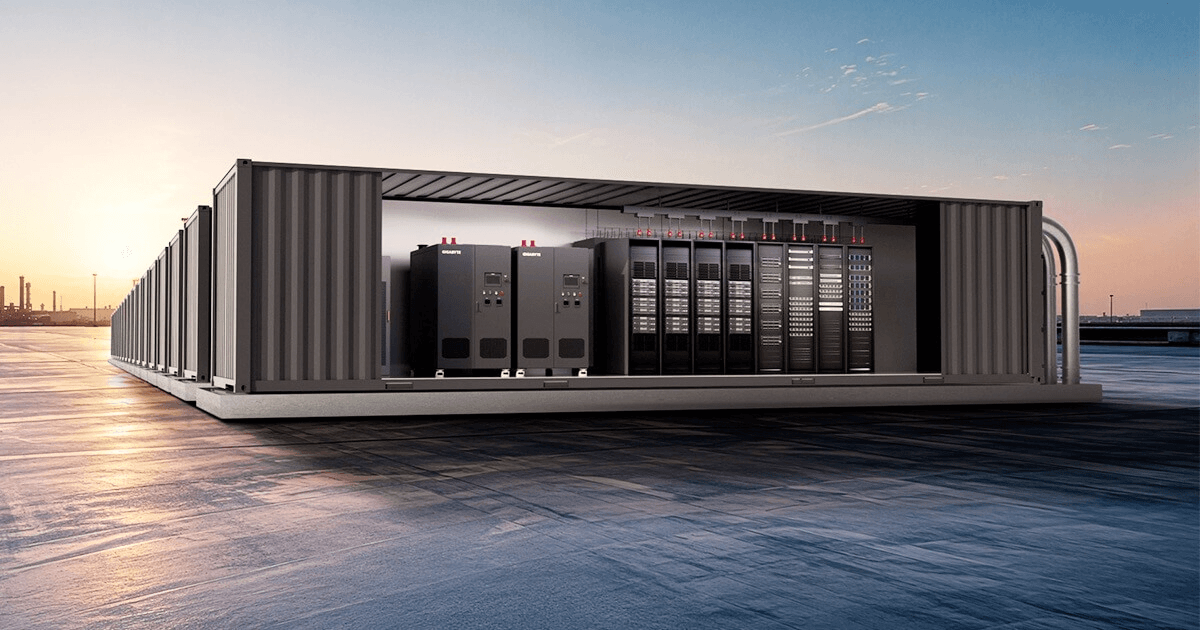
GADU: Accelerated Deployment Unit
If you need to deploy infrastructure quickly or at the network edge, a prefabricated modular data center might be the answer. By setting up your choice of compute platforms and support systems within a containerized environment, GADU can realize AI infrastructure 4x faster than conventional data centers while meeting the requirements for cost-effective, on-premises AI compute.
AI for Telecommunications
From automating network management and improving customer experiences through predictive analytics to creating new revenue streams by renting out excess AI compute as a neocloud service, GIGABYTE equips telcos with the infrastructure, networking, and AIoT innovations needed to navigate the ever-shifting landscape of next-generation communications.
Enterprise AI: Designed for Growth
Your data-to-AI pipeline will deliver higher performance and long-term value if it evolves alongside changing demands. That's why GIGABYTE supplies more than scalable solutions for compute, networking, and storage—we also provide advanced cooling for better sustainability, as well as full-stack software that optimizes hardware performance and outfits you with a complete toolkit for AI development.
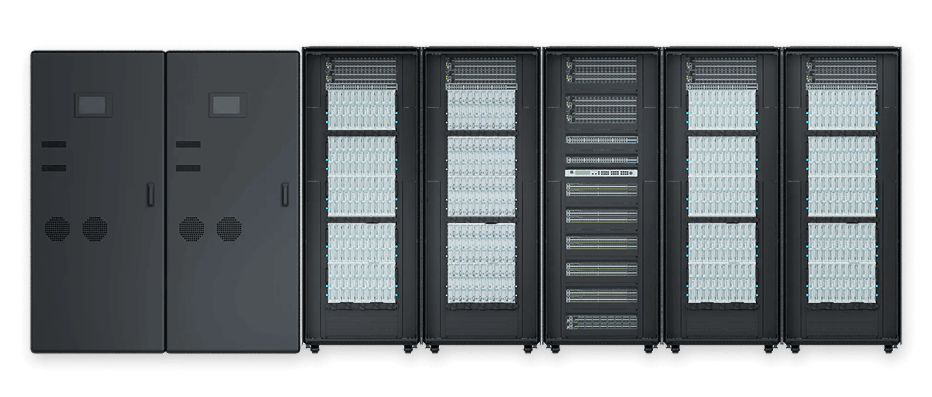
GIGAPOD: POD Scale & Rack Scale
Competing at the forefront of AI requires advanced AI processors and scalable cluster architecture that makes them more than the sum of their parts. GIGABYTE's GIGAPOD combines sophisticated AI compute platforms with storage and networking systems, rounded out with optimized power and cooling. The result is a total solution validated for rapid deployment and seamless data center integration.
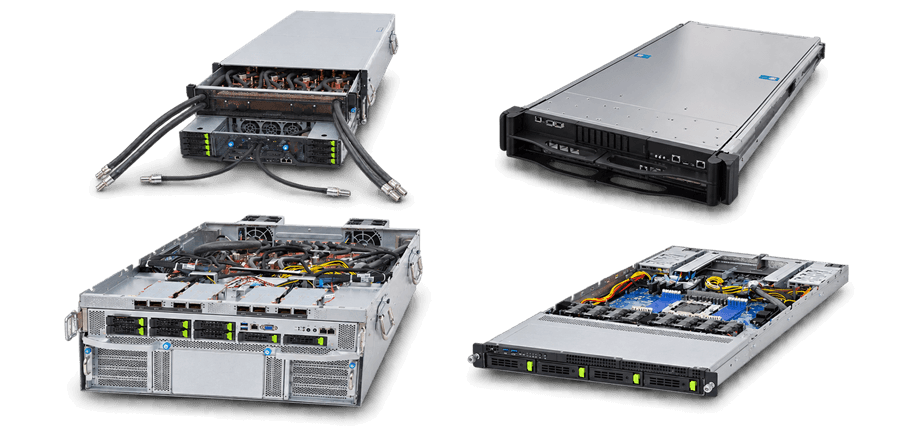
Rackmount Servers & Workstations
Infusing AI compute across your operations can jumpstart smart transformation. GIGABYTE integrates state-of-the-art AI processors into systems designed for diverse deployments, from EIA- and OCP-based rackmounts to workstations. Innovative thermal management further enables these servers to handle demanding AI workloads, such as model training and inference and agentic applications.
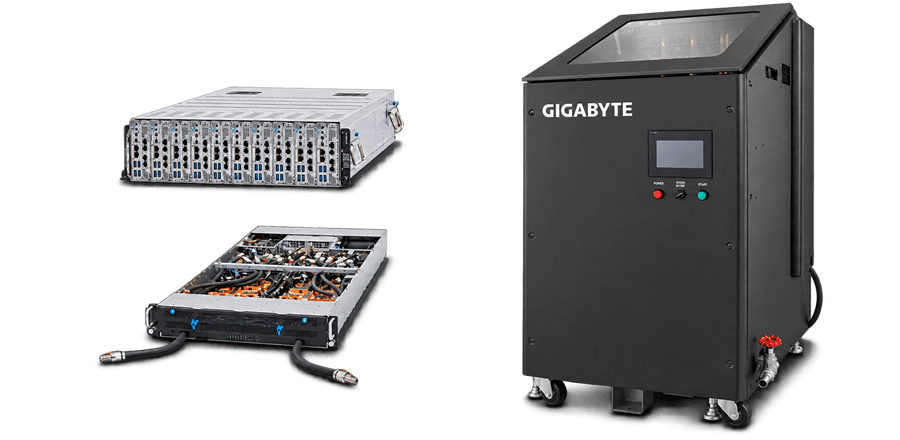
Cooling Solutions for Green Computing
There is mounting demand for sustainable, low-carbon AI compute. GIGABYTE can help you conserve energy with air cooling enhanced by proprietary system design and automation software, direct liquid cooling (DLC) that achieves a heat capture ratio (HCR) of over 92% through integrated manifolds, or immersion cooling capable of delivering power usage effectiveness (PUE) approaching 1.02.
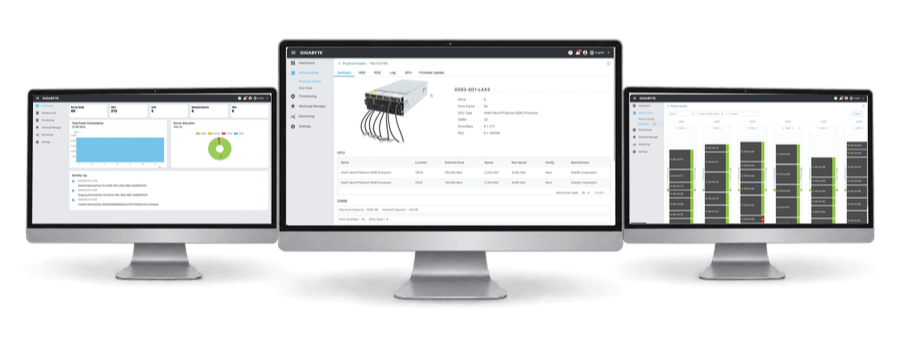
Full-Stack Software Solutions
Choosing the right software can unlock the true potential of your AI assets. GIGABYTE's software stack not only gives you full control over your infrastructure, but also creates an accelerated pipeline from concept formulation to real-world value. Our partnerships with NVIDIA, data storage experts, and cybersecurity leaders bring together the tools you need to streamline AI development.
Physical AI: Artificial Intelligence's Next Frontier
Physical AI differs from traditional automation in that AI models enable machines to perceive, understand, and interact with the world around them—without solely relying on predefined rules and behaviors. GIGABYTE provides both the AI systems used to train these models and the embedded computing platforms that put them into action, opening up a brave new world for robots and other intelligent machines.
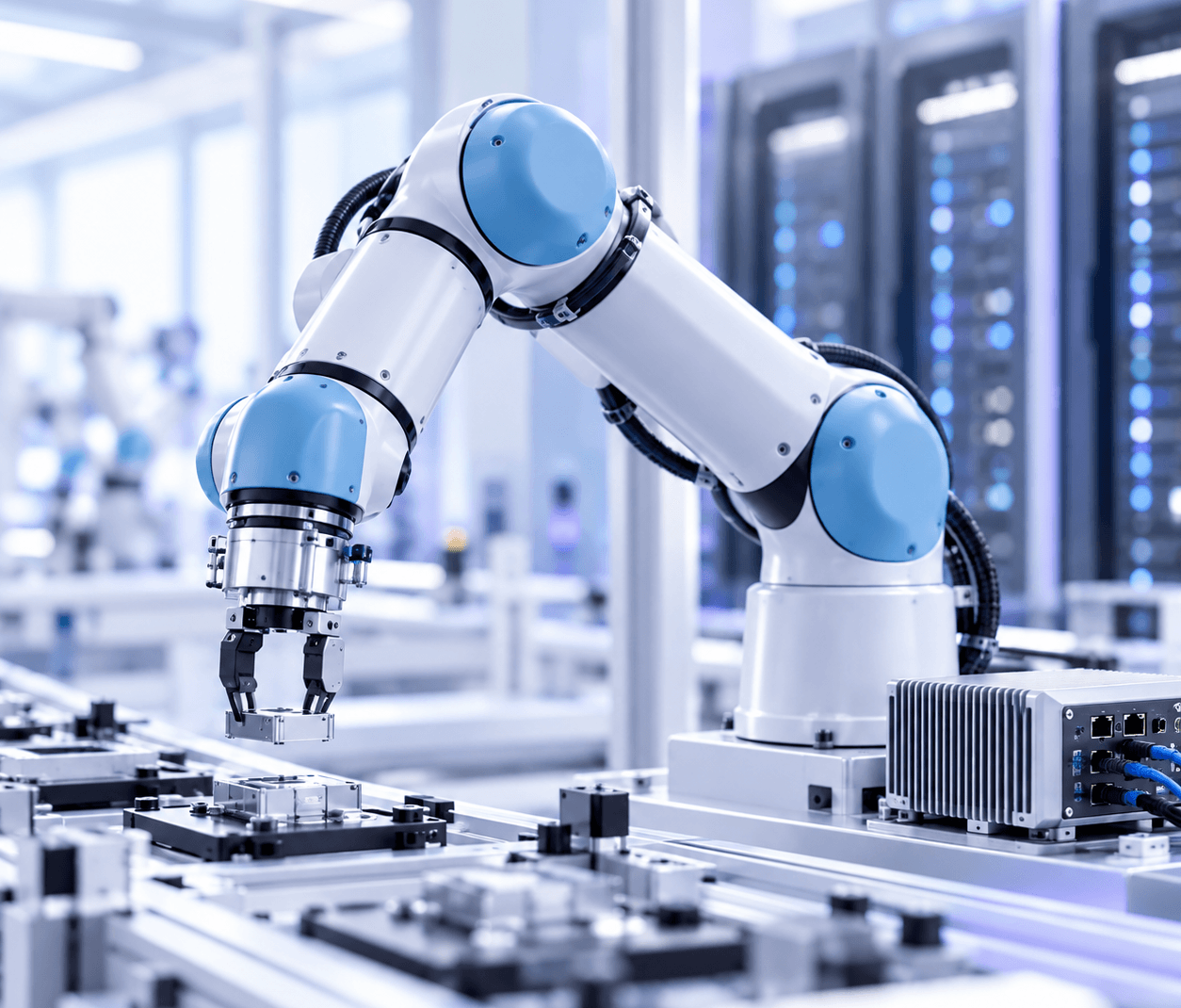
"Big Brain" vs. "Small Brain" Architecture
The models that form the basis of physical AI, the automated workflows that refine them, and the digital twins that provide environments for simulation-based training are all built on systems designed for foundation model development and reinforcement learning at scale. GIGABYTE offers AI solutions that digitize human mastery and transfer it to a new breed of intelligent helpmates.
When deployed in the field, physical AI runs on versatile systems capable of onboard control and real-time decision-making. GIGABYTE and subsidiary GIGAIPC have engineered embedded computing solutions that pair blazing-fast processing with extensive connectivity and rugged durability to power demanding applications in manufacturing, transportation, and beyond.
Edge AI: Powerful, Secure, Self-Sufficient
When AI compute must happen on-premises for reasons of performance and security, GIGABYTE's edge AI solutions bring enterprise-grade processing right to the spot where data is generated. Success stories abound in diverse sectors from smart healthcare to smart transportation, proving that artificial intelligence can be a net positive for society's productivity and quality of life.

Built-In, Plug-and-Play AI Compute
GIGABYTE and subsidiary GIGAIPC present an edge AI portfolio spanning embedded computing, IPCs, and mini-PCs that integrate high-performance AI engines into existing IT infrastructure through flexible connectivity and compact form factors. These solutions can serve as the hub of an AI-enhanced environment and lay the groundwork for the next wave of AI-powered innovations.
Personal AI: Work Smarter, Player Harder
GIGABYTE brings AI to your fingertips with PC products designed for creativity, entertainment, and productivity. Our AI-enabled laptops and PCs combine powerful hardware with proprietary software to deliver an intuitive, personalized AI PC experience. For advanced use cases, our AI TOP series realizes the ideal of local AI development on your desktop—comparable to workstation-class solutions.
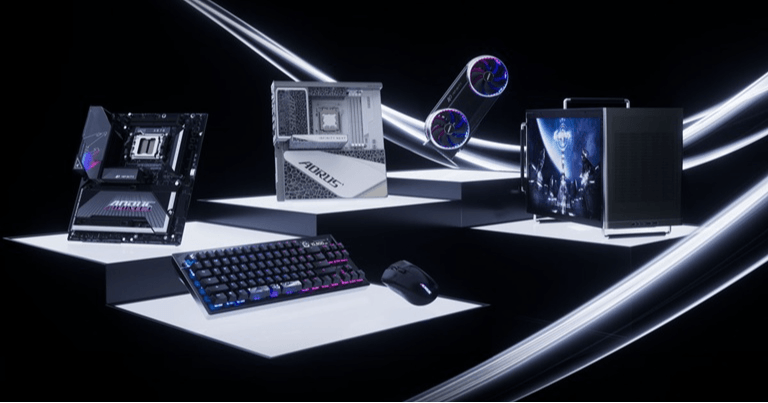
Supercharge Gaming & Creativity
AI is redefining the GIGABYTE PC experience. Get more from every gaming session and creative project with laptops and PCs outfitted with AI tools engineered to enhance performance and ease of use. GIGABYTE laptops with GiMATE take the experience further with a smart AI Mate that responds and adapts to your needs.
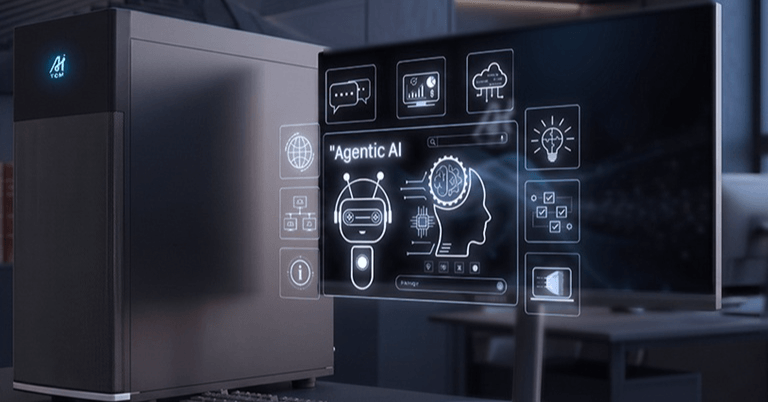
Create Your Own AI on Your Desk
AI TOP is GIGABYTE's total solution for local AI development that lets you run massive AI models with advanced memory offloading while keeping your data secure. AI TOP Hardware encompasses individual components, prebuilt systems, and clustering solutions. AI TOP Utility software perfects the development environment by offering a complete toolkit through an intuitive and customizable interface.
AI Insights
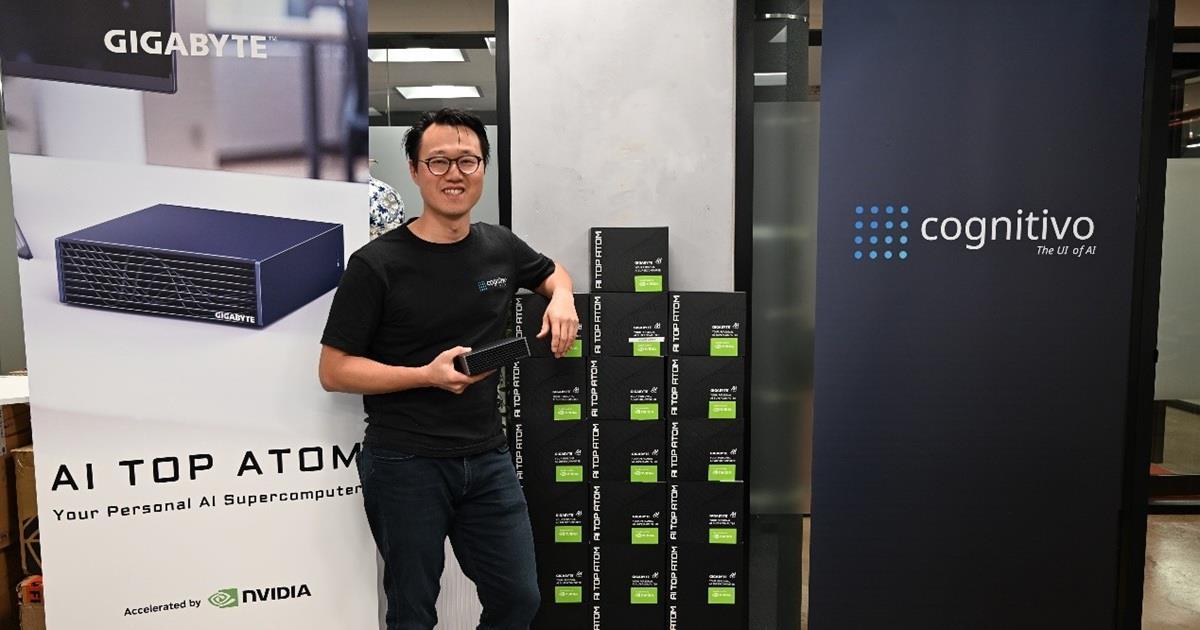
Using GIGABYTE's AI TOP ATOM, Australia's Reasoning AI Trailblazer Cognitivo Tackles Artificial Intelligence's "Last Mile"
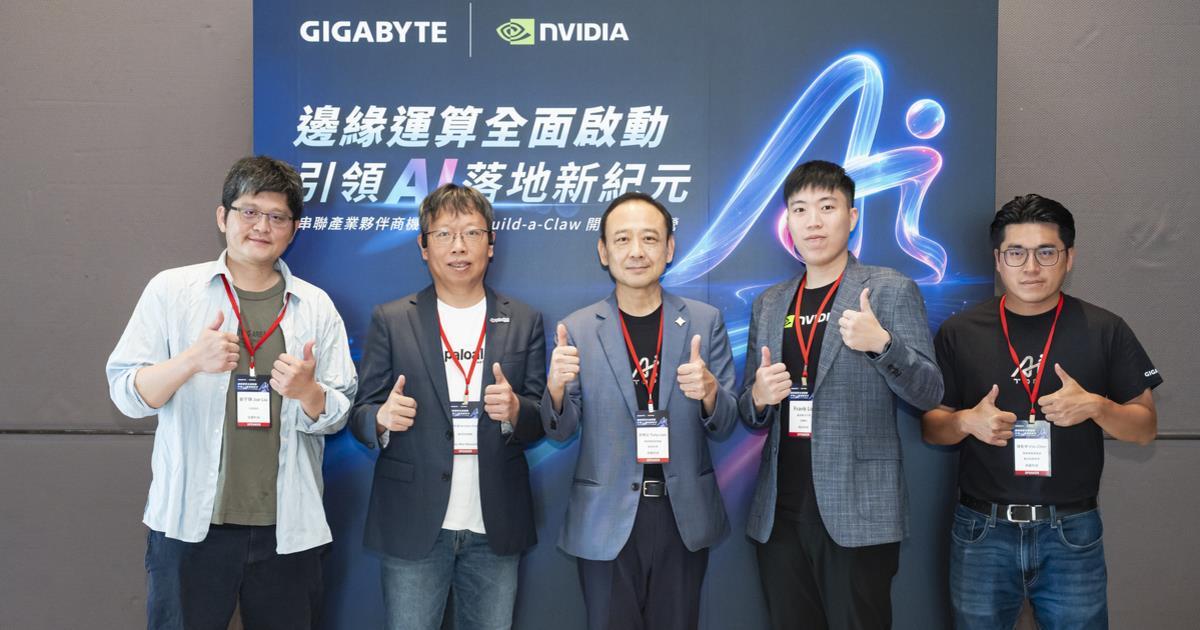
Edge Computing Fully Unleashed: GIGABYTE Partners with NVIDIA to Lead Enterprises into a New Era of Proprietary AI

What is Sovereign AI? Why is It Essential to Your AI Strategy?

Taiwan's aetherAI Injects Smart Medicine into Endoscopy and Hematology with GIGABYTE's Edge AI Mini-PC
Supporting JHPC-quantum Project with a Next-Generation High-Performance Computing System

What is Agentic AI? Are You On Track to Profit from It?
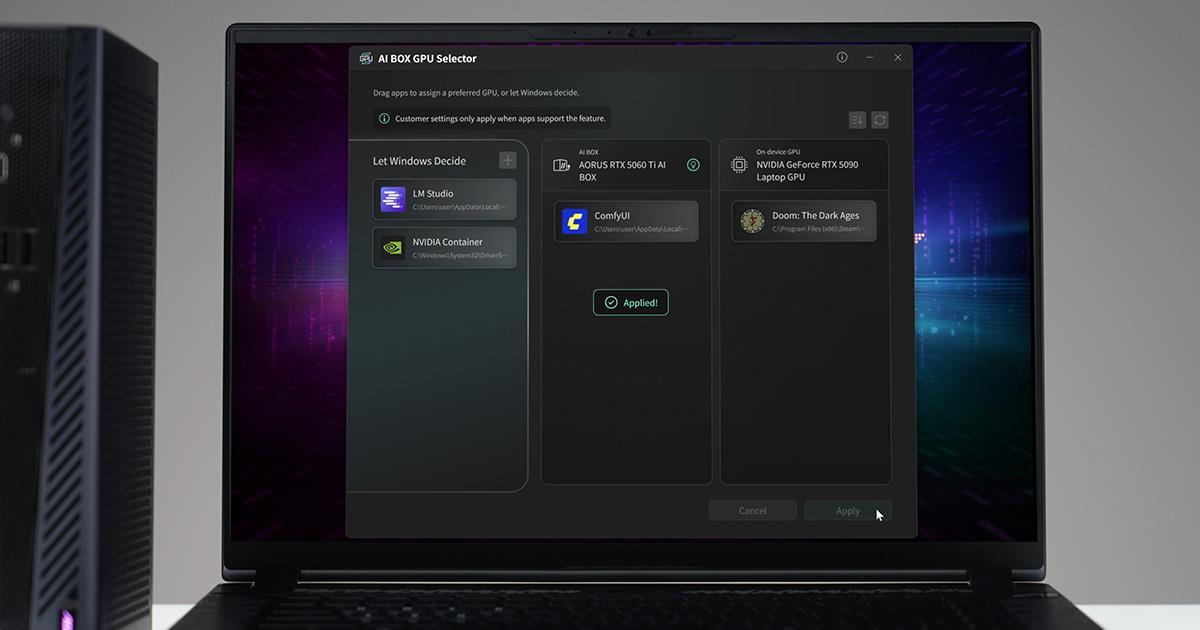
AI BOX GPU Selector – The Smart Way to Harness Your GPU Power
Ready or Not? The Era of AI Factory Has Arrived!
How GIGAPOD Provides a One-Stop Service, Accelerating a Comprehensive AI Revolution
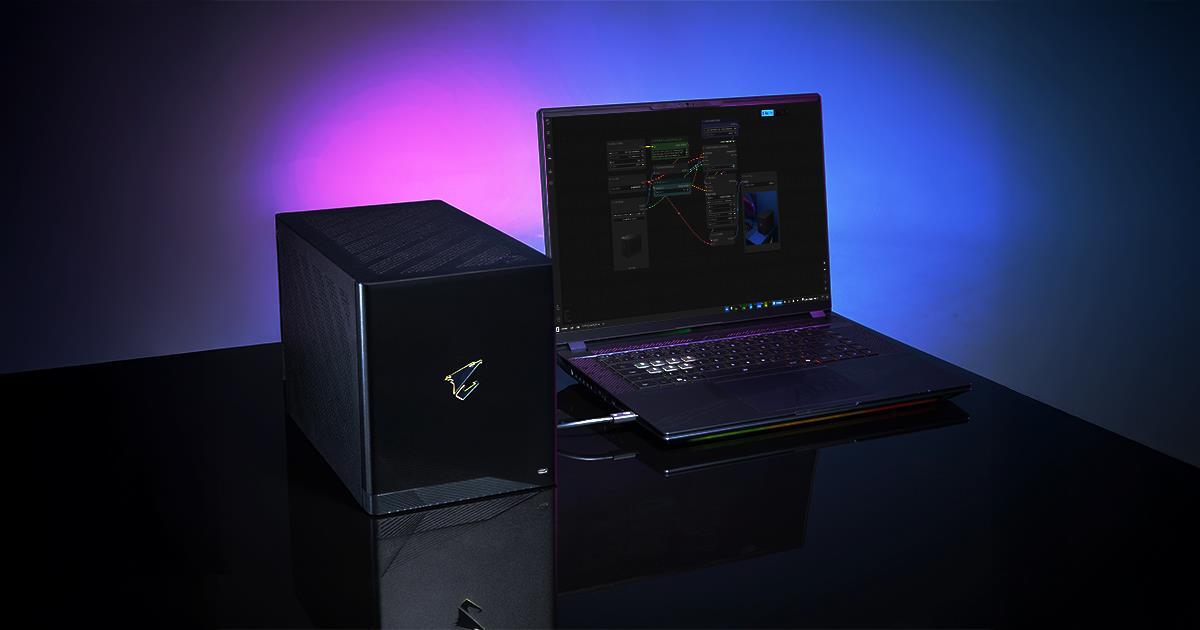
5 Things You Can Do By eGPU – AORUS AI BOX User Guide
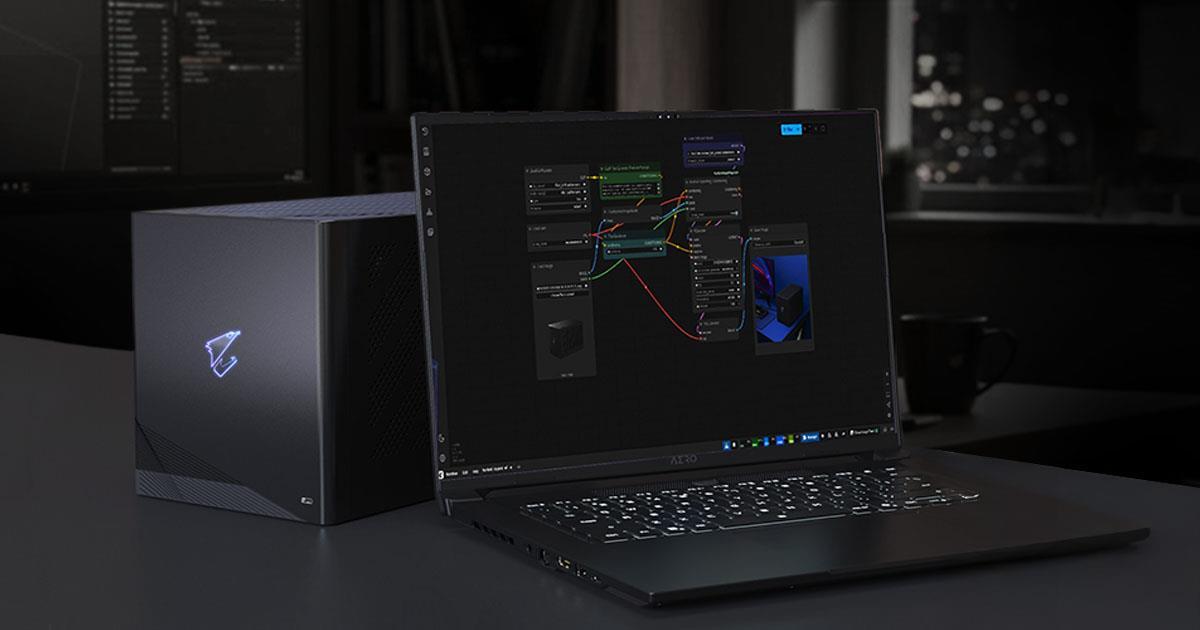
How To Setup Between AI BOX and Laptop dGPU for Different Programs – ComfyUI, LM Studio, and Games
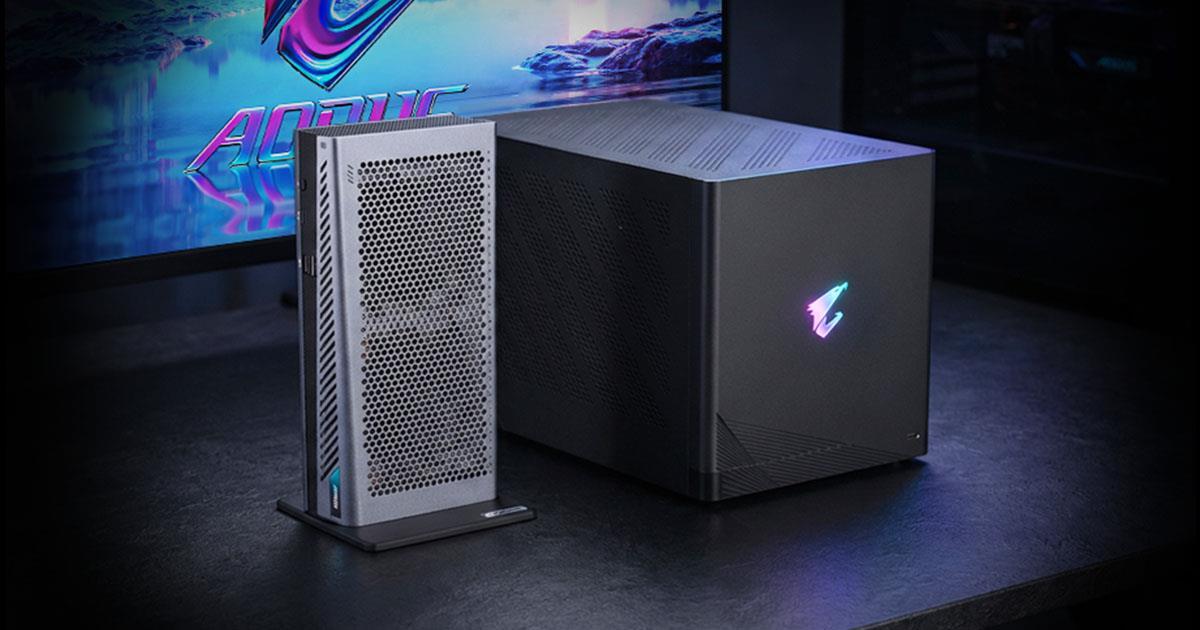
A Quick Look at AORUS RTX 5090 and 5060 Ti AI BOX – Which One Should I Choose?
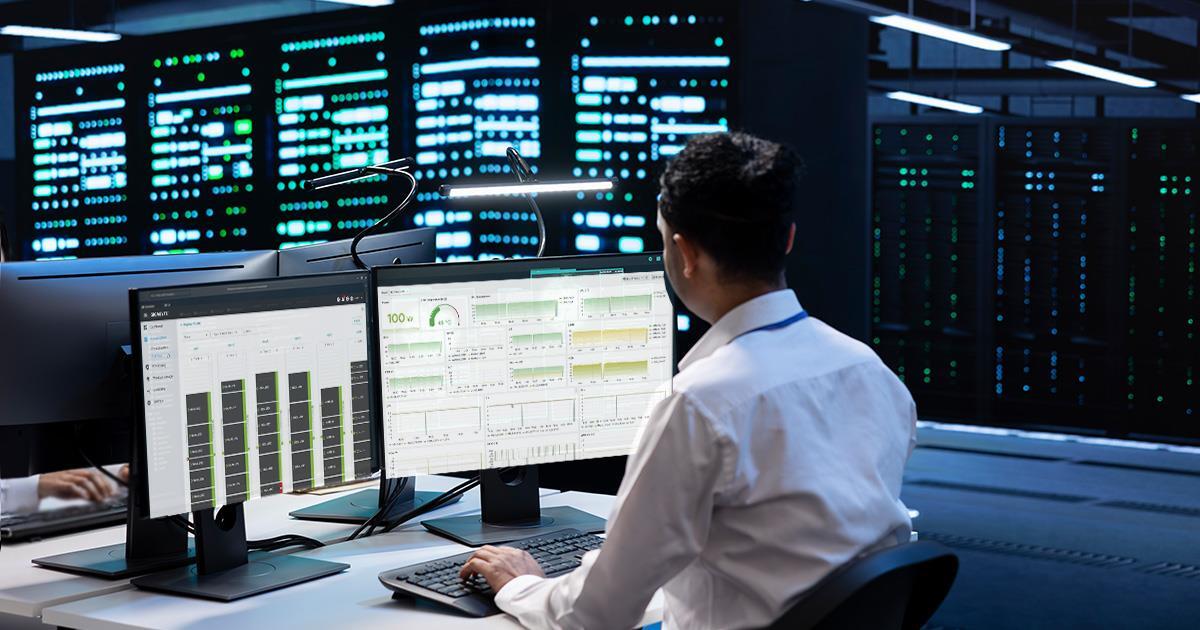
DCIM x AIOps: The Next Big Trend Reshaping AI Software

Revolutionizing the AI Factory: The Rise of CXL Memory Pooling
HPC Ignites: How Data-Centric Mindset Revolutionizing Enterprise AI Infrastructure
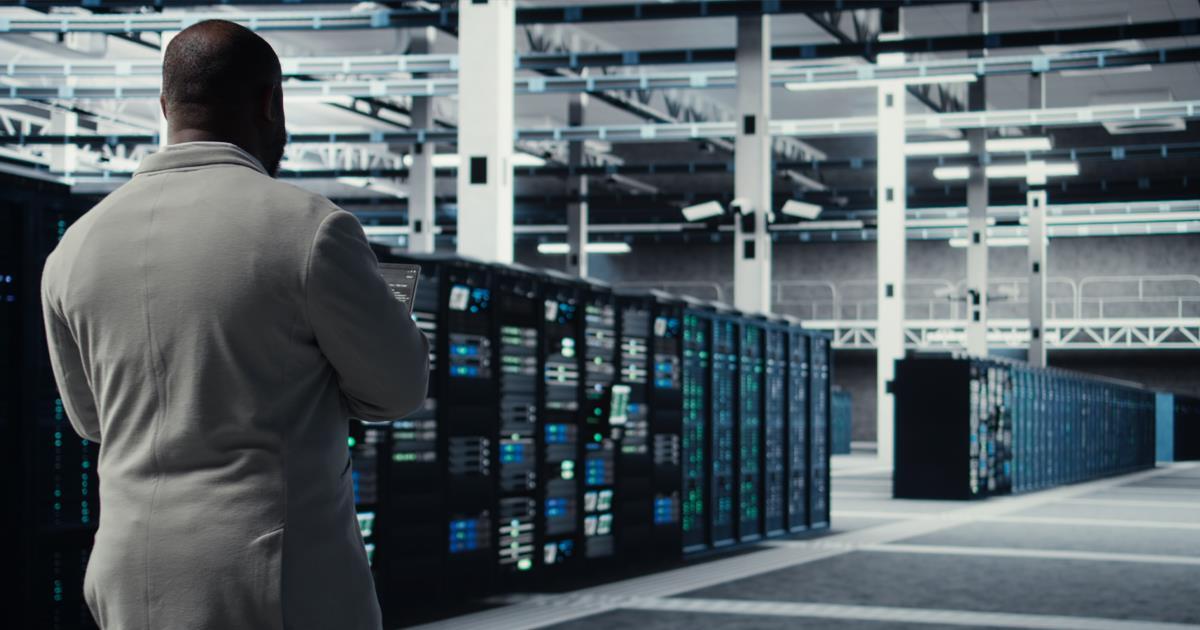
The Data Revolution in AI Factories: Driving High-Speed Networking Forward
How to Get Your Data Center Ready for AI? Part Two: Cluster Computing

How to Get Your Data Center Ready for AI? Part One: Advanced Cooling

How to Pick the Right Server for AI? Part One: CPU & GPU
How to Pick the Right Server for AI? Part Two: Memory, Storage, and More
10 Frequently Asked Questions about Artificial Intelligence
How to Benefit from AI In the Healthcare & Medical Industry
How to Benefit from AI in the Automotive & Transportation Industry

GIGABYTE’s ARM Server Boosts Development of Smart Traffic Solution by 200%

To Harness Generative AI, You Must Learn About “Training” & “Inference”
FAQ
How is AI used in business?
Generally speaking, AI can streamline operations, test ideas before implementation, and create new sources of revenue. Generative AI models can uncover patterns and connections in vast datasets that may lead to breakthroughs in computer science, medicine, and other fields. Agentic AI can propose and execute solutions with minimal human intervention, while automation powered by physical AI can improve productivity in manufacturing. Computer simulations using digital twins allow new concepts to be tested before additional resources are committed to research and development. Businesses can even rent out excess AI compute through "neocloud" services to open up fresh revenue streams. With applications spanning productivity, innovation, and monetization, the possibilities for AI continue to expand—and so does the demand for AI compute.
How do you choose the right AI hardware for your workload?
When selecting hardware for your AI project, start with the scope and objectives of your workload. If you are developing a new AI product that requires extensive model training, supercomputing clusters can aggregate the processing power of hundreds or even thousands of AI chips to accelerate development and time-to-market. On the other hand, if you are fine-tuning open-source models for specialized applications, rackmount servers or workstations may offer a more practical path to local AI development—especially when sensitive data must remain on-premises. Requirements can vary significantly by workload, scale, and deployment environment, which is why working with an experienced AI solutions provider like GIGABYTE can help you select the right infrastructure and maximize the returns on your AI investment.
What are the challenges in scaling AI solutions?
If your initial AI investment is successful, the next challenge is scaling it alongside business growth. Avoiding overinvestment, reducing deployment lead times, and securing sufficient power and water resources are all critical considerations. This is why planning your AI solutions as part of a scalable AI infrastructure is essential. AI infrastructure encompasses the facilities, compute systems, networking, storage, power, cooling, and software needed to keep AI operations running and growing efficiently. Working with an AI solutions provider like GIGABYTE, which offers a portfolio that covers everything from data center infrastructure to individual systems, can simplify expansion and help you scale according to demand.
What enterprise AI solutions does GIGABYTE offer?
For enterprises and other large-scale organizations, GIGABYTE offers solutions spanning AI infrastructure, AI systems and software, and edge and physical AI. For AI infrastructure, GIGABYTE can help customers build data centers from the ground up, with dedicated solutions for AI factories (GAIFA), modular data centers (GADU), and key industries. For AI systems and software, GIGABYTE integrates advanced AI processors into cluster- and rack-scale solutions, rackmount servers, and workstations, allowing customers to deploy and scale AI compute according to their workloads. Advanced cooling and full-stack software further improve efficiency, performance, and infrastructure management. For edge and physical AI, GIGABYTE provides AI servers for model development, along with embedded computing systems, industrial PCs, and mini-PCs for deploying AI in the field.
Your AI Journey Begins with A Single Step
Contact Sales