Liquid Cooling
Liquid Cooling
What is it?
As the name suggests, liquid cooling technology uses liquid (in this case, coolant) as a heat transfer mechanism. Two common liquid cooling technologies available on the market for servers are direct liquid cooling (DLC), also known as direct-to-chip (D2C) liquid cooling; and immersion cooling, which can be further subdivided into single-phase and two-phase immersion cooling. For more information about immersion cooling, it is recommended you take a look at our glossary entry or go straight to the dedicated solution page.
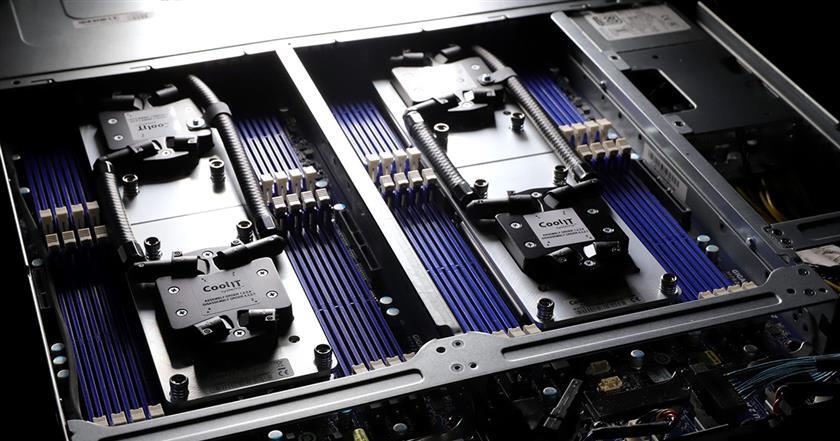
Direct liquid cooling helps the server dissipate heat through the use of sealed tubes (called cooling loops) filled with coolant. The cooling loops coil around key components inside the server chassis. Thermal energy is transferred from the components to the coolant through conductive copper plates, also called cold plates. The heated coolant is then circulated outside the server to a heat exchanger, which removes the heat from the coolant before piping it back into the server to repeat the cycle.
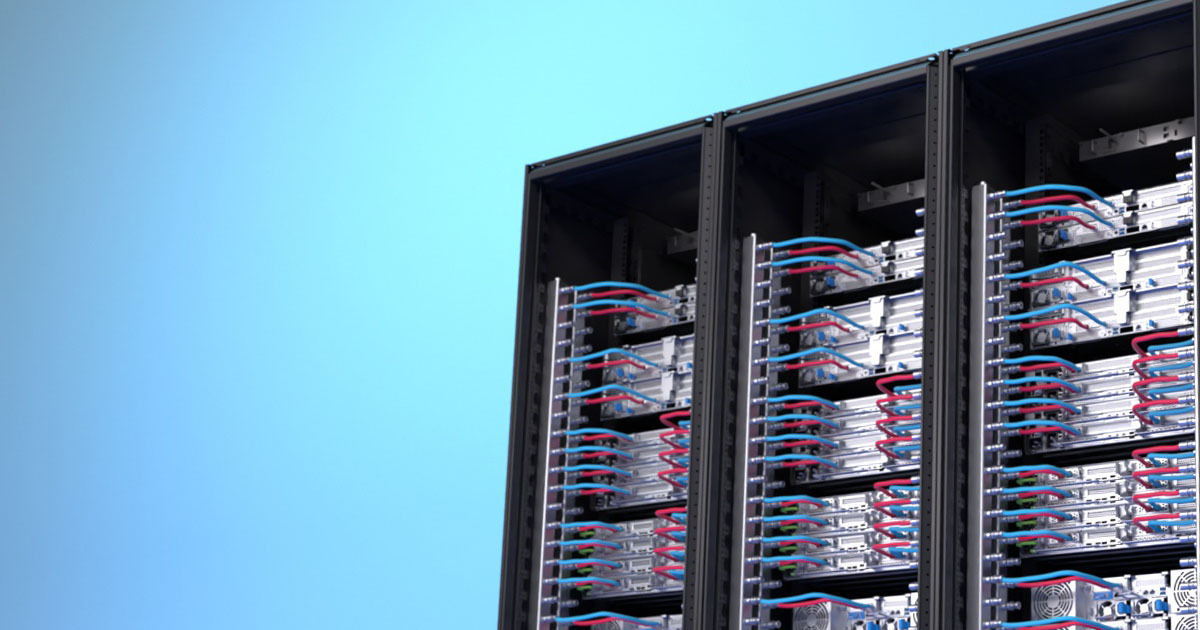
The heat exchanger may be installed in the same server rack as the liquid-cooled server, so that the heat is expelled directly into the hot aisle of an air-cooled data center. This is what is known as a liquid-to-air cooling setup, and it makes it easier for conventional data centers to dip a toe into liquid cooling without overhauling the entire infrastructure. Conversely, a liquid-to-liquid cooling setup transfers heated coolant from all the server racks to a centralized heat exchanger that is part of facility's liquid-based cooling loop. While this method is even more effective at dissipating heat, the server room will have to be designed from the outset to support liquid-cooled servers.
Direct liquid cooling helps the server dissipate heat through the use of sealed tubes (called cooling loops) filled with coolant. The cooling loops coil around key components inside the server chassis. Thermal energy is transferred from the components to the coolant through conductive copper plates, also called cold plates. The heated coolant is then circulated outside the server to a heat exchanger, which removes the heat from the coolant before piping it back into the server to repeat the cycle.
The heat exchanger may be installed in the same server rack as the liquid-cooled server, so that the heat is expelled directly into the hot aisle of an air-cooled data center. This is what is known as a liquid-to-air cooling setup, and it makes it easier for conventional data centers to dip a toe into liquid cooling without overhauling the entire infrastructure. Conversely, a liquid-to-liquid cooling setup transfers heated coolant from all the server racks to a centralized heat exchanger that is part of facility's liquid-based cooling loop. While this method is even more effective at dissipating heat, the server room will have to be designed from the outset to support liquid-cooled servers.
Why do you need it?
Liquid cooling is more efficient at heat transfer than traditional air-cooled systems, so it is often used for cooling servers that generate a high amount of heat, such as those that engage in high performance computing (HPC) to support the development of artificial intelligence (AI) or the creation of digital twins. Compared to air cooling, which requires fans and heat sinks to assist in heat dissipation, liquid cooling has no use for those components and also does not require extra space for air flow. All this helps to reduce the server's overall footprint, which can be used to greatly increase CPU and GPU density, so that more computing power can be deployed in a limited space. Efficient cooling can protect the servers from exceeding their intended TDP, which leads to greater reliability, higher availability, and even better chip performance. Liquid cooling technology also reduces energy consumption and improves the data center's PUE (Power Usage Effectiveness).
How is GIGABYTE helpful?
GIGABYTE is working with multiple industry partners to offer a variety of liquid cooling solutions for our server products, from single-phase immersion cooling to two-phase immersion cooling to direct liquid cooling. These solutions help our customers get the best performance out of their server solutions while adhering to the ideals of environmentally friendly green computing.
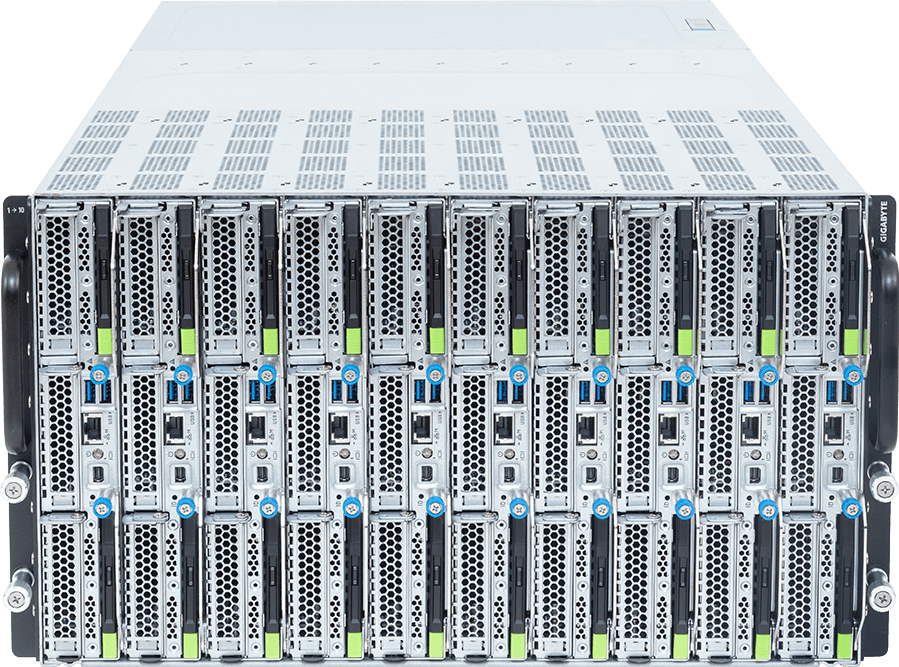
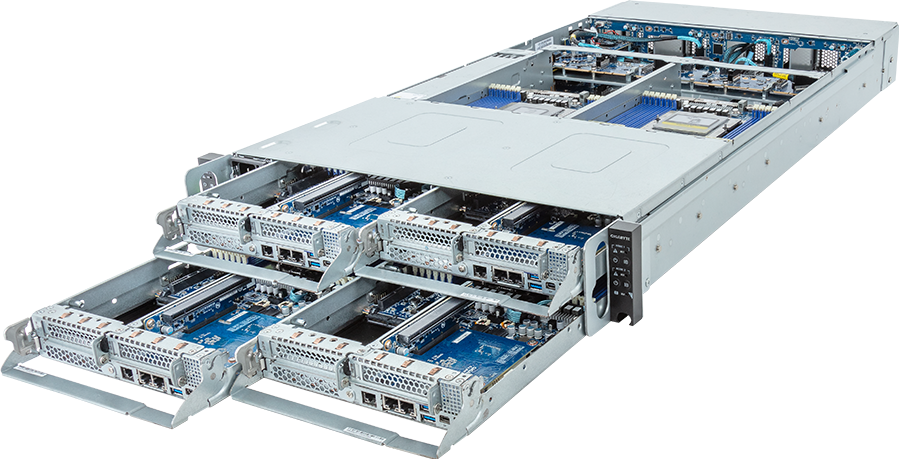
One recent example of GIGABYTE's DLC solution is the deployment of a new GIGABYTE HPC cluster in the German Aerospace Center. GIGABYTE's H261-Z60 Hyper-Converged Infrastructure (HCI) server from the H-Series of High Density Servers were combined with a CoolIT DLC system to build the new cluster. The solution provided up to twice the maximum computing power of competing products on the market, reduced the servers' footprint by 50%, and met the client's requirement of operating high-performance servers in an ambient temperature of 40°C with no air conditioning, in order to better meet the goals of energy efficiency and carbon reduction.
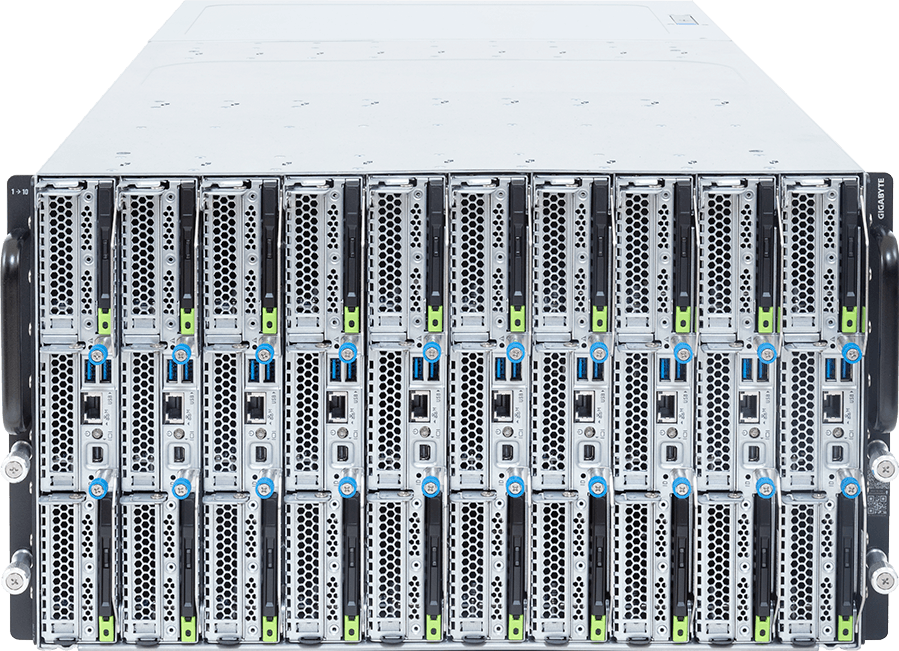
One recent example of GIGABYTE's DLC solution is the deployment of a new GIGABYTE HPC cluster in the German Aerospace Center. GIGABYTE's H261-Z60 Hyper-Converged Infrastructure (HCI) server from the H-Series of High Density Servers were combined with a CoolIT DLC system to build the new cluster. The solution provided up to twice the maximum computing power of competing products on the market, reduced the servers' footprint by 50%, and met the client's requirement of operating high-performance servers in an ambient temperature of 40°C with no air conditioning, in order to better meet the goals of energy efficiency and carbon reduction.