AI Training
What is it?
Modern artificial intelligence (AI) is able to do a variety of tasks, from generating texts and images to piloting a self-driving car, because they are developed via a process known as machine learning or deep learning. The two primary components of learning are "training" and "inference".
During training, an immense quantity of data is entered into the AI model. The data is usually labeled, and there are human programmers standing by to supervise—though more advanced AI is able to engage in self-supervised or semi-supervised training with unlabeled data. The AI analyzes the input and tries to deliver the expected output; for example, it will attempt to pick out dog photos from a sea of animal pictures. Based on the validity of its output—which is to say, whether the guess was correct or not—the AI will adjust its decision-making process by assigning weighted scores, also called "biases", to the data parameters.
Through repeated iterations of predictions (forward propagations) and feedback (backward propagations), the weightings become so precise that the right connections will always be chosen. This is how the AI is trained to recognize the data that it's designed to work with.
Why do you need it?
Together with inferencing, AI training is an intrinsic and inextricable part of how modern AI "learns". Rather than expecting human programmers to write code for every contingency, the AI trains itself by studying a deluge of big data, until it is ready to work with fresh, unlabeled data in a real-life scenario.
Let's use computer vision as it applies to license plate recognition as an example. The electronic tolling stations on the freeway must be able to read the letters and numbers on the license plates of passing cars. Different plates may use different fonts; the plate itself may be crooked, tilted, or smudged; the cars may be traveling at different speeds. The only reason the AI is still able to read the information correctly is because it's been trained with such a large quantity of data, it can interpret the input accurately every time.
How is GIGABYTE helpful?
The amount of digital data and computing resources required for AI training is not only breathtaking, but also ramping up exponentially. Utilizing AI infrastructure with GPU acceleration and parallel computing is a must—especially since competing developers are also racing to introduce their AI products to the market.
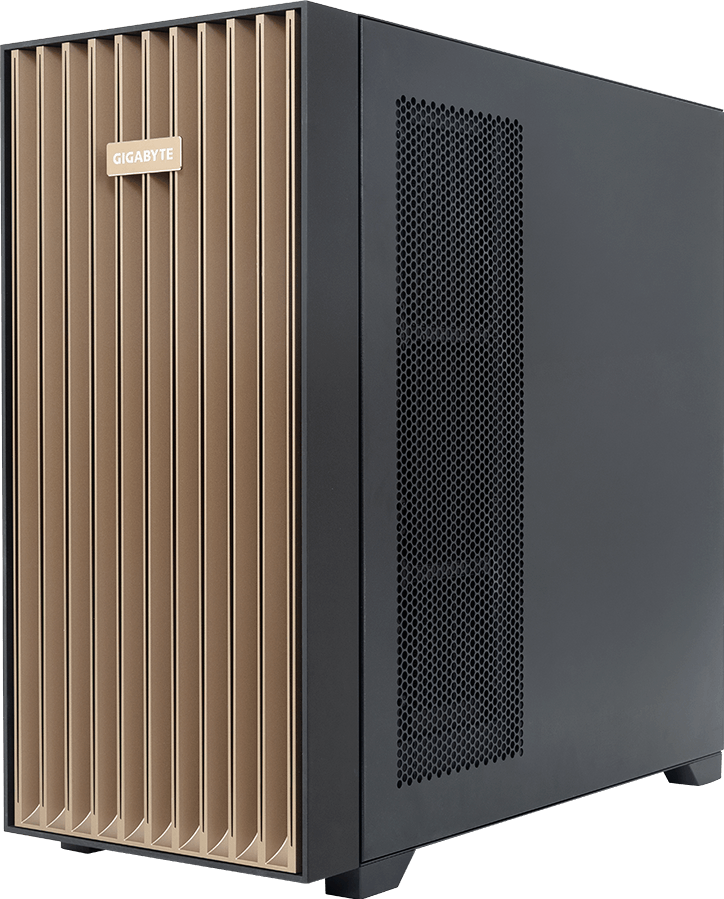
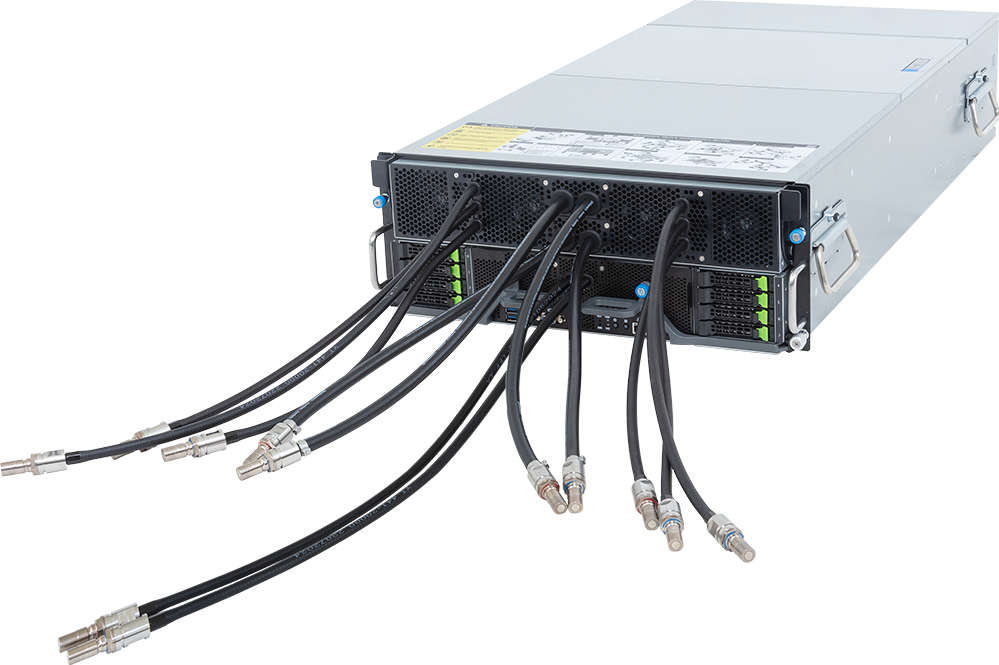
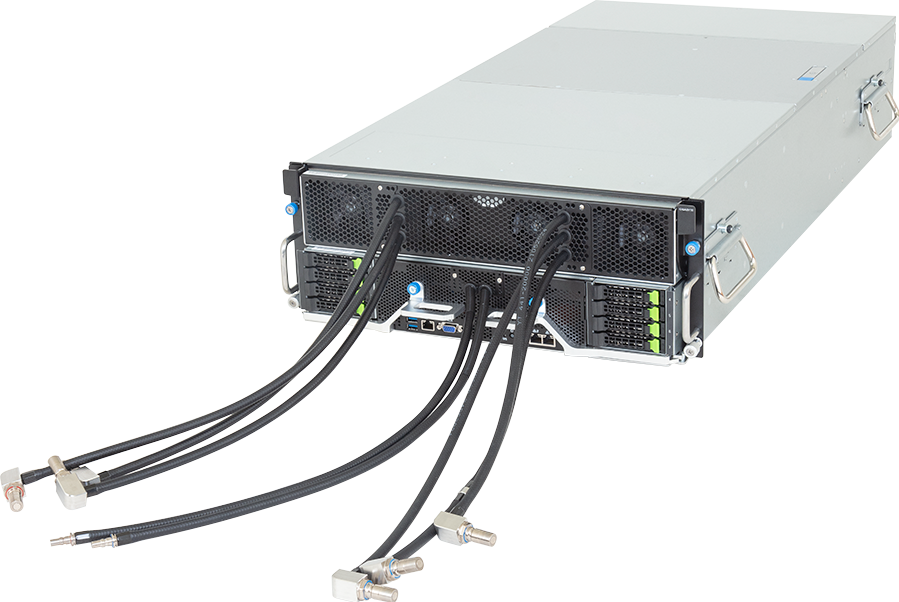
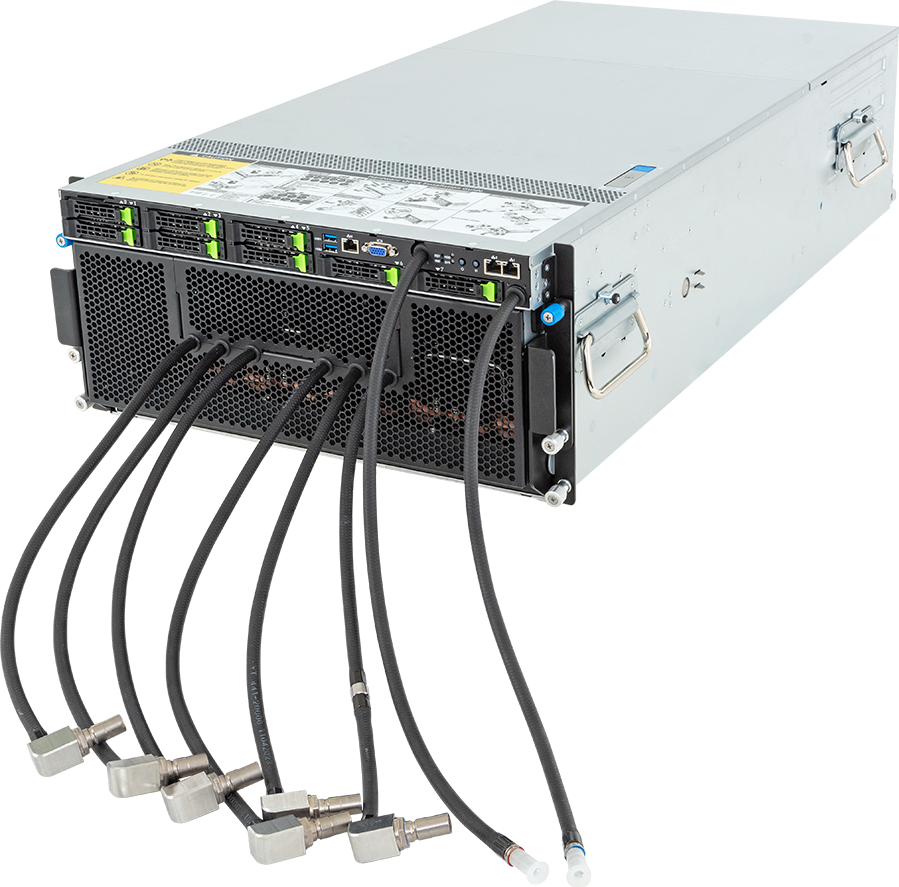
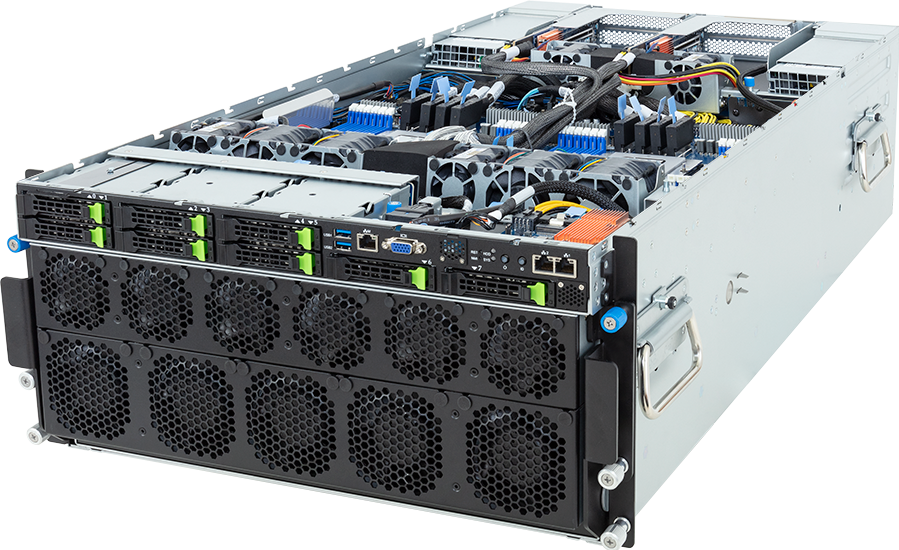
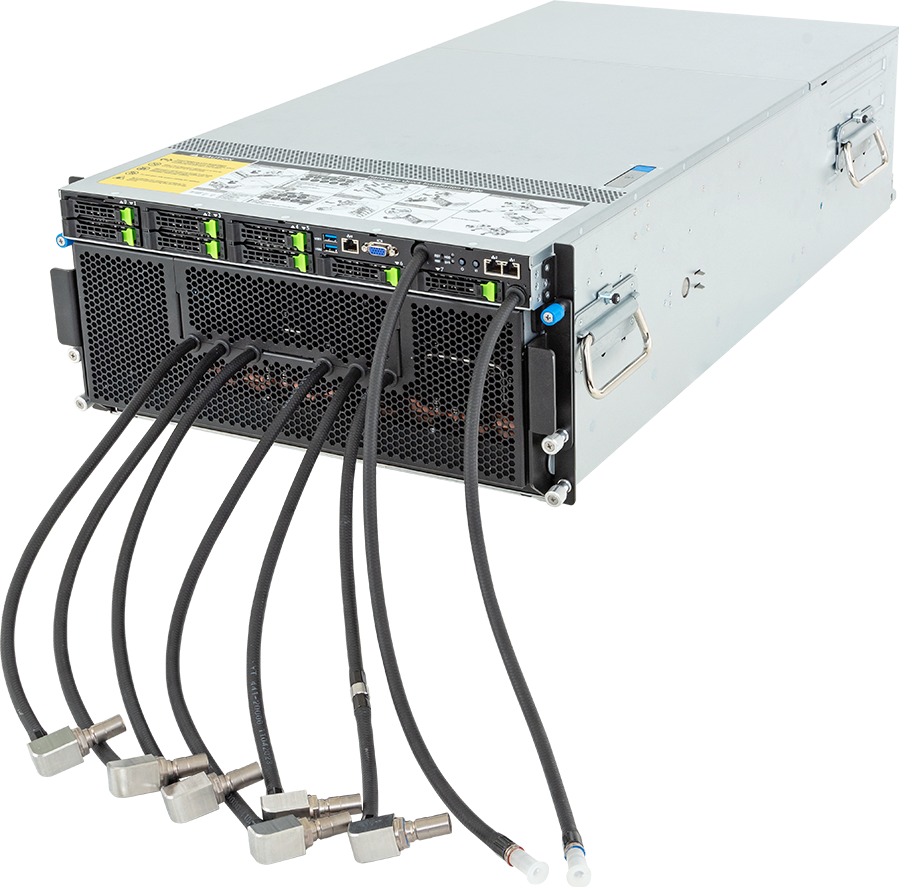
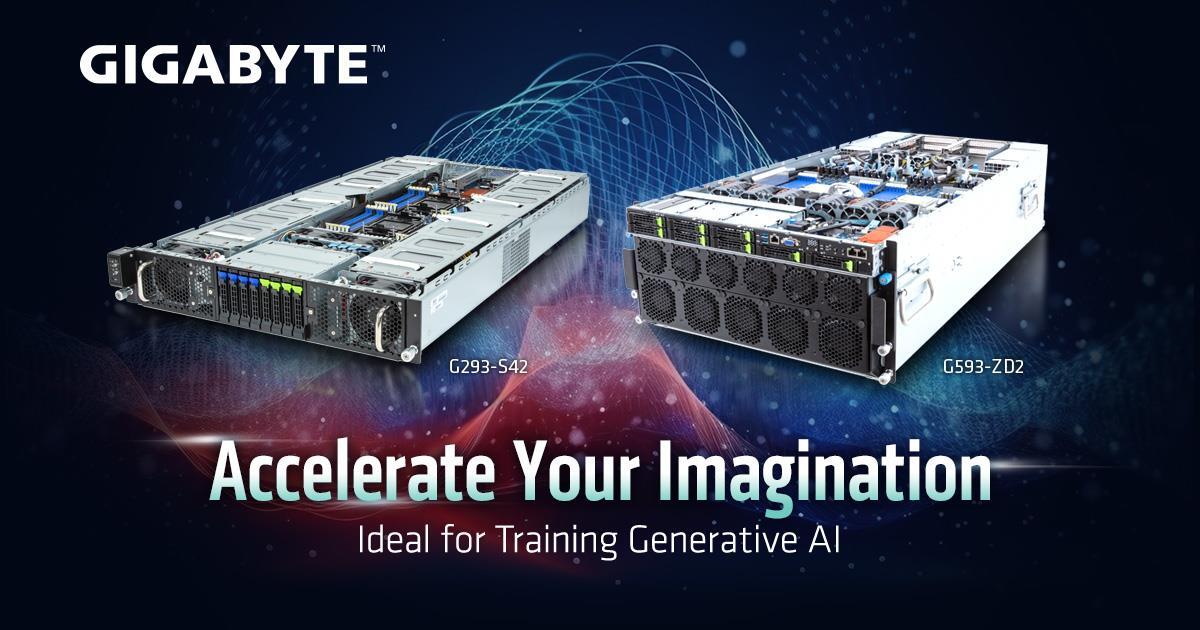
GIGABYTE Technology’s G-Series GPU Servers are some of the most powerful AI servers in the sector. In particular, the G593-SD0 and G593-ZD2 combine NVIDIA’s HGX™ H100 8-GPU computing module with 4th Gen Intel® Xeon® Scalable or AMD EPYC™ 9004 CPUs, respectively. They are capable of delivering over 32 petaFLOPS of AI computing performance, making these products a natural for Natural Language Processing (NLP) and Large Language Model (LLM) applications. All this supercomputing prowess can fit inside a 5U server thanks to GIGABYTE's proprietary cooling tech and chassis design, which helps to improve compute density.
In addition to cutting-edge server hardware, GIGABYTE also recommends the Myelintek MLSteam DNN Training System, part of GIGABYTE’s DNN Training Appliance. This is a turnkey DNN training platform that features a preloaded, verified, and optimized environment boasting some of the most popular deep learning frameworks and libraries. The back end of this solution is also a G-Series GPU Server.
Learn more : 《Advance AI with GIGABYTE’s supercharged AI server solutions》
GIGABYTE Technology’s G-Series GPU Servers are some of the most powerful AI servers in the sector. In particular, the G593-SD0 and G593-ZD2 combine NVIDIA’s HGX™ H100 8-GPU computing module with 4th Gen Intel® Xeon® Scalable or AMD EPYC™ 9004 CPUs, respectively. They are capable of delivering over 32 petaFLOPS of AI computing performance, making these products a natural for Natural Language Processing (NLP) and Large Language Model (LLM) applications. All this supercomputing prowess can fit inside a 5U server thanks to GIGABYTE's proprietary cooling tech and chassis design, which helps to improve compute density.
In addition to cutting-edge server hardware, GIGABYTE also recommends the Myelintek MLSteam DNN Training System, part of GIGABYTE’s DNN Training Appliance. This is a turnkey DNN training platform that features a preloaded, verified, and optimized environment boasting some of the most popular deep learning frameworks and libraries. The back end of this solution is also a G-Series GPU Server.
Learn more : 《Advance AI with GIGABYTE’s supercharged AI server solutions》