NVIDIA QUADRO M2000 (Rev. 1.0)
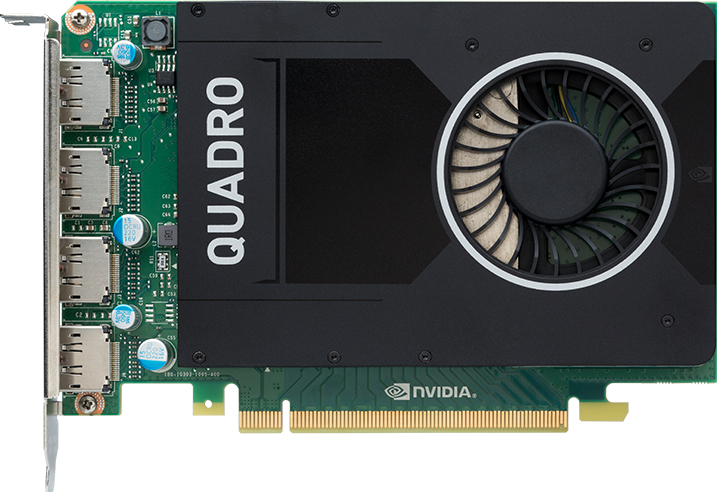
ข้อมูลจำเพาะ
- GPU Memory
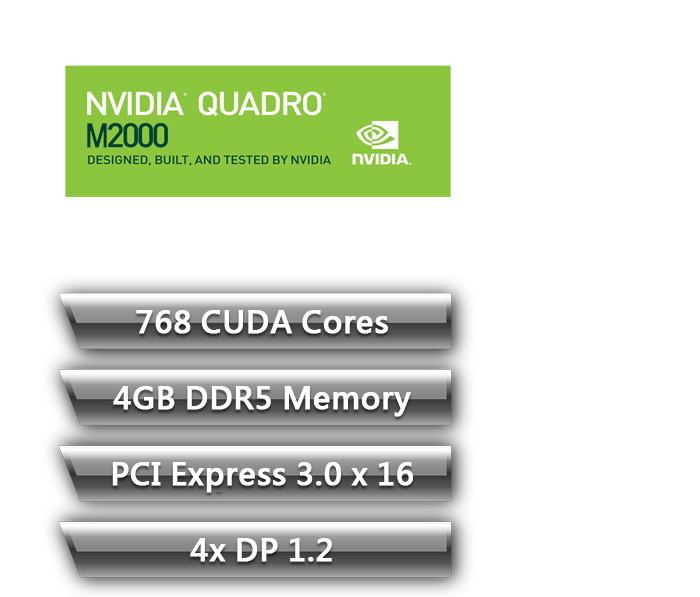
- 4 GB GDDR5
- Memory Interface
- 128-bit
- Memory Bandwidth
- Up to 106 GB/s
- NVIDIA CUDA® Cores
- 768
- System Interface
- PCI Express 3.0 x16
- Max Power Consumption
- 75 W
- Thermal Solution
- Active
- Display Connectors
- 4 x DP 1.2
- Max Simultaneous Displays
- 4 DP 1.2 Multi-Stream
- Max DP 1.2 Resolution
- 4096 x 2160 @ 60Hz
- Form Factor
- 4.376” H x 6.6 L Single Slot
- Graphics APIs
- Shader Model 5.0, OpenGL 4.5, DirectX 12, Vulkan 1.0
- Compute APIs
- CUDA, DirectCompute, OpenCL™
- Supported Platforms
- • Microsoft Windows 10 (64-bit and 32-bit)
• Microsoft Windows 8 and 8.1 (64-bit and 32-bit)
• Microsoft Windows 7 (64-bit and 32-bit)
• Linux® - Full OpenGL implementation, complete with NVIDIA and ARB extensions (64-bit and 32-bit)
- NVIDIA Driver Downloads
- GPU Memory
- 4 GB GDDR5
- Memory Interface
- 128-bit
- Memory Bandwidth
- Up to 106 GB/s
- NVIDIA CUDA® Cores
- 768
- System Interface
- PCI Express 3.0 x16
- Max Power Consumption
- 75 W
- Thermal Solution
- Active
- Display Connectors
- 4 x DP 1.2
- Max Simultaneous Displays
- 4 DP 1.2 Multi-Stream
- Max DP 1.2 Resolution
- 4096 x 2160 @ 60Hz
- Form Factor
- 4.376” H x 6.6 L Single Slot
- Graphics APIs
- Shader Model 5.0, OpenGL 4.5, DirectX 12, Vulkan 1.0
- Compute APIs
- CUDA, DirectCompute, OpenCL™
- Supported Platforms
- • Microsoft Windows 10 (64-bit and 32-bit)
• Microsoft Windows 8 and 8.1 (64-bit and 32-bit)
• Microsoft Windows 7 (64-bit and 32-bit)
• Linux® - Full OpenGL implementation, complete with NVIDIA and ARB extensions (64-bit and 32-bit)
- NVIDIA Driver Downloads
* ข้อมูลเบื้องต้นมีใว้สำหรับอ้างอิงเท่านั้น GIGABYTE ขอสงวนสิทธิ์ในการปรับเปลี่ยนหรือแก้ไขเนื้อหาได้ตลอดเวลาโดยไม่ต้องแจ้งให้ทราบล่วงหน้า
* ประสิทธิภาพสูงสุดที่ใช้ในการประชาสัมพันธ์เป็นเพียงข้อมูลตามทฤษฎีจากผู้ผลิตชิพเซตที่เกี่ยวข้อง หรือองค์กรที่กำหนดคุณสมบัติอินเตอร์เฟส ประสิทธิภาพที่แท้จริงอาจแตกต่างกันโดยการตั้งค่าของระบบที่ไม่เหมือนกัน
* เครื่องหมายการค้าและโลโก้คุณสมบัติต่างๆ เป็นของผู้ถือสิทธิ์นั้นๆ
* เนื่องจากความต้องการหน่วยความจำมาตรฐานของสถาปัตยกรรมคอมพิวเตอร์ต่อหน่วยที่ไม่เหมือนกัน ดังนั้นขนาดหน่วยความจำที่จำเป็นอาจน้อยกว่าจำนวนที่ระบุไว้ก็ได้
* ประสิทธิภาพสูงสุดที่ใช้ในการประชาสัมพันธ์เป็นเพียงข้อมูลตามทฤษฎีจากผู้ผลิตชิพเซตที่เกี่ยวข้อง หรือองค์กรที่กำหนดคุณสมบัติอินเตอร์เฟส ประสิทธิภาพที่แท้จริงอาจแตกต่างกันโดยการตั้งค่าของระบบที่ไม่เหมือนกัน
* เครื่องหมายการค้าและโลโก้คุณสมบัติต่างๆ เป็นของผู้ถือสิทธิ์นั้นๆ
* เนื่องจากความต้องการหน่วยความจำมาตรฐานของสถาปัตยกรรมคอมพิวเตอร์ต่อหน่วยที่ไม่เหมือนกัน ดังนั้นขนาดหน่วยความจำที่จำเป็นอาจน้อยกว่าจำนวนที่ระบุไว้ก็ได้