The Advanced IC Lab at NYCU was Upgraded to Elevate the Taiwan Semiconductor Industry and Talent
Success Case by TechNews
The Advanced IC Lab at National Yang Ming Chiao Tung University (NYCU) has been upgraded to enhance Taiwan's semiconductor industry and talent cultivation. With contributions from GIGABYTE Technology and partners, the lab now features cutting-edge servers, improving both computational capabilities and educational outcomes. The new infrastructure enables efficient testing of IC designs and supports advanced learning and research, fostering talent that will drive future innovations in the semiconductor industry.
6 min read
The influence of advances in manufacturing technology has increased computing demand, and when coupled with the global supply chain, they have had a profound effect on the semiconductor industry. As a result, the cultivation of semiconductor talent has become an important goal worldwide. GIGABYTE Technology, which has strengths in server R&D and manufacturing, continues to engage with industry-academia collaborations, in hopes to inject strong momentum into the cultivation of talent for Taiwan’s semiconductor industry.
As the advancements in process nodes continue to push the limits with ever increasing transistor density to support greater performance demands, finding breakthroughs in IC design is crucial for the semiconductor industry. However, talent cultivation requires a significant investment of time. Therefore, it is the duty of higher-educational institutions to help students who are aspiring to join the semiconductor industry to catch up with the fast-paced innovations in technology.
NYCU continues to deepen its knowledge in the field of semiconductor design, using rigorous teaching and research to cultivate semiconductor talent that can make an immediate impact in the industry. “The course load for IC design is quite high, even higher than similar courses at top universities abroad, to swiftly align with the industry’s talent needs,” said Dr. Chen-Yi Lee, VP of National Yang Ming Chiao Tung University (NYCU) and Professor at NYCU’s Institute of Electronics.
As the advancements in process nodes continue to push the limits with ever increasing transistor density to support greater performance demands, finding breakthroughs in IC design is crucial for the semiconductor industry. However, talent cultivation requires a significant investment of time. Therefore, it is the duty of higher-educational institutions to help students who are aspiring to join the semiconductor industry to catch up with the fast-paced innovations in technology.
NYCU continues to deepen its knowledge in the field of semiconductor design, using rigorous teaching and research to cultivate semiconductor talent that can make an immediate impact in the industry. “The course load for IC design is quite high, even higher than similar courses at top universities abroad, to swiftly align with the industry’s talent needs,” said Dr. Chen-Yi Lee, VP of National Yang Ming Chiao Tung University (NYCU) and Professor at NYCU’s Institute of Electronics.

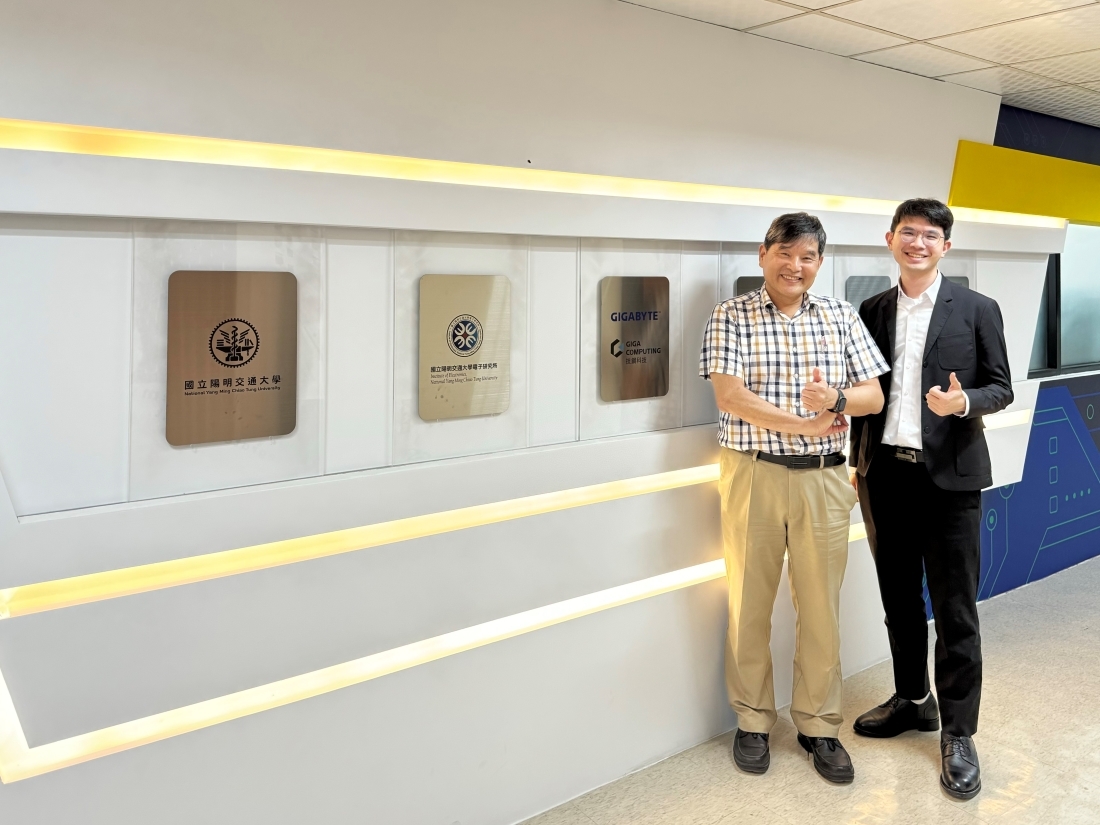
Dr. Chen-Yi Lee (on the right) discusses chip advancements (Source: TechNews)
GIGABYTE Steps in to Upgrade the Lab
As the IC design industry continues to innovate, the number of students in this field has been growing exponentially. However, given the strain on resources, research laboratories are facing the issue of having insufficient and outdated equipment.
In the interview, Dr. Lee explained the impact that new server architecture can have on the field of IC design at NYCU. “As server chips become more advanced, these new chips can be used to hasten the time it takes for testing new IC designs. What used to take hours could be done in a few minutes with an upgrade of the IT hardware,” said Dr. Lee.
By chance, GIGABYTE learned about the need for greater computing hardware at the NYCU Advanced IC Design Lab. So, GIGABYTE teamed up with AMD, Micron Technology, Nanya Technology, Phison Electronics, and Samsung Electronics, together they assembled complete cutting-edge servers for the lab.
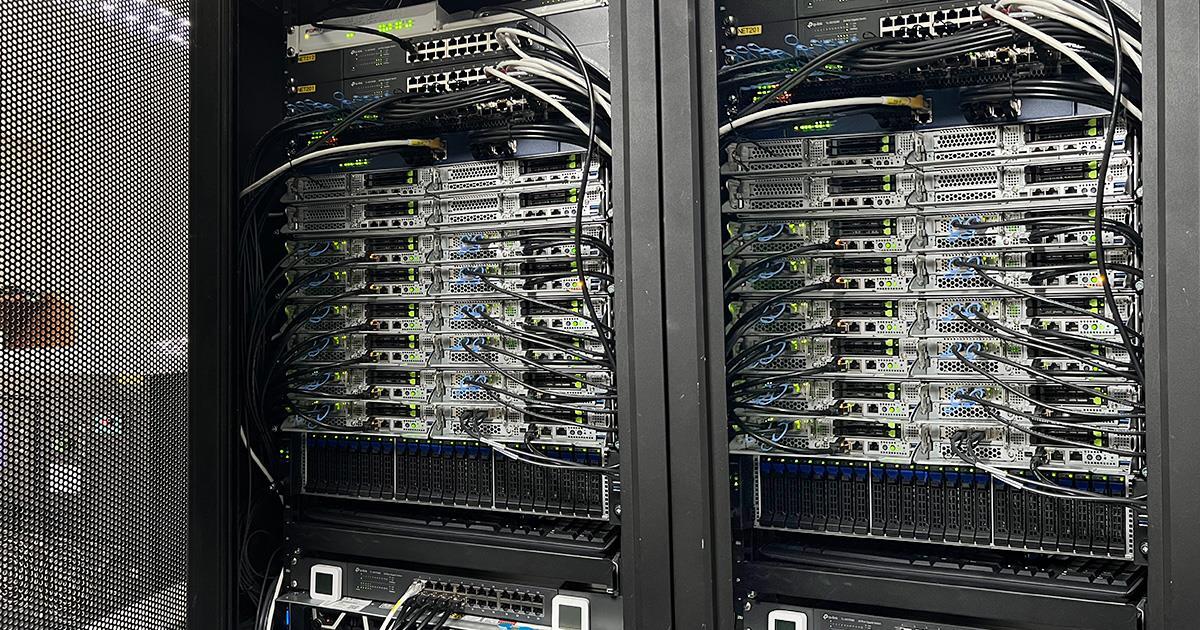
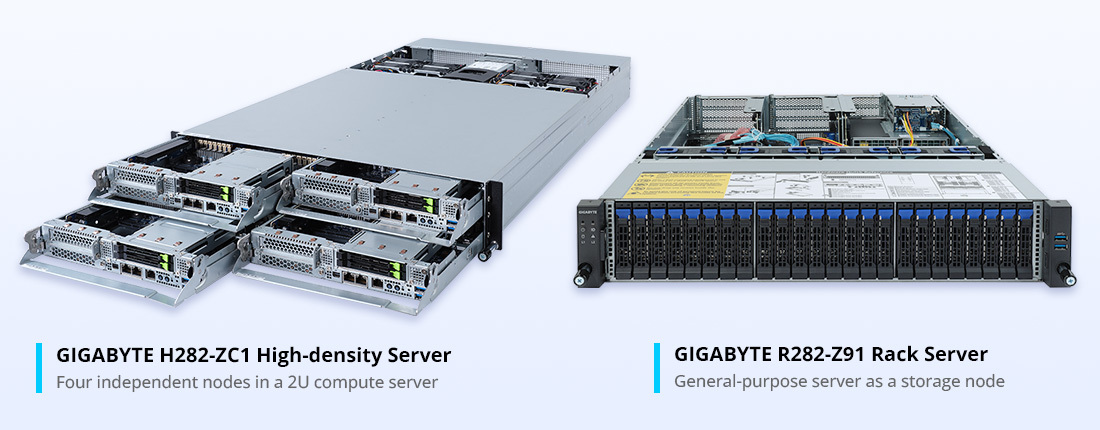
GIGABYTE supplied two GIGABYTE R282-Z91 general-purpose servers and six H282-ZC1 high-density servers, each playing different roles in the cluster at the IC Design Lab. The R282-Z91 servers were used for storage, while the H282-ZC1 servers act as the computing platform with four nodes per server to fulfill demanding computing needs from multiple users.
In the interview, Dr. Lee explained the impact that new server architecture can have on the field of IC design at NYCU. “As server chips become more advanced, these new chips can be used to hasten the time it takes for testing new IC designs. What used to take hours could be done in a few minutes with an upgrade of the IT hardware,” said Dr. Lee.
By chance, GIGABYTE learned about the need for greater computing hardware at the NYCU Advanced IC Design Lab. So, GIGABYTE teamed up with AMD, Micron Technology, Nanya Technology, Phison Electronics, and Samsung Electronics, together they assembled complete cutting-edge servers for the lab.
GIGABYTE supplied two GIGABYTE R282-Z91 general-purpose servers and six H282-ZC1 high-density servers, each playing different roles in the cluster at the IC Design Lab. The R282-Z91 servers were used for storage, while the H282-ZC1 servers act as the computing platform with four nodes per server to fulfill demanding computing needs from multiple users.
Upgraded Experience Boosts Learning: Smooth Performance for Multiple Users
When planning the server architecture, the need for future expansion was accounted for. This extends beyond compute resources to data transmission as well. Therefore, the server architecture is composed of two data servers (R282-Z91) paired with Phison’s advanced SSD technology to provide over 500 TB of storage capacity. And this setup is combined with 20Gbps “bonding” network switches, effectively increasing the communication bandwidth between nodes.
The heavy lifting compute performance is provided by the compute nodes in the six H282-ZC1 high-density servers. “Because we do IC design, the main computing focus is done by the CPU,” said Lin-hung Lai, senior IC Design Lab manager. “Therefore, high multi-core CPU nodes can significantly accelerate our design process.” And each CPU node in the GIGABYTE servers is equipped with 1TB of DDR4 memory, capable of handling the growing demands of large-scale IC design.
The heavy lifting compute performance is provided by the compute nodes in the six H282-ZC1 high-density servers. “Because we do IC design, the main computing focus is done by the CPU,” said Lin-hung Lai, senior IC Design Lab manager. “Therefore, high multi-core CPU nodes can significantly accelerate our design process.” And each CPU node in the GIGABYTE servers is equipped with 1TB of DDR4 memory, capable of handling the growing demands of large-scale IC design.
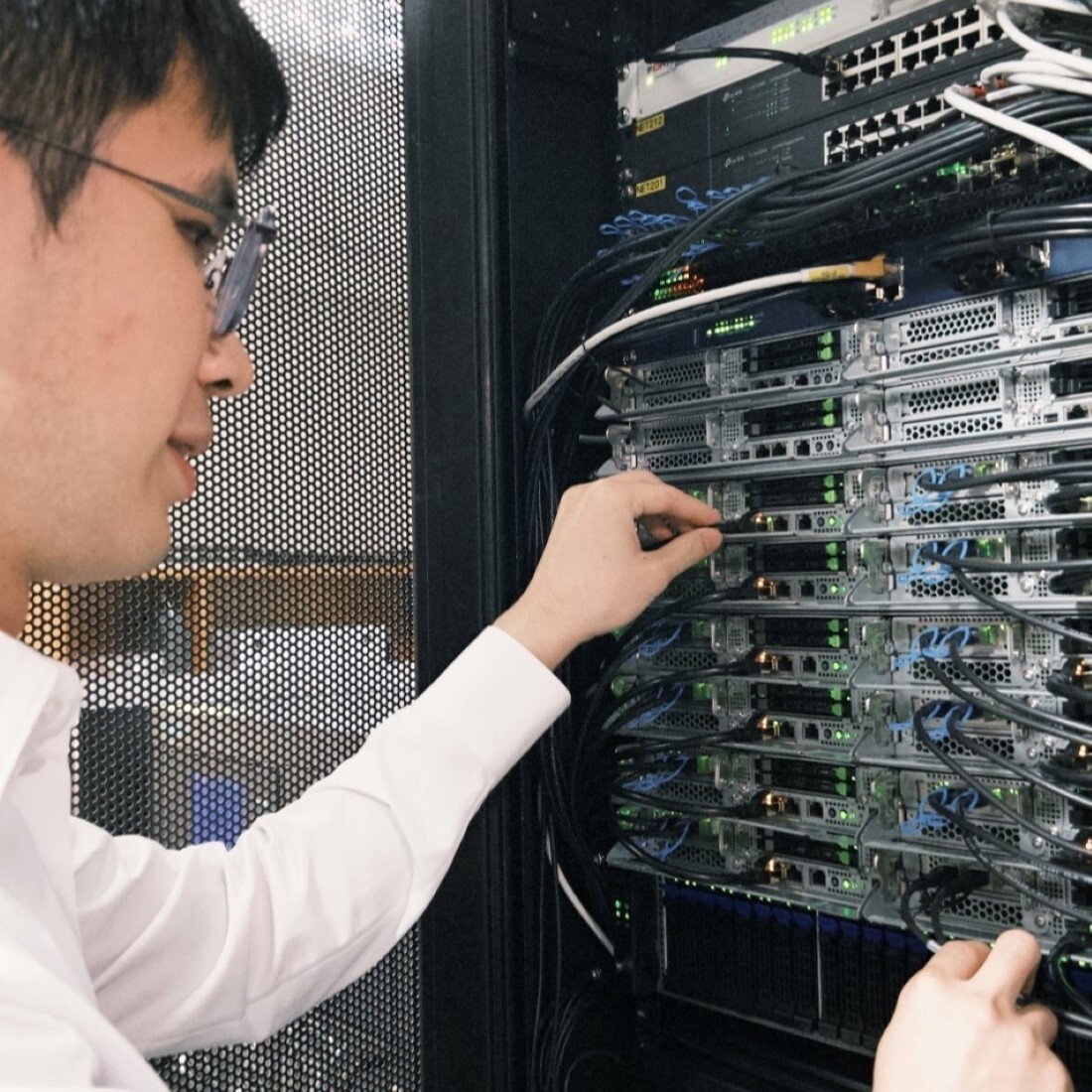
Senior lab manager Lin-Hung Lai introduced us to the dedicated server room space of GIGABYTE servers, which makes management more convenient. (Source: TechNews)
After installing the servers, the impact was significant, and the upgrade allowed for more diverse usage. Outside of classroom hours, students can continue practicing and creating work in a high-quality environment, significantly enhancing the learning process. Without the long wait times, students have been able to undertake more complex design exercises and there has been a substantial improvement in the quality of work produced.
These improvements are also possible because of the CPU choice of the six multi-node computing servers and two storage servers. The compute dense H282-ZC1 server utilizes the AMD EPYC 7003 Series CPU, based on AMD “Zen 4” cores with TSMC’s 7nm process. This CPU series features up to 64 cores and uses PCIe 4.0 for fast throughput, capable of reaching a bandwidth of 128GB/s for fast and stable connectivity. These six high-density H282-ZC1 servers house 2,304 CPU cores (4,608 threads). For fast high-density storage, the R282-Z91 was selected, and the two servers can support a total of 372.48TB of storage.
These improvements are also possible because of the CPU choice of the six multi-node computing servers and two storage servers. The compute dense H282-ZC1 server utilizes the AMD EPYC 7003 Series CPU, based on AMD “Zen 4” cores with TSMC’s 7nm process. This CPU series features up to 64 cores and uses PCIe 4.0 for fast throughput, capable of reaching a bandwidth of 128GB/s for fast and stable connectivity. These six high-density H282-ZC1 servers house 2,304 CPU cores (4,608 threads). For fast high-density storage, the R282-Z91 was selected, and the two servers can support a total of 372.48TB of storage.
Hardware in one of the six compute servers:
| Item | Model | Quantity |
|---|---|---|
| Server | GIGABYTE H282-ZC1 | 1 |
| CPU | AMD EPYC 7763 (64C/128T) | 8 |
| Memory | NANYA 32GB DDR4-3200 | 128 |
| Storage | Phison 2.5" 7.68TB SATA SSD | 4 |
| LAN | CLN4832 Intel® 82599ES 10Gb/s 2-port | 4 |
Configuration of the two storage servers:
| Item | Model | Quantity |
|---|---|---|
| Server | GIGABYTE R282-Z91 | 1 |
| CPU | AMD EPYC 7543 (32C/64T) | 2 |
| Memory | NANYA 32GB DDR4-3200 | 8 |
| Storage | Phison 2.5" 1.92T ESR1720 SATA SSD | 1 |
| Phison 2.5" 7.68T ESR1710 SATA SSD | 24 | |
| RAID | 9364-8i 2G | 1 |
| LAN | CLN4832 Intel® 82599ES 10Gb/s 2-port | 1 |
Having state of the art hardware is one thing, but how to utilize those resources is equally important. To alleviate congestion caused by many heavy users at the same time, the IC Design Lab had a need to utilize resources more effectively, so they implemented their own server traffic control system. By doing so, they can better allocate and adjust the resources. In the end, it has improved the user experience.
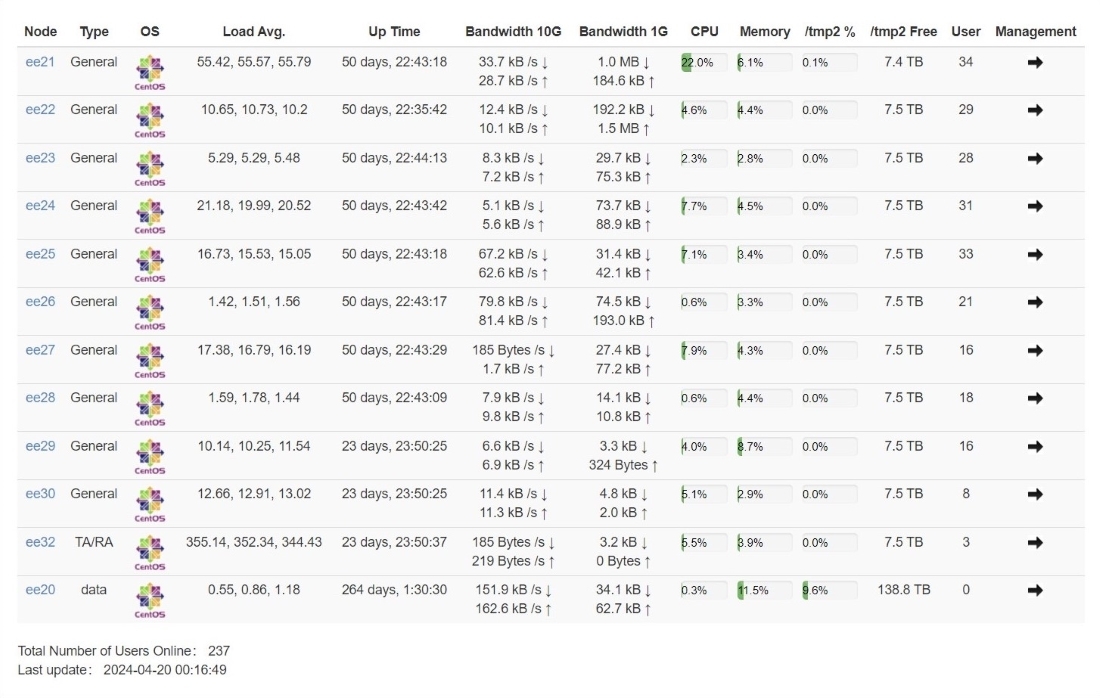
IT resources being allocated for 217 online users. (Source: NYCU IC Lab)
From Insufficient Hardware to Incredible Computing Performance
“By better allocating resources, the occurrence of overloading a single server was greatly reduced, while one could monitor the server’s status,” said Lin-Hung Lai, Senior Administrator of IC Lab, “Prior to this upgrade, desktop PCs served as servers that students had to remotely connect to and to take turns using them. However, each computer had only 8GB of memory, making them antiquated and the learning process was extremely sluggish. This was especially problematic when creating integrated circuits using the EDA process called APR (Automatic Place and Route). For example, what used to take an hour could now be done in five minutes. The improvement is massive.”
The main change is that students no longer connect remotely to individual computers, instead they connect to servers operating in a high-computing power environment. Also, the new lab servers allow for the creation of nearly 1,500 accounts per semester. At peak times, as many as 500 users are simultaneously online working, and this significantly enhances the learning process in the field of IC.
The main change is that students no longer connect remotely to individual computers, instead they connect to servers operating in a high-computing power environment. Also, the new lab servers allow for the creation of nearly 1,500 accounts per semester. At peak times, as many as 500 users are simultaneously online working, and this significantly enhances the learning process in the field of IC.
Talent and Contributions Are Never Lost
Solving the infrastructure issue makes university students’ learning more efficient, so they can personally progress at a greater rate. The talent cultivated from the Advanced IC Design Lab will join the semiconductor industry as valuable assets that are ready to elevate this industry. Dr. Lee revealed that the learning achievements and research data left by previous students has been well preserved, serving as the best data for future deep learning training. The next phase of the lab may be on AI development, designing Chip LLM or Chip GPT, which will create a new milestone in IC design education.