Supercomputing
What is it?
A "supercomputer" is a colloquial term that refers to a data center-grade computing platform—mostly likely a server, or a computing cluster composed of servers—that computes at a speed that is many times faster than what the current generation of consumer-grade personal computers are capable of. The supercomputer can achieve this level of high-performance computing (HPC) because it is centered around a large number of the most advanced processing units, which can work together in tandem. These processors may include the latest CPU products; the latest GPU accelerators and modules to expedite the process through parallel computing; and other specialized processors that may help to optimize performance through heterogeneous computing. The compute node of a supercomputer may be supported by storage and networking nodes comprising other advanced servers with specialized functions. Last but not least, the supercomputer may utilize inventive thermal management methods, such as liquid cooling or immersion cooling, to unlock the full potential of its processors while maintaining stable operations.
It goes without saying that IT experts are always pushing the envelope on what can be classified as a supercomputer. The current generation of supercomputers operate on the scale of petaFLOPS (quadrillion floating point operations per second). Very roughly speaking, this is about a million times faster than the fastest consumer-grade PC. The next goalpost is “exascale computing”, which functions above a quintillion floating point operations per second (exaFLOPS). Quantum computing, which utilizes quantum mechanics to process data faster than "classical" computers ever can, is another groundbreaking field of computer science that may redefine what we call a supercomputer.
It goes without saying that IT experts are always pushing the envelope on what can be classified as a supercomputer. The current generation of supercomputers operate on the scale of petaFLOPS (quadrillion floating point operations per second). Very roughly speaking, this is about a million times faster than the fastest consumer-grade PC. The next goalpost is “exascale computing”, which functions above a quintillion floating point operations per second (exaFLOPS). Quantum computing, which utilizes quantum mechanics to process data faster than "classical" computers ever can, is another groundbreaking field of computer science that may redefine what we call a supercomputer.
Why do you need it?
A lot of modern inventions, from artificial intelligence to space exploration, were made possible with supercomputing. Below are just a few of the most outstanding examples of how supercomputers have reshaped our world.
● AI: Modern AI applications, especially those pertaining to generative AI, require an enormous dataset of big data to be poured into the AI model so it can engage in AI training and "learn" to generate the correct responses when engaging in AI inference. The number of data parameters is overwhelming—in the case of many large language models (LLM), it can go up into the trillions. Without supercomputing, it could take years to build an AI model. Thanks to supercomputing, new AI inventions are becoming available every day.
● Climate change: Supercomputers can help us prepare for the adverse effects of extreme weather. Waseda University in Japan is using a computing cluster composed of GIGABYTE servers to simulate the impact of typhoons and tsunamis on coastal regions. The servers can run multiple simulations simultaneously and with incredible accuracy, which can help related agencies undertake disaster prevention efforts. Global warming can also be alleviated by finding new ways to reduce carbon emissions. Spain's Institute for Cross-Disciplinary Physics and Complex Systems (IFISC) is using GIGABYTE servers to participate in the "ARCTIC" project, which seeks to combat "flight delay propagation"—the phenomenon when a delay in one flight cascades into a snowball effect that wastes fuel and increases air pollution. The IFISC also contributes to the EU-funded "VPP4ISLANDS" project, which virtually tests the implementation of renewable energy by using "digital twins".
● Quantum physics: Supercomputers are key to unlocking the secret workings of the universe. The European Organization for Nuclear Research (CERN) uses GIGABYTE's G482-Z51 G-Series GPU Servers to process data from subatomic particle experiments that are conducted with the Large Hadron Collider (LHC). The supercomputing platforms can keep up with the 40 terabytes of raw data that the particle accelerator generates every second, allowing scientists to explore new boundaries in our understanding of particle physics.
● Scientific research: Research into green energy, medicine, molecular dynamics, nanomaterials, and just about every field of knowledge can be expedited with supercomputing. A top technological university in Europe selected GIGABYTE's H262-Z63, the H-Series High Density Server specially designed for supercomputers, to upgrade their data center and support academic research into engineering science, biochemistry, natural science, civil engineering, and mathematics. In Spain, the University of Barcelona built the IQTC09 Cluster with 26 GIGABYTE servers to help students and faculty delve into material science and theoretical and computational chemistry. Rey Juan Carlos University uses a cluster made up of 8 GIGABYTE servers to study cellular aging mechanisms and hopefully generate new insight into hereditary diseases and other illnesses.
● Space exploration: Supercomputing is the language by which we communicate with worlds beyond our own. The Lowell Observatory in Arizona is looking for exoplanets in outer space—planets with characteristics similar to Earth that may be able to support life. Researchers are using GIGABYTE's GPU Server to study the "stellar noise" emitted by our own Sun to help accelerate the process. The German Aerospace Center (DLR) uses GIGABYTE's H261-Z60 with liquid cooling to help launch probes for space missions to Mars, among other projects.
● AI: Modern AI applications, especially those pertaining to generative AI, require an enormous dataset of big data to be poured into the AI model so it can engage in AI training and "learn" to generate the correct responses when engaging in AI inference. The number of data parameters is overwhelming—in the case of many large language models (LLM), it can go up into the trillions. Without supercomputing, it could take years to build an AI model. Thanks to supercomputing, new AI inventions are becoming available every day.
● Climate change: Supercomputers can help us prepare for the adverse effects of extreme weather. Waseda University in Japan is using a computing cluster composed of GIGABYTE servers to simulate the impact of typhoons and tsunamis on coastal regions. The servers can run multiple simulations simultaneously and with incredible accuracy, which can help related agencies undertake disaster prevention efforts. Global warming can also be alleviated by finding new ways to reduce carbon emissions. Spain's Institute for Cross-Disciplinary Physics and Complex Systems (IFISC) is using GIGABYTE servers to participate in the "ARCTIC" project, which seeks to combat "flight delay propagation"—the phenomenon when a delay in one flight cascades into a snowball effect that wastes fuel and increases air pollution. The IFISC also contributes to the EU-funded "VPP4ISLANDS" project, which virtually tests the implementation of renewable energy by using "digital twins".
● Quantum physics: Supercomputers are key to unlocking the secret workings of the universe. The European Organization for Nuclear Research (CERN) uses GIGABYTE's G482-Z51 G-Series GPU Servers to process data from subatomic particle experiments that are conducted with the Large Hadron Collider (LHC). The supercomputing platforms can keep up with the 40 terabytes of raw data that the particle accelerator generates every second, allowing scientists to explore new boundaries in our understanding of particle physics.
● Scientific research: Research into green energy, medicine, molecular dynamics, nanomaterials, and just about every field of knowledge can be expedited with supercomputing. A top technological university in Europe selected GIGABYTE's H262-Z63, the H-Series High Density Server specially designed for supercomputers, to upgrade their data center and support academic research into engineering science, biochemistry, natural science, civil engineering, and mathematics. In Spain, the University of Barcelona built the IQTC09 Cluster with 26 GIGABYTE servers to help students and faculty delve into material science and theoretical and computational chemistry. Rey Juan Carlos University uses a cluster made up of 8 GIGABYTE servers to study cellular aging mechanisms and hopefully generate new insight into hereditary diseases and other illnesses.
● Space exploration: Supercomputing is the language by which we communicate with worlds beyond our own. The Lowell Observatory in Arizona is looking for exoplanets in outer space—planets with characteristics similar to Earth that may be able to support life. Researchers are using GIGABYTE's GPU Server to study the "stellar noise" emitted by our own Sun to help accelerate the process. The German Aerospace Center (DLR) uses GIGABYTE's H261-Z60 with liquid cooling to help launch probes for space missions to Mars, among other projects.
How is GIGABYTE helpful?
As an industry leader in high-performance servers, server motherboards, and workstations, GIGABYTE Technology can help clients inject supercomputing into their projects, as the case studies above demonstrate. GIGABYTE offers two main categories of supercomputing products: server solutions and cooling systems that support the servers.
● Server solutions: As mentioned, a supercomputer is able to process at lightning speeds because it runs on the latest processors. Thanks to GIGABYTE's close relationship with leading chip manufacturers like AMD, Intel, and NVIDIA, GIGABYTE servers are equipped with the newest inventions in the field of server processors. In terms of CPUs, GIGABYTE servers support the most advanced AMD EPYC™ 9004 or 4th Gen Intel® Xeon® Scalable processors. In terms of GPU accelerators, AMD’s Instinct™ MI300-series, NVIDIA HGX™ H100 modules, and NVIDIA L40S are just a few of the cutting-edge options you can benefit from when you choose GIGABYTE.
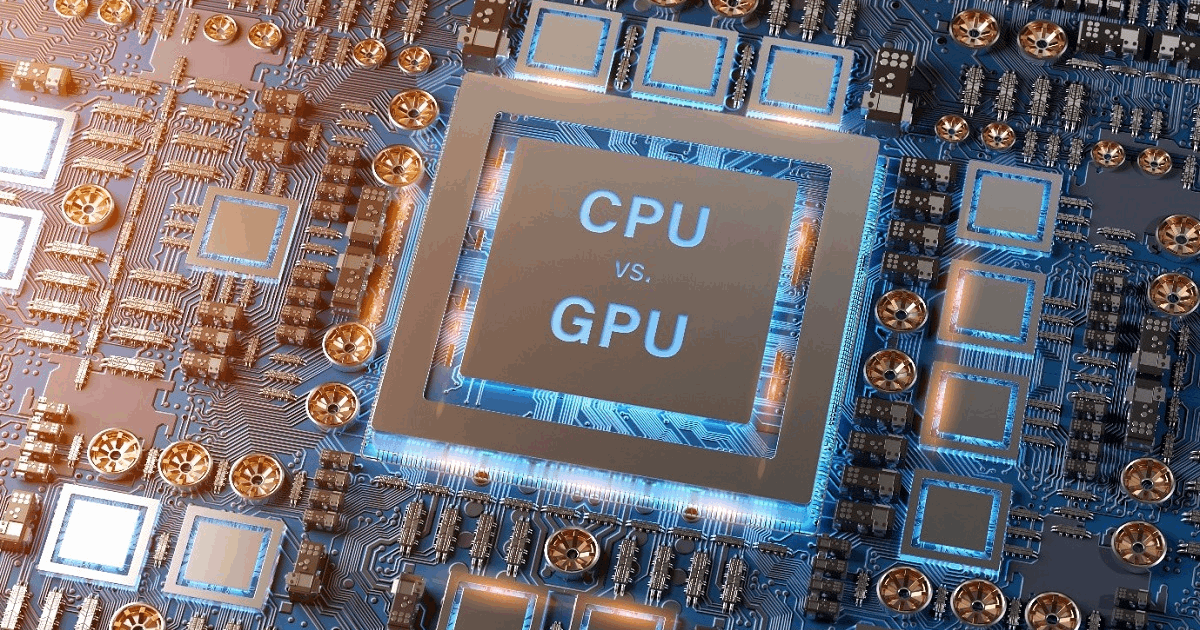
As a matter of fact, these are not your only options. NVIDIA's Grace Hopper™ Superchips, and AMD's data center-class APU products, which are exemplified by Instinct™ MI300A, are instances of manufacturers combining CPU and GPU functions into one chip and optimizing performance to surpass the supercomputing threshold. ARM processors, which take advantage of the simplified RISC architecture to pack more cores into a single processing unit, are another competitive alternative for supercomputing. Fugaku, one of the world's top supercomputers, is powered by ARM processors. GIGABYTE offers a comprehensive line of ARM Servers. A shining example is the R283-P93, which runs on AmpereOne™ Family CPUs that provide up to 192 cores in a single processor.
Depending on the nature of your supercomputing workload and where your servers are deployed, you may consider the abovementioned H-Series and G-Series servers for computing. You may also select GIGABYTE's S-Series Storage Servers for data storage, R-Series Rack Servers for a versatile combination of compute, storage, and networking, and E-Series Edge Servers or W-Series workstation products for installation in limited space.
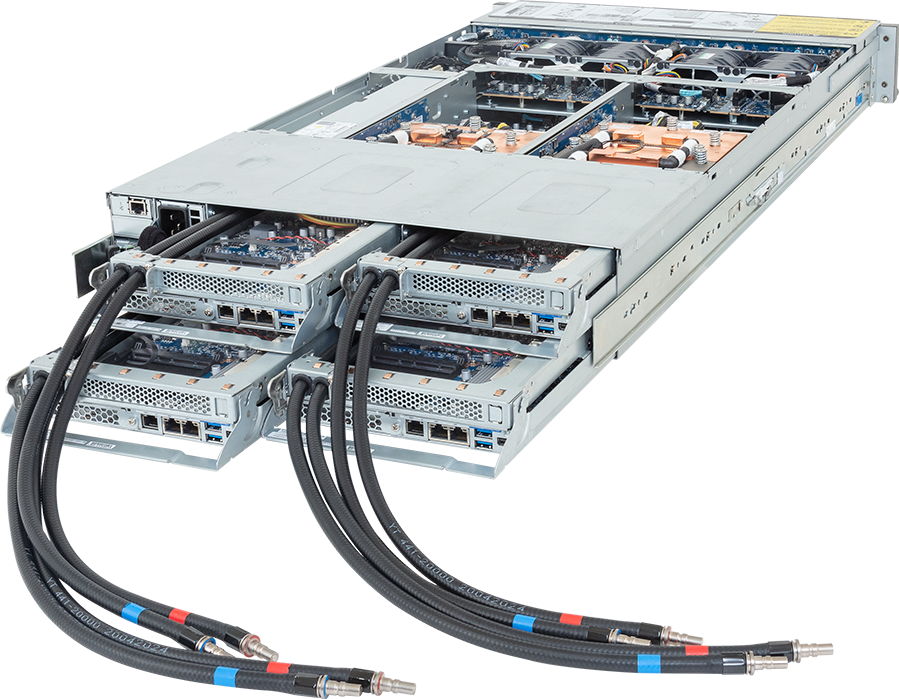
● Cooling systems: As supercomputers get more powerful, it becomes imperative to keep the advanced processors cool. Optimal thermal management will not only unleash the chips' full potential and maintain stable operations, but also improve the data center's power usage effectiveness (PUE) and help the operator achieve carbon emission and sustainability goals.
GIGABYTE offers liquid cooling and immersion cooling solutions to support our server products. GIGABYTE's A1P0-EA0 is a single-phase immersion tank that combines immersion-ready servers, immersion tank, and coolant to offer a one-stop solution. Many of the abovementioned GIGABYTE servers featuring the latest processors can also be outfitted for direct liquid cooling (DLC). Happy customers of GIGABYTE's innovative cooling systems include the Japanese telecom giant KDDI and a French geosciences research company that provides services to earth sciences and oil and gas mining industries.
● Server solutions: As mentioned, a supercomputer is able to process at lightning speeds because it runs on the latest processors. Thanks to GIGABYTE's close relationship with leading chip manufacturers like AMD, Intel, and NVIDIA, GIGABYTE servers are equipped with the newest inventions in the field of server processors. In terms of CPUs, GIGABYTE servers support the most advanced AMD EPYC™ 9004 or 4th Gen Intel® Xeon® Scalable processors. In terms of GPU accelerators, AMD’s Instinct™ MI300-series, NVIDIA HGX™ H100 modules, and NVIDIA L40S are just a few of the cutting-edge options you can benefit from when you choose GIGABYTE.
As a matter of fact, these are not your only options. NVIDIA's Grace Hopper™ Superchips, and AMD's data center-class APU products, which are exemplified by Instinct™ MI300A, are instances of manufacturers combining CPU and GPU functions into one chip and optimizing performance to surpass the supercomputing threshold. ARM processors, which take advantage of the simplified RISC architecture to pack more cores into a single processing unit, are another competitive alternative for supercomputing. Fugaku, one of the world's top supercomputers, is powered by ARM processors. GIGABYTE offers a comprehensive line of ARM Servers. A shining example is the R283-P93, which runs on AmpereOne™ Family CPUs that provide up to 192 cores in a single processor.
Depending on the nature of your supercomputing workload and where your servers are deployed, you may consider the abovementioned H-Series and G-Series servers for computing. You may also select GIGABYTE's S-Series Storage Servers for data storage, R-Series Rack Servers for a versatile combination of compute, storage, and networking, and E-Series Edge Servers or W-Series workstation products for installation in limited space.
● Cooling systems: As supercomputers get more powerful, it becomes imperative to keep the advanced processors cool. Optimal thermal management will not only unleash the chips' full potential and maintain stable operations, but also improve the data center's power usage effectiveness (PUE) and help the operator achieve carbon emission and sustainability goals.
GIGABYTE offers liquid cooling and immersion cooling solutions to support our server products. GIGABYTE's A1P0-EA0 is a single-phase immersion tank that combines immersion-ready servers, immersion tank, and coolant to offer a one-stop solution. Many of the abovementioned GIGABYTE servers featuring the latest processors can also be outfitted for direct liquid cooling (DLC). Happy customers of GIGABYTE's innovative cooling systems include the Japanese telecom giant KDDI and a French geosciences research company that provides services to earth sciences and oil and gas mining industries.