Core

What is it?

It used to be that a single CPU (central processing unit) possessed a single core—the processing unit within the CPU that receives and executes instructions. Times have changed, however, and now a single CPU can house a multitude of cores, each capable of carrying out its own set of instructions. The cores themselves may contain even smaller threads—the smallest sequence of instructions that can be executed independently. The upshot of all this is that modern CPUs can carry out multiple tasks simultaneously thanks to their high core and thread counts. You can envision it as a multi-lane highway; rather than making the cars go faster on a single lane, the use of cores opens up multiple lanes on the same road for many instructions to be executed at the same time.

Why do you need it?

Almost all modern processors are based on the multi-core architecture. The inclusion of more cores not only means more tasks can be completed simultaneously, which eliminates bottlenecks and accelerates computation, it also opens the door to innovative computing techniques such as parallel computing and distributed computing. High performance computing (HPC), which is a major trend in advanced computing, also relies heavily on linking multiple servers running multi-core processors to form a computing cluster that calculates on the scale of supercomputers.

How is GIGABYTE helpful?

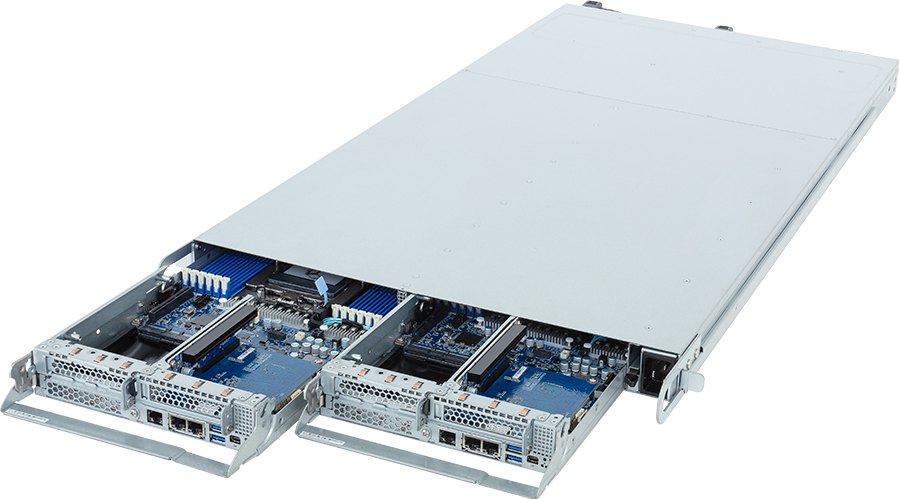
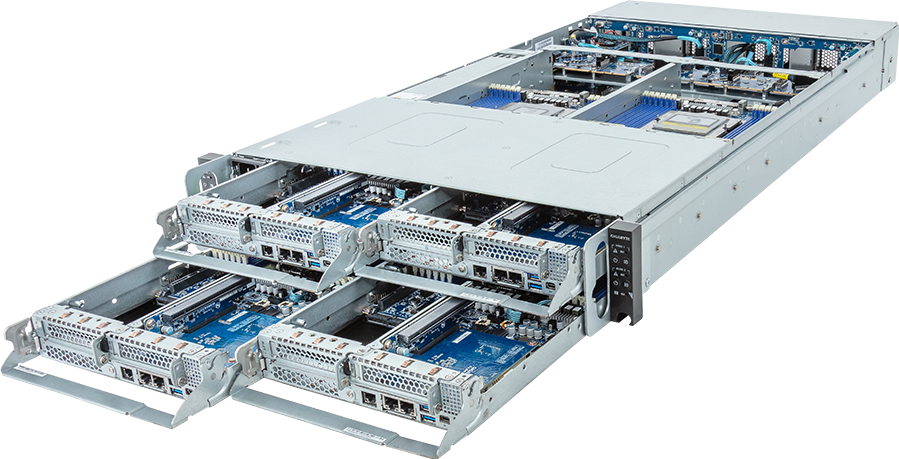
GIGABYTE servers are powered by the most advanced processors. For example, if you installed dual 64-core AMD EPYC™ CPUs in each node of GIGABYTE's H262 Series of High Density Servers, and then populated a full 42U (42 rack units) server rack with these servers (leaving some room for networking equipment), you would have as many as 10,240 cores in one rack. Another kind of processor that is rapidly gaining ground is based on the ARM architecture, which can house as many as 128 cores in a single CPU. The excellent power efficiency of ARM processors goes a long way towards reducing power consumption and resolving heat-related issues.

Recommended Reading

Server Processors: The Core of a Server’s Performance

Server Processors: The Core of a Server’s Performance

How do server processors work? In which ways are they different from the processors used in personal computers? Which processors should you choose for your servers? GIGABYTE Technology, an industry leader in server solutions that support the most advanced processors, is pleased to present our latest Tech Guide. We will go over the fundamentals of server processors, compare the differences between various types of processors, and then present GIGABYTE products that may help you achieve your goals with the CPUs most suitable for your needs.
CSR and ESG in Action: GIGABYTE Helps NCKU Train Award-Winning Supercomputing Team

CSR and ESG in Action: GIGABYTE Helps NCKU Train Award-Winning Supercomputing Team

GIGABYTE Technology is not only a leading brand in high-performance server solutions—it is also an active force for good when it comes to CSR and ESG activities. Case in point: in 2020, GIGABYTE provided four G482-Z50 servers to Taiwan’s Cheng Kung University. The servers were used to train a team of talented students, who went on to take first place in that year’s APAC HPC-AI Competition in Singapore. The parallel computing performance of the servers’ processors, the seamless connectivity between the servers, and the servers’ unrivalled reliability are the reasons why GIGABYTE servers are ideal for educating the next generation of supercomputing experts. GIGABYTE is happy to give back to society and contribute to human advancement through high tech solutions.
What is Private Cloud, and is it Right for You?

What is Private Cloud, and is it Right for You?

In the era of cloud computing, just about everyone has heard of the terms “private cloud” and “public cloud”. Chances are, you are using one or both of them in your everyday life—but how much do you really know about them? If you had the chance, could you build a private cloud for yourself or your organization? GIGABYTE Technology, an industry leader in server solutions used by global cloud service providers, is pleased to present our latest Tech Guide. We will examine the difference between private and public clouds, introduce the private cloud’s advantages and limitations, and then introduce GIGABYTE products that may help you build and operate a private cloud of your own.
CoolIT Systems Direct Liquid Cooling

CoolIT Systems Direct Liquid Cooling

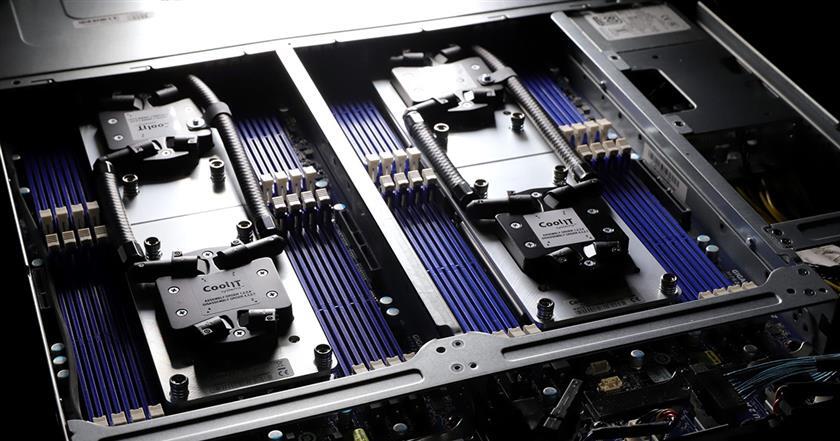
GIGABYTE has joined forces with CoolIT systems to deliver flexible, proven and reliable liquid cooling solutions for a diverse range of systems & challenges including HPC (High Performance Computing), AI (Artificial Intelligence) and Cloud Services.
The EPYC Rise of AMD’s New Server Processor

The EPYC Rise of AMD’s New Server Processor

Spain’s IFISC Tackles COVID-19, Climate Change with GIGABYTE Servers

Spain’s IFISC Tackles COVID-19, Climate Change with GIGABYTE Servers

By using GIGABYTE, Spain’s Institute for Cross-Disciplinary Physics and Complex Systems is pitting the world’s foremost server solutions against some of the world’s most pressing issues, including the effects of climate change, pollution, and COVID-19. GIGABYTE servers are up to the diverse and daunting tasks, because they are designed for high performance computing, intensive numerical simulations, AI development, and big data management.
What is a Server? A Tech Guide by GIGABYTE

What is a Server? A Tech Guide by GIGABYTE

In the modern age, we enjoy an incredible amount of computing power—not because of any device that we own, but because of the servers we are connected to. They handle all our myriad requests, whether it is to send an email, play a game, or find a restaurant. They are the inventions that make our intrinsically connected age of digital information possible. But what, exactly, is a server? GIGABYTE Technology, an industry leader in high-performance servers, presents our latest Tech Guide. We delve into what a server is, how it works, and what exciting new breakthroughs GIGABYTE has made in the field of server solutions.
Setting the Record Straight: What is HPC? A Tech Guide by GIGABYTE

Setting the Record Straight: What is HPC? A Tech Guide by GIGABYTE

The term HPC, which stands for high performance computing, gets thrown around a lot nowadays, as server solutions become more and more ubiquitous. It is running the risk of becoming a catchall phrase: anything that is “HPC” must be the right choice for your computing needs. You may be wondering: what exactly are the benefits of HPC, and is HPC right for you? GIGABYTE Technology, an industry leader in high-performance servers, presents this tech guide to help you understand what HPC means on both a theoretical and a practical level. In doing so, we hope to help you evaluate if HPC is right for you, while demonstrating what GIGABYTE has to offer in the field of HPC.
Cluster Computing: An Advanced Form of Distributed Computing

Cluster Computing: An Advanced Form of Distributed Computing

Cluster computing is a form of distributed computing that is similar to parallel or grid computing, but categorized in a class of its own because of its many advantages, such as high availability, load balancing, and HPC. GIGABYTE Technology, an industry leader in high-performance servers, presents this tech guide to help you learn about cluster computing. We also recommend GIGABYTE servers that can help you benefit from cluster computing.
In the Quest for Higher Learning, High Density Servers Hold the Key

In the Quest for Higher Learning, High Density Servers Hold the Key

A top technological university in Europe noticed rising demand for computing services across its various departments. It decided to build a next-generation data center with GIGABYTE's high density servers. With the right tools in place, scientists were able to accelerate their research, analyze massive amounts of information, and complete more data-intensive projects. Science advanced while the institute flourished.