Modular Data Center
What Is a Modular Data Center?
A modular data center is a data center architecture built around the concept of prefabricated infrastructure and scalable expansion. Unlike traditional data centers that require on-site construction from the ground up, modular data centers are integrated and tested in factories first, including servers, power, cooling, and networking systems, then delivered to the target site for deployment. This approach can significantly shorten deployment time while improving flexibility and scalability.
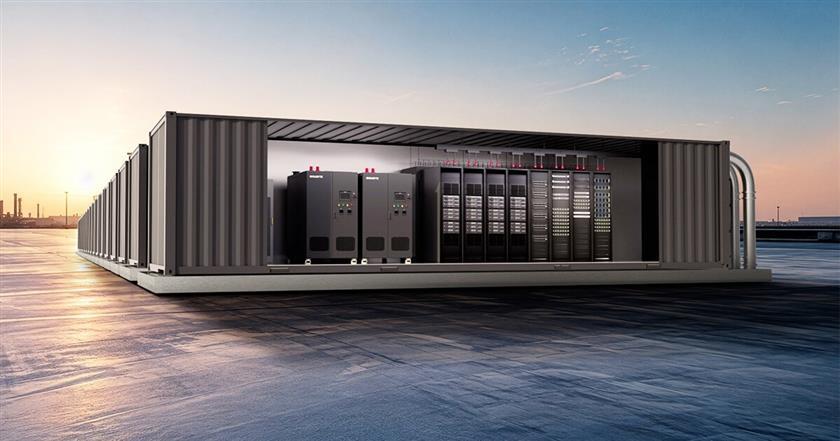
Modular data centers come in different forms. One common type is the containerized data center, which integrates key infrastructure into standard shipping containers. It offers high mobility and is ideal for temporary deployment or edge computing applications. Another type is the skid-mounted data center, where equipment is pre-installed on a steel base frame. Since it lacks an outer enclosure for outdoor protection, it is usually deployed indoors and used to expand computing capacity within existing data centers.
No matter the form, the key advantage of modular data centers lies in their block-based expansion model. As business needs grow, companies can quickly add new modules without redesigning the entire facility, greatly improving operational flexibility.
Modular data centers come in different forms. One common type is the containerized data center, which integrates key infrastructure into standard shipping containers. It offers high mobility and is ideal for temporary deployment or edge computing applications. Another type is the skid-mounted data center, where equipment is pre-installed on a steel base frame. Since it lacks an outer enclosure for outdoor protection, it is usually deployed indoors and used to expand computing capacity within existing data centers.
No matter the form, the key advantage of modular data centers lies in their block-based expansion model. As business needs grow, companies can quickly add new modules without redesigning the entire facility, greatly improving operational flexibility.
Why Are Modular Data Centers Important?
The rapid adoption of AI is fundamentally changing how enterprises demand computing power. In the past, companies could estimate data center capacity based on three- to five-year business plans. Today, the explosive growth of AI training, inference services, and AI agent applications is moving faster than traditional construction cycles can support.
In this environment, the value of modular data centers goes beyond faster deployment. They help businesses stay agile and competitive in an uncertain market. Companies do not need to invest heavily in a full-scale facility before demand is clear. Instead, they can start small and expand step by step as business grows.
According to McKinsey, prefabricated and modular solutions now account for around 40% to 60% of data center builds on average, with some leading designs reaching 80% to 85%.
The modular trend not only speeds up deployment, but also shifts more technical work to factories, reducing on-site construction risk and improving quality consistency. In daily operations, if a key component fails and repair costs are too high, businesses can replace the faulty module directly, reducing downtime and operational risk.
In this environment, the value of modular data centers goes beyond faster deployment. They help businesses stay agile and competitive in an uncertain market. Companies do not need to invest heavily in a full-scale facility before demand is clear. Instead, they can start small and expand step by step as business grows.
According to McKinsey, prefabricated and modular solutions now account for around 40% to 60% of data center builds on average, with some leading designs reaching 80% to 85%.
The modular trend not only speeds up deployment, but also shifts more technical work to factories, reducing on-site construction risk and improving quality consistency. In daily operations, if a key component fails and repair costs are too high, businesses can replace the faulty module directly, reducing downtime and operational risk.
How is GIGABYTE helpful?
GIGABYTE provides a complete one-stop modular data center solution, covering consulting, architecture design, deployment, testing, and after-sales maintenance. By integrating hardware, software, and cooling systems, GIGABYTE helps enterprises accelerate AI adoption.
Its GIGAPOD cluster computing platform can start from a single GPU server and scale up to 8 racks, 32 GPU nodes, and 256 GPUs in total. This makes it suitable for large-scale AI training, high-performance computing, and advanced scientific research.
Together with GPM (GIGABYTE POD Manager), users can monitor hardware status and resource usage in real time, while dynamically allocating computing resources based on actual needs. This improves both management efficiency and resource utilization.
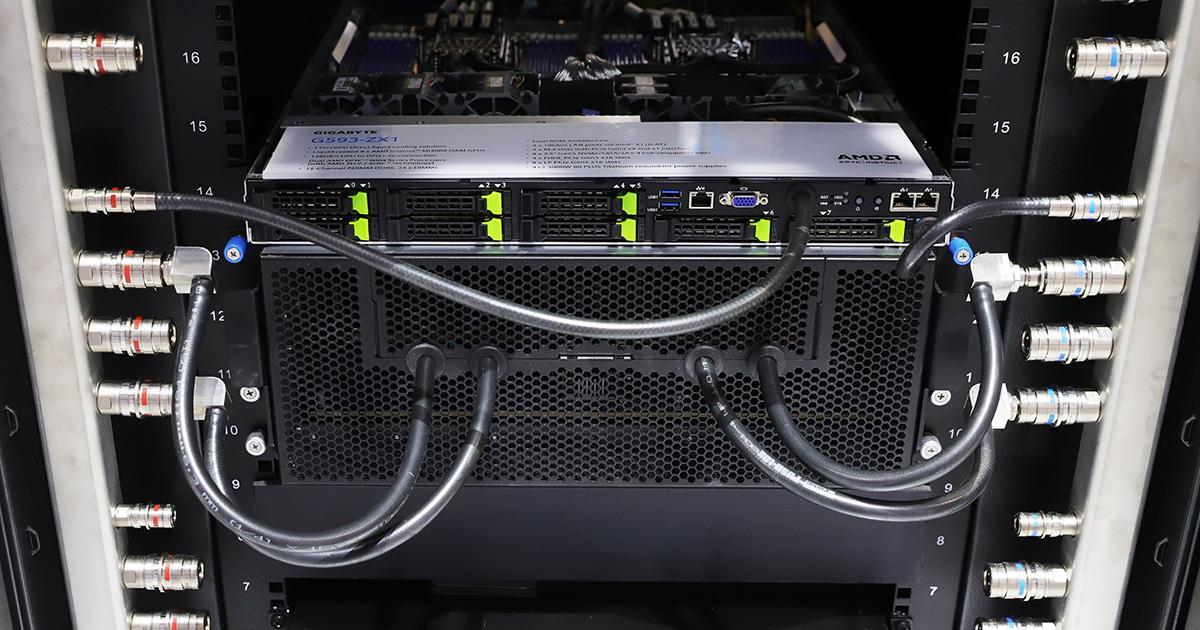
For cooling, GIGABYTE offers advanced liquid cooling and immersion cooling technologies. These solutions go beyond the physical limits of traditional air cooling, helping server chips remain stable and deliver maximum computing performance.
Its GIGAPOD cluster computing platform can start from a single GPU server and scale up to 8 racks, 32 GPU nodes, and 256 GPUs in total. This makes it suitable for large-scale AI training, high-performance computing, and advanced scientific research.
Together with GPM (GIGABYTE POD Manager), users can monitor hardware status and resource usage in real time, while dynamically allocating computing resources based on actual needs. This improves both management efficiency and resource utilization.
For cooling, GIGABYTE offers advanced liquid cooling and immersion cooling technologies. These solutions go beyond the physical limits of traditional air cooling, helping server chips remain stable and deliver maximum computing performance.