ASIC (Application-Specific Integrated Circuit)
What is ASIC?
In the field of computing, different types of processors may be better suited for different tasks. For example, a GPU is fundamentally different from a CPU because while a CPU excels at serial processing, a GPU is designed to be better at parallel computing thanks to its massive number of cores. For this reason, GPUs have evolved from the narrow function of rendering graphics to its current prestigious status as the backbone of LLM applications and AI development.
An “application-specific integrated circuit”, or ASIC, takes the concept of designing a microchip to fulfill a clearly defined function to its logical conclusion. It is the diametric opposite of the "field-programmable gate array" (FPGA), which may be reprogrammed after manufacturing to perform functions that're different from what it was intended for. An ASIC enjoys a much higher level of customization during its production process. This makes it laser-focused on a specific task and unrivalled in its performance. While the extent of customization may vary depending on the manufacturing method, the barrier to producing an ASIC chip is generally higher than that of its more versatile counterparts, although the cost may be offset through mass production.
An “application-specific integrated circuit”, or ASIC, takes the concept of designing a microchip to fulfill a clearly defined function to its logical conclusion. It is the diametric opposite of the "field-programmable gate array" (FPGA), which may be reprogrammed after manufacturing to perform functions that're different from what it was intended for. An ASIC enjoys a much higher level of customization during its production process. This makes it laser-focused on a specific task and unrivalled in its performance. While the extent of customization may vary depending on the manufacturing method, the barrier to producing an ASIC chip is generally higher than that of its more versatile counterparts, although the cost may be offset through mass production.
Why do you need it?
The inspiring idea of changing the design of a microchip to make it better suited for a specific function was pivotal in the history of computer science. Early iterations of the GPU, which—as the name implies—were originally made to render computer graphics, fit the definition of an ASIC. While GPUs can now be used for much more, (which has led to a movement to relabel them as general-purpose GPUs, or GPGPUs), the basic idea of making different types of processors and then combining their strengths through heterogeneous computing is what has led to the invention of new families of processing units. Examples include AMD's APU (accelerated processing unit) products, NVIDIA BlueField data processing units (DPU), Google's tensor processing units (TPU), and more. As long as there's an area of application that can benefit from a bespoke processor, and as long as demand is high enough to cover the costs of customization, ASIC products or other similar kinds of processors will always have a role to play in the IT infrastructure.
How is GIGABYTE helpful?
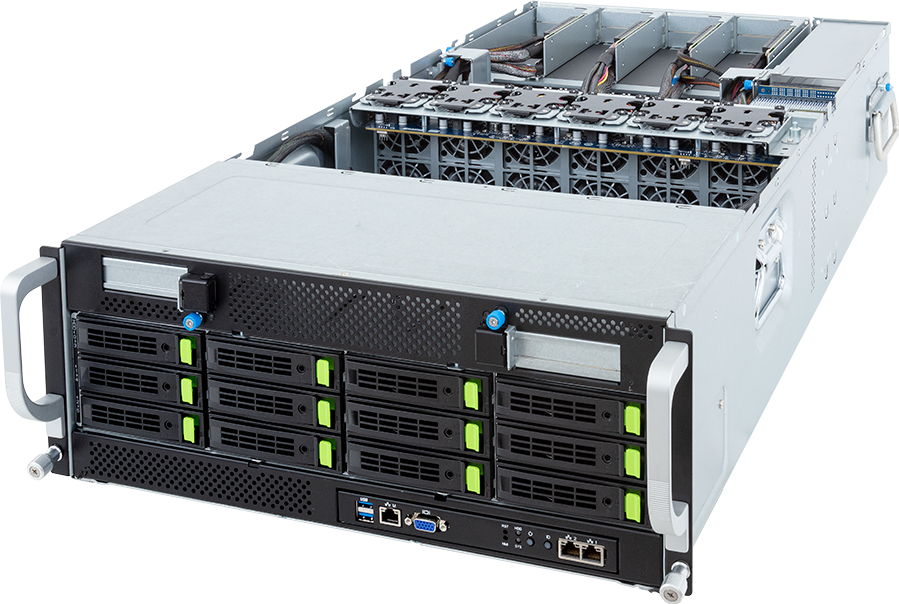
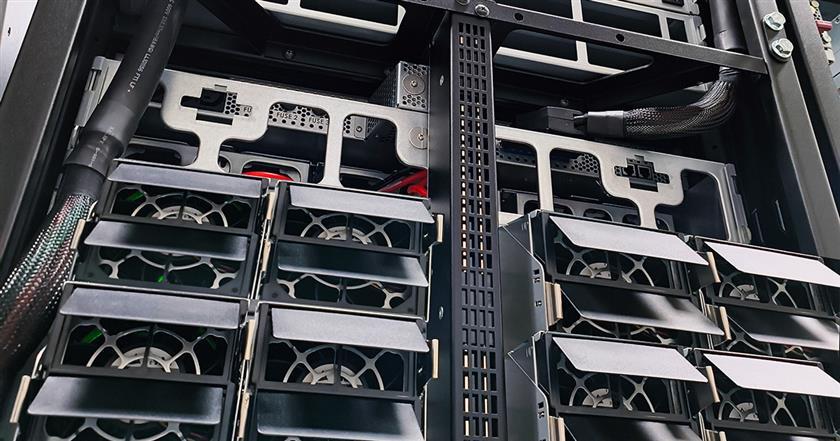
GIGABYTE Technology offers server products that support heterogeneous computing, which makes it viable for highly specialized processors—such as ASIC products—to work in tandem with conventional CPUs and GPUs. The G-Series GPU Servers are highly recommended for use with ASIC accelerators, because they offer multiple expansion slots utilizing the latest PCIe interface technologies, which provide high-throughput and low-latency communication between processing units. GIGABYTE's proprietary thermal management design also helps to unlock the processors' full potential while optimizing PUE and maintaining stable operations.
One good example of an ASIC product is the Qualcomm® Cloud AI 100, which can be deployed in GIGABYTE's G292-Z43 GPU Server. This accelerator is highly recommended for engaging in AI inference on the cloud or on the edge, since it was designed to address the unique requirements of cloud-based AI services, such as signal processing, power efficiency, node advancement, and scalability.
One good example of an ASIC product is the Qualcomm® Cloud AI 100, which can be deployed in GIGABYTE's G292-Z43 GPU Server. This accelerator is highly recommended for engaging in AI inference on the cloud or on the edge, since it was designed to address the unique requirements of cloud-based AI services, such as signal processing, power efficiency, node advancement, and scalability.