Constructing the Brain of a Self-Driving Car
Success Case by GIGABYTE
GIGABYTE’s High Density Servers Help Technology Innovator Develop Algorithm for Autonomous Vehicle.
6 min read
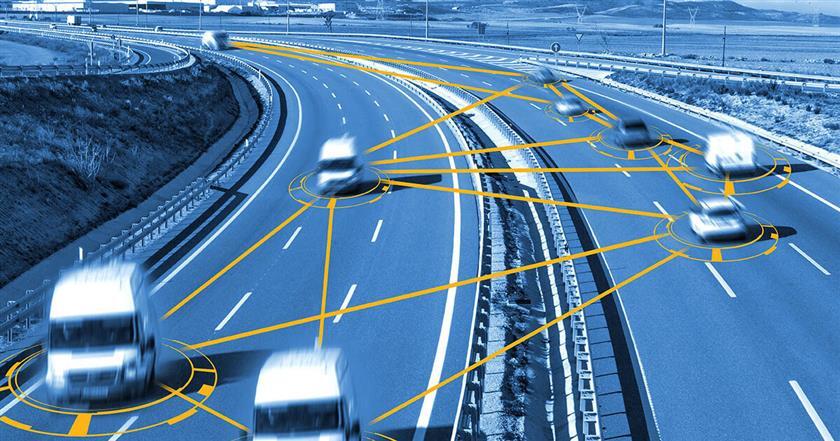
Since the introduction of the Ford Model T in 1908, the world has been looking forward to the next milestone in automobile history: the invention of a truly autonomous, self-driving “robot car”. Besides car manufacturers, tech companies are also competing to announce the next breakthrough in driverless technology.
An Israeli developer of autonomous driving technology is one such company. Established in the nineties, it produces software and chipsets that will elevate the technology from Advanced Driver Assistance Systems (ADAS) to fully autonomous self-driving cars. To use the “Six Levels of Driving Automation” classification set by SAE International, an automotive standardization body, this means to advance unmanned vehicles from Level 3 (conditional automation) to Level 4 (high automation), or even Level 5 (full automation). 《Glossary: What is ADAS?》
An Israeli developer of autonomous driving technology is one such company. Established in the nineties, it produces software and chipsets that will elevate the technology from Advanced Driver Assistance Systems (ADAS) to fully autonomous self-driving cars. To use the “Six Levels of Driving Automation” classification set by SAE International, an automotive standardization body, this means to advance unmanned vehicles from Level 3 (conditional automation) to Level 4 (high automation), or even Level 5 (full automation). 《Glossary: What is ADAS?》
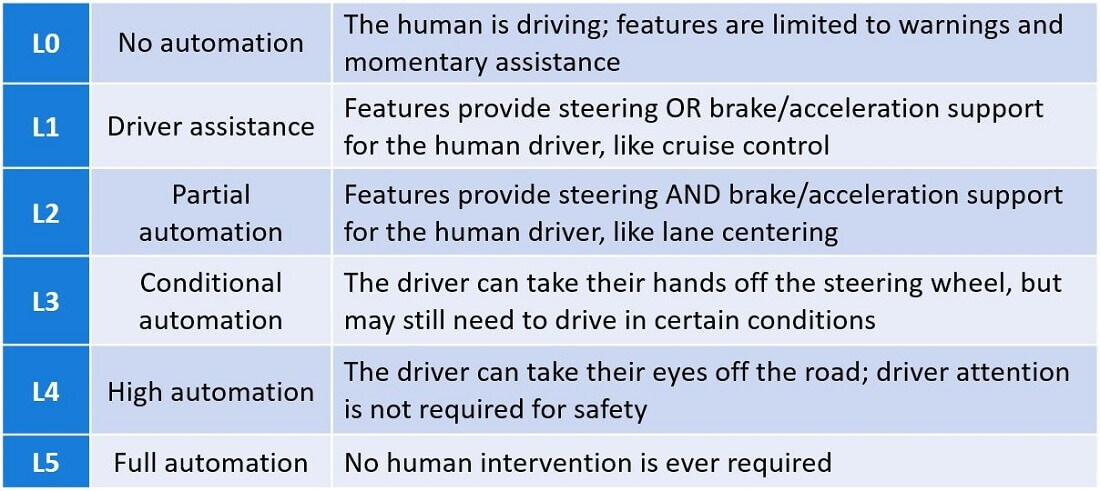
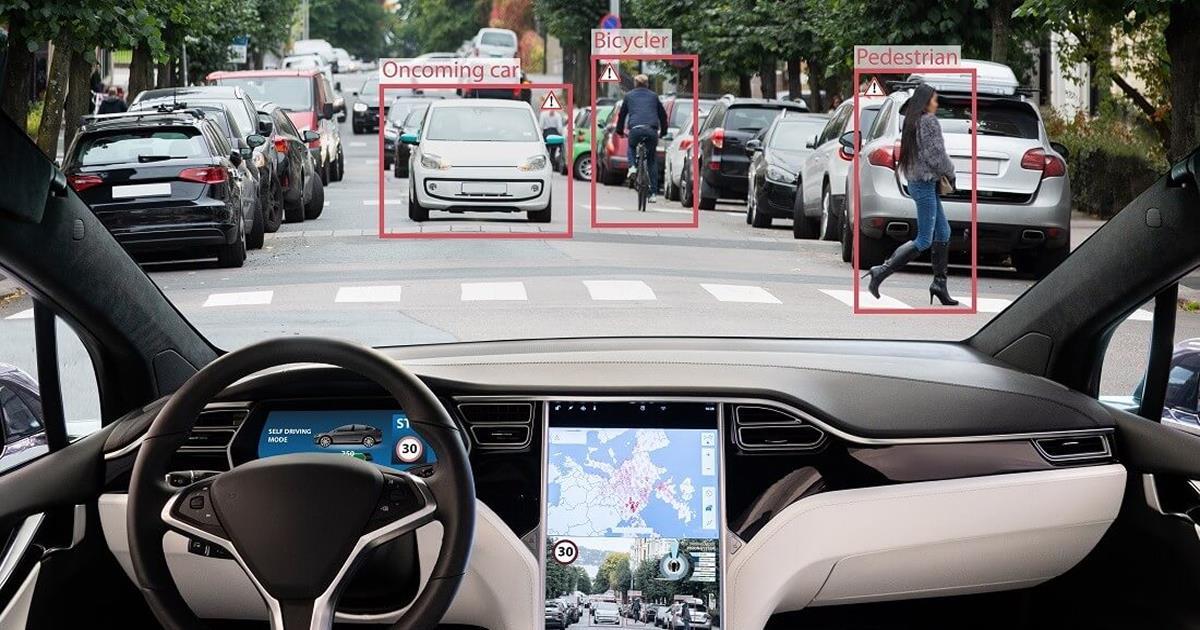
They have their work cut out for them. ADAS already exist in features such as anti-lock braking systems (ABS) and forward collision warnings (FCW), but a truly autonomous vehicle is a few more rungs up the evolutionary ladder. It needs to perceive its surroundings, predict what it will encounter on the road, and make decisions in real time. For this task, present-day infrared sensors and computer systems are no longer sufficient. Cameras must be installed on the self-driving car, and the AI needs to be trained through deep learning to recognize and respond to what the cameras see in real time. To develop the self-driving algorithm, it is necessary to conduct repeated test drives in many different locations and pour an ocean of data into the database on a daily basis. The autonomous vehicle company purchased GIGABYTE’s high density servers to help them kick things into high gear.
“It’s Awesome.” GIGABYTE’s GPU and Rack Servers Wow Client
Sluggish read and write speeds can bog down development. The autonomous vehicle company searched for a new solution. After careful evaluation, they selected GIGABYTE. The G291-281 from the GPU Server product line and the R281-NO0 from the Rack Server product line were chosen to help develop self-driving cars.
GIGABYTE’s G291-281 is a scalable, high-density GPU server that’s designed for high performance and parallel computing. One of its most remarkable features is it can support up to 8 double-slot GPGPUs or co-processor cards within a 2U chassis, resulting in industry-leading performance. The G291-281 has a proven track record of helping to expedite the development of artificial intelligence, deep learning, real-time analytics, scientific simulation and modeling, and more.
As for the R281-NO0, it is a versatile server solution that combines top-notch performance with efficiency and reliability. It has the capacity for 24 hot-plug Non-Volatile Memory – Express (NVMe) drives, which can be paired with solid state drives (SSD) through PCIe hardware interface to create a much faster disk interface protocol. According to internal estimates, transmission bandwidth and speed can go up to 6 times faster with the inclusion of NVMe drives.
The autonomous vehicle company was impressed with these two servers. They told GIGABYTE: “Fabulous! Very good, it’s awesome!”
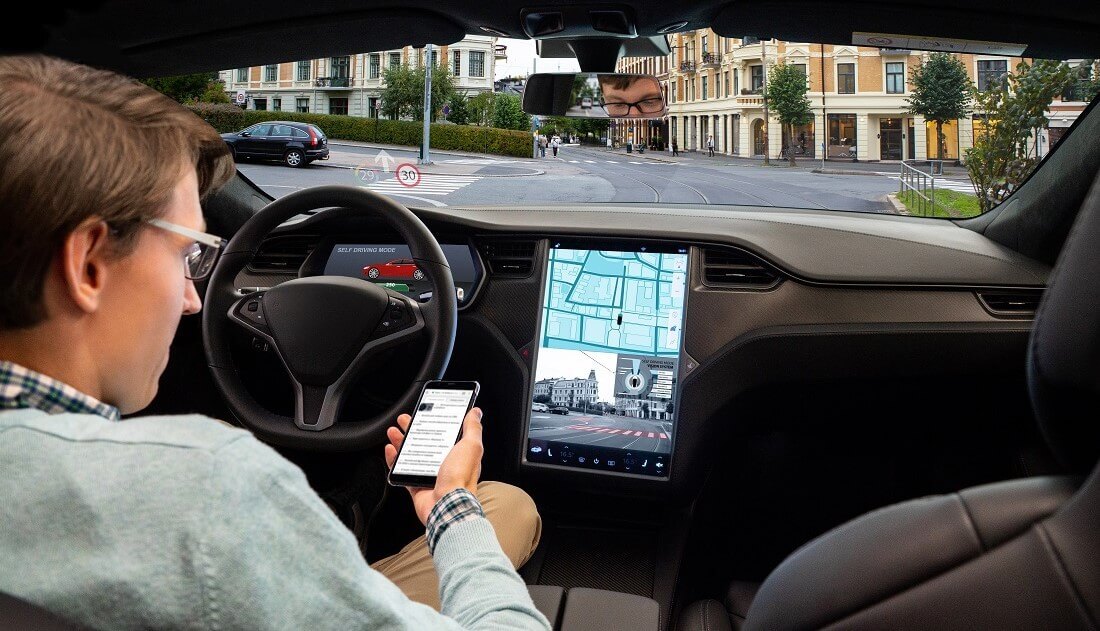
The autonomous vehicle company must conduct test drives in different locations and process a large amount of data to develop a truly autonomous, self-driving car.
Every time a prototype driverless vehicle goes out for a spin, it comes back with around 64 terabytes of raw data. As the client has a fleet of such cars, the amount of data being uploaded after each session was staggering—roughly the equivalent of 30,000 Blu-ray movies. Because the AI needs to sift through all the input to achieve deep learning, inefficient data delivery was tantamount to placing a roadblock to the algorithm’s progress. With the GPU and rack servers helping to optimize efficiency, development of autonomous vehicle technology picked up speed.
GIGABYTE’s G291-281 GPU Server and R281-NO0 Rack Server offered four outstanding benefits that sealed the deal for the client.
GIGABYTE’s G291-281 GPU Server and R281-NO0 Rack Server offered four outstanding benefits that sealed the deal for the client.
One: Faster Computing, Memory, and Storage
Both the G291-281 and the R281-NO0 are part of GIGABYTE’s family of Intel® Xeon® Scalable Processor servers, which are available in dual socket configurations and are compatible with different SKUs. This means they can be optimized to support different applications, including enterprise databases, cloud computing, and challenging High Performance Computing (HPC) workloads. Each CPU can support up to 28 cores and 56 threads per socket.
The servers also support Intel Optane DC Persistent Memory, a breakthrough in memory and storage technology that offers higher capacity than the DRAM and greater speed than SSDs. Clients can enjoy higher capacities and lower latency when fetching data from system storage.
The servers also support Intel Optane DC Persistent Memory, a breakthrough in memory and storage technology that offers higher capacity than the DRAM and greater speed than SSDs. Clients can enjoy higher capacities and lower latency when fetching data from system storage.
Two: Cost-Effective Solution for Smarter Investments
Every penny counts in the race to advance driverless technology. Innovators are careful to get their money’s worth. Dollar for dollar, clients get more bang for their buck when they buy GIGABYTE. By selecting GIGABYTE’s servers, the client achieved their operational objectives without breaking the bank, making it possible for funds to be allocated to other equally important investments.
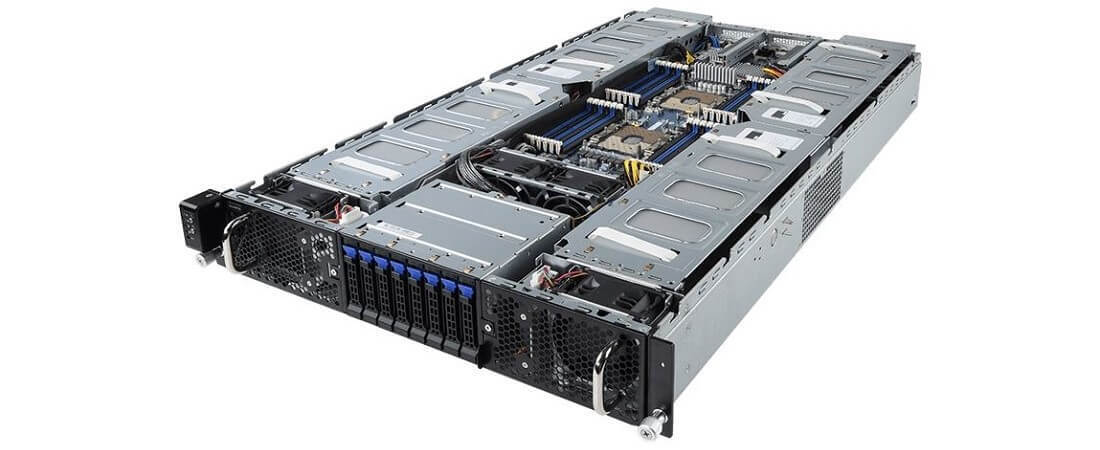
GIGABYTE’s G291-281 is a high-density GPU server. Its industry-leading design can support up to 8 double-slot GPGPUs or co-processor cards within a 2U chassis.
Three: High-Density Design Saves Space and Paves Way for Future Expansions
The G291-281 is part of GIGABYTE’s HPC solutions. The compact design is ideal for maximizing both power and cooling, while also minimizing the footprint of each server. The R281-NO0 comes with a dense add-on slot design, which gives the user a range of comprehensive add-on options. The two highly efficient servers help the client reduce costs, and they leave room for future growth as data usage continues to expand.
Four: Optimal Heat Dissipation and Smart Power Management
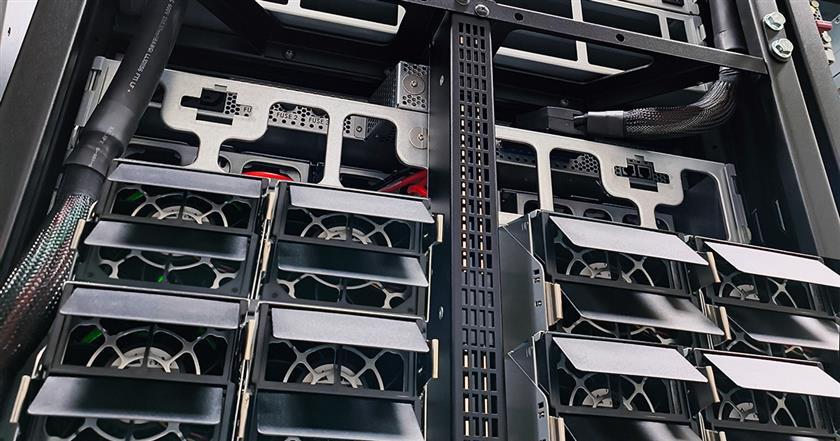
The high-density design necessitates the inclusion of innovative heat dissipation methods. Both the G291-281 and R281-NO0 are enabled with dynamic fan speed control, which means individual fan speed will be automatically adjusted according to the system’s current temperature to achieve optimal power efficiency and cooling. There is also a function to manually create and edit each fan’s speed profiles to accommodate the client’s specific requirements.
Intelligent power management also plays an important role in making sure everything runs smoothly. SCMP (Smart Crises Management/ Protection) is a GIGABYTE-patented feature that automatically forces the CPU to enter ultra-low frequency mode (ULFM) in case of fault or error with the power supply unit, such as overheating or a fan problem. This prevents system shutdown. When the fault has been resolved, the system will return to normal power mode automatically.
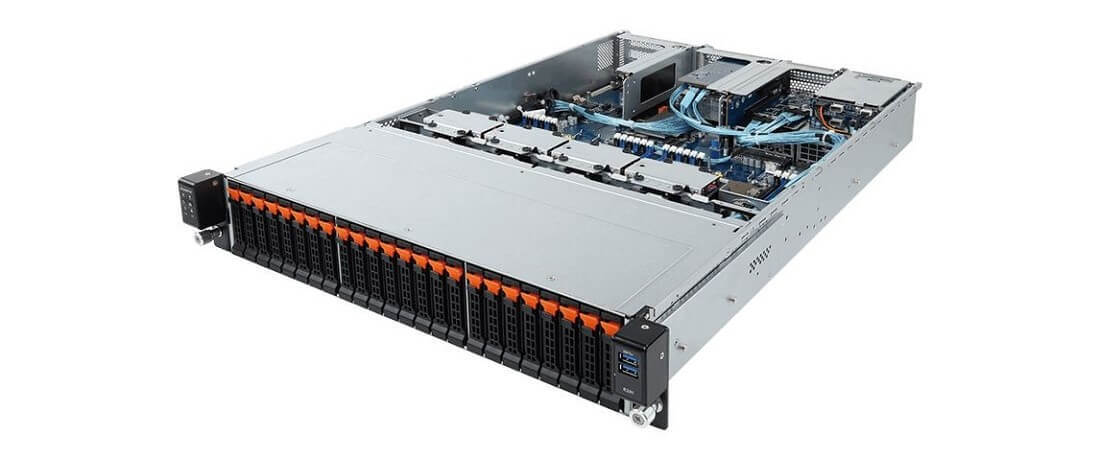
GIGABYTE’s R281-NO0 is a versatile server solution with the capacity for 24 NVMe drives, which can be paired with SSD through PCIe for faster disk interface protocol.
GIGABYTE Contributes to a Better Tomorrow with Industry-Leading Expertise
GIGABYTE is glad to contribute to a better tomorrow through its GPU servers, rack servers, and other hardware solutions. With a diverse range of products in its portfolio and many years of industry experience, GIGABYTE excels at understanding the clients’ needs and recommending the optimal response to their problems. In the project with the autonomous vehicle company, this dedication to innovation and service has resulted in another satisfied client.
The Israeli technology innovator needed to accelerate algorithm development while remaining cost-effective and supporting future growth. The high-density G291-281 GPU server and versatile R281-NO0 rack server were just what the doctor ordered. Even as they move toward the next breakthrough in automobile history, and GIGABYTE has once again reaffirmed its commitment to using state-of-the-art technology to solve problems, helping everyone to "Upgrade Your Life".
Learn More:
《Need for Speed: Server Technology Helps to Achieve Aerodynamic Vehicle Design》
《As Good as Gold - High Performance Computing Accelerates Oil Extraction》