Metaverse
What is it?
In 2021, tech giants such as Meta Platforms (the company formerly known as Facebook) and Microsoft announced their commitment to building a “metaverse”, renewing interest in a term coined by science fiction writer Neal Stephenson in 1992. As the name implies, the metaverse is a portmanteau of "meta-", meaning comprehensive or transcending, and "universe". Stephenson envisioned it as a future version of the internet that had transformed into a fully immersive, three-dimensional virtual reality, one that is ever-present and shared by all its users.
This is all well and good; but what does it mean for those of us in the real world, and why should tech giants want to turn this fantasy into reality?
Currently, the real-life version of the metaverse as proposed by tech giants is the extension of existing virtual reality (VR), augmented reality (AR), and mixed reality (MR) techniques, widely implemented in a variety of user scenarios and vertical sectors, including business, education, entertainment, and retail. The metaverse in this sense may not be persistent or interconnected, but it should offer a clear advantage over the internet as we know it. The point of entry into the metaverse can be VR headsets or something even more innovative. The metaverse itself will run on countless servers in data centers around the world.
This is all well and good; but what does it mean for those of us in the real world, and why should tech giants want to turn this fantasy into reality?
Currently, the real-life version of the metaverse as proposed by tech giants is the extension of existing virtual reality (VR), augmented reality (AR), and mixed reality (MR) techniques, widely implemented in a variety of user scenarios and vertical sectors, including business, education, entertainment, and retail. The metaverse in this sense may not be persistent or interconnected, but it should offer a clear advantage over the internet as we know it. The point of entry into the metaverse can be VR headsets or something even more innovative. The metaverse itself will run on countless servers in data centers around the world.
Why do you need it?
While the concept is breathtaking, at this current point in time, it's not entirely clear what concrete functions and benefits the real-life version of the metaverse will offer. A lot of the underlying technologies are still in development, and much of the surrounding buzz is speculative. What is known is that VR, AR, and MR solutions will have a significant role to play on the front-end, while servers on the back-end will be the foundation of the new virtual world.
How is GIGABYTE helpful?
GIGABYTE, a global IT brand renowned for its personal computer products, server products, and smart city and IoT solutions, has a number of ready solutions for the metaverse, including VR/AR/MR applications on the front-end, and servers on the back-end.
Smart Fitting Mirror: GIGABYTE's Smart Fitting Mirror is an O2O (online to offline) retail solution that features integrated IoT hardware, 3D ToF cameras, and ULSee's 3D Virtual Try-On software. Users can generate virtual avatars of themselves and try on different outfits in a virtual simulation. User behavior is recorded and analyzed in GIGABYTE's cloud computing servers for big data analysis with the help of AI and deep learning, which will let retailers better understand customer preferences and deliver ads with pinpoint accuracy.
VR 360 Stadium Experience: Officially opened in 2020, the Taipei Music Center offers an out-of-this-world experience for concert-goers in its second-floor VIP room. By donning wireless head mounted displays (HMD), audience members can get a 360-degree view of a live concert in 8K resolution. This was made possible by 5G communications and edge computing technology, as well as a built-in micro data center powered by GIGABYTE's G481-HA0. Data collected by recording devices is processed by the server in real time to recreate the concert in virtual reality.
Naked-Eye Virtual Reality: As VR tech continues to advance, it's possible that HMDs will become unnecessary one day, and truly immersive virtual reality will be implemented without any wearable device. Such is the vision of the Silicon Valley-based tech company ArchiFiction, which has used GIGABYTE's W281-G40 server and MW51-HP0 server motherboard to create n'Space, a projector-based platform capable of rendering photorealistic virtual environments. Data about the viewer's position and surroundings are processed in real time by the GIGABYTE server to construct the responsive, immersive virtual world.
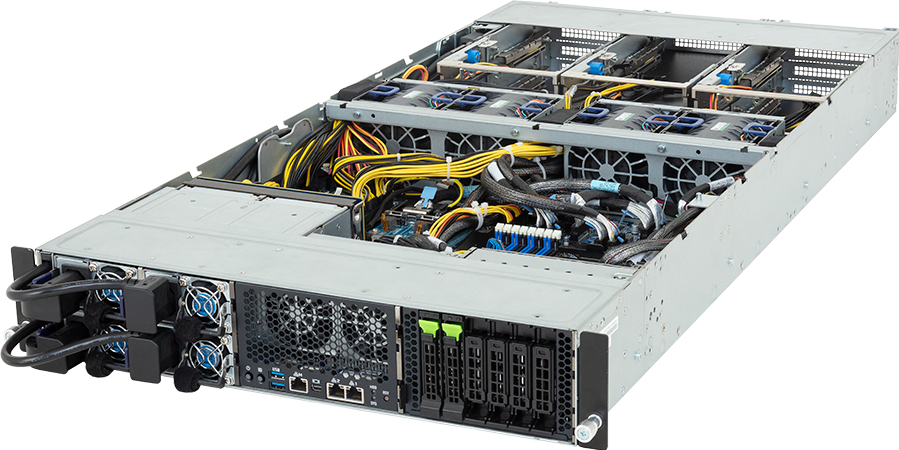
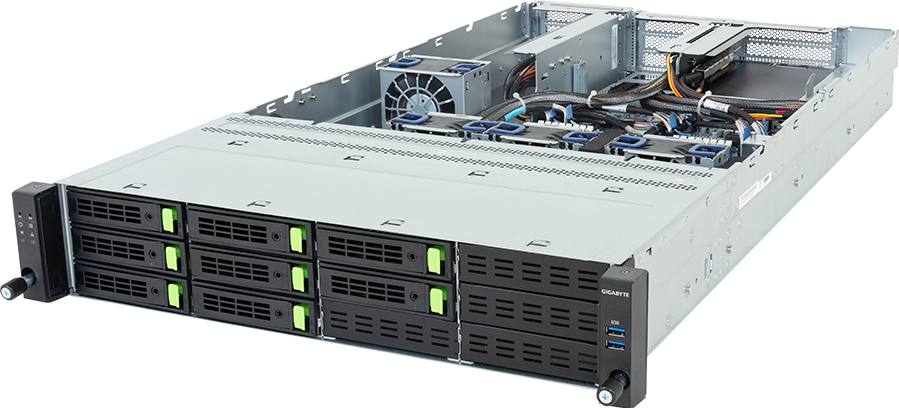
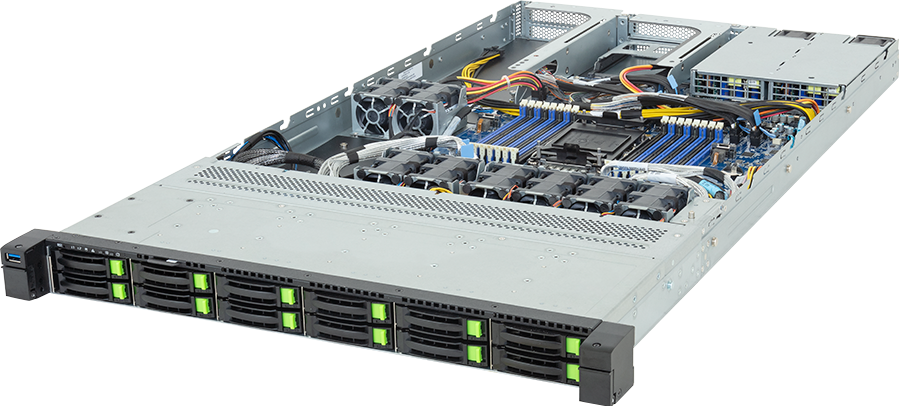
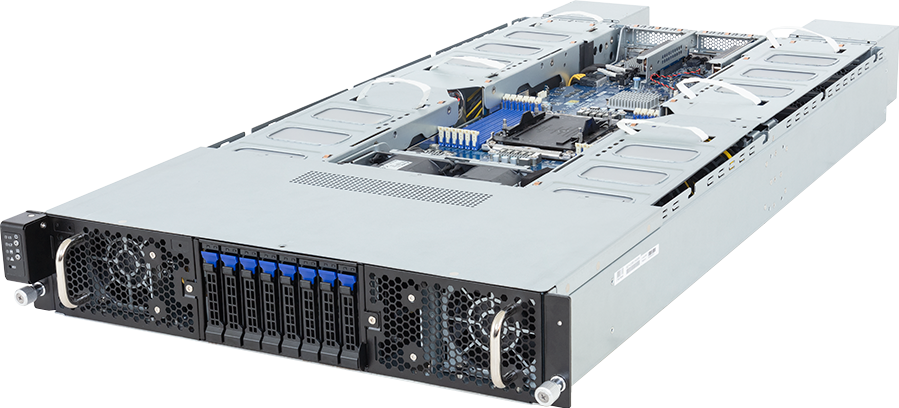
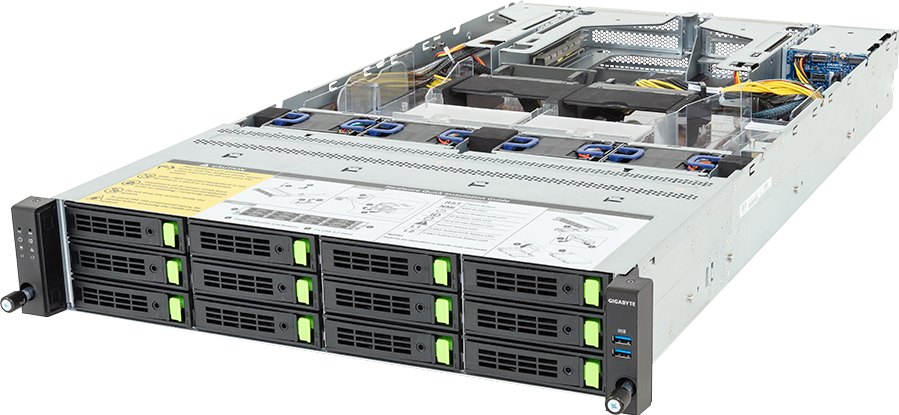
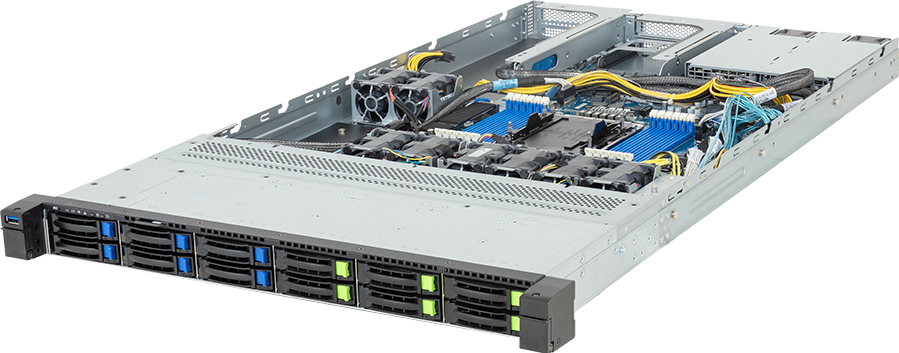
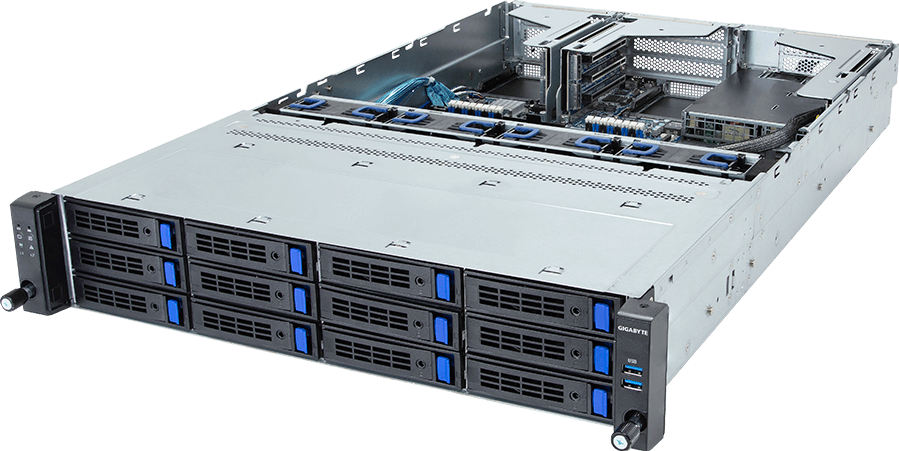
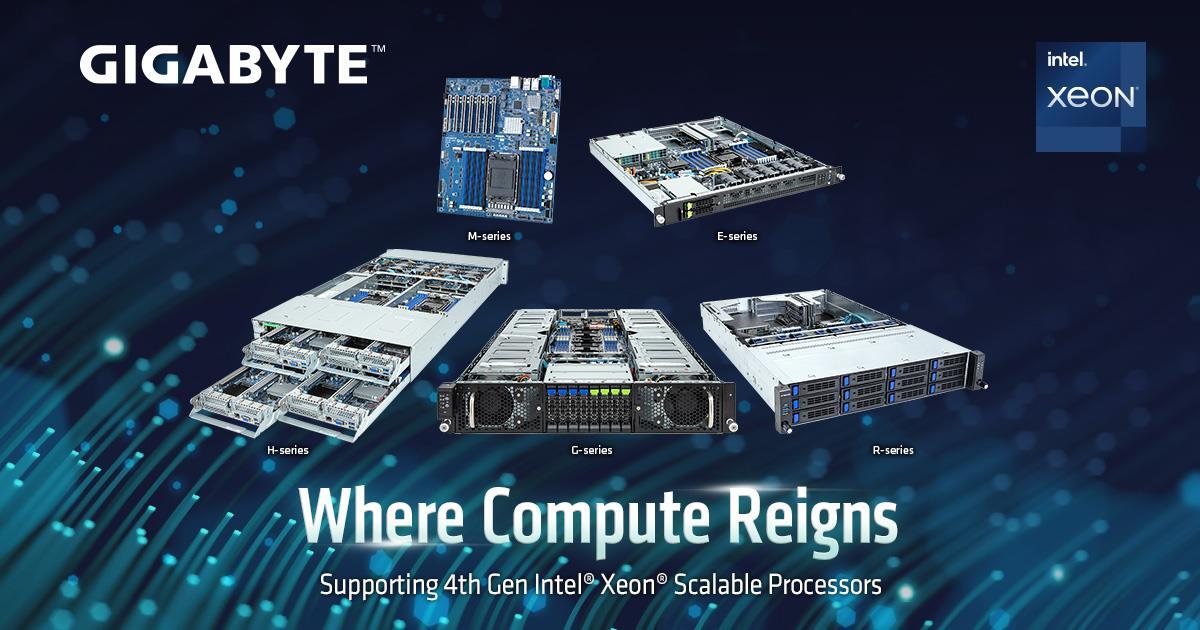
Server products: On the back-end, GIGABYTE's H-Series High Density Servers, G-Series GPU Servers, R-Series Rack Servers, and S-Series Storage Servers are all highly recommended for constructing the data centers that will support the metaverse. The servers run on a wide range of industry-leading processors by AMD, Arm, and Intel, and many feature the option to install additional NVIDIA GPU accelerators. The H-Series and G-Series Servers are ideal for parallel computing and HPC-related tasks carried out by the computing node of a computing cluster, while the S-Series Servers are designed for use in the storage node. R-Series Servers are versatile workhorse models that can fill a variety of roles.
Smart Fitting Mirror: GIGABYTE's Smart Fitting Mirror is an O2O (online to offline) retail solution that features integrated IoT hardware, 3D ToF cameras, and ULSee's 3D Virtual Try-On software. Users can generate virtual avatars of themselves and try on different outfits in a virtual simulation. User behavior is recorded and analyzed in GIGABYTE's cloud computing servers for big data analysis with the help of AI and deep learning, which will let retailers better understand customer preferences and deliver ads with pinpoint accuracy.
VR 360 Stadium Experience: Officially opened in 2020, the Taipei Music Center offers an out-of-this-world experience for concert-goers in its second-floor VIP room. By donning wireless head mounted displays (HMD), audience members can get a 360-degree view of a live concert in 8K resolution. This was made possible by 5G communications and edge computing technology, as well as a built-in micro data center powered by GIGABYTE's G481-HA0. Data collected by recording devices is processed by the server in real time to recreate the concert in virtual reality.
Naked-Eye Virtual Reality: As VR tech continues to advance, it's possible that HMDs will become unnecessary one day, and truly immersive virtual reality will be implemented without any wearable device. Such is the vision of the Silicon Valley-based tech company ArchiFiction, which has used GIGABYTE's W281-G40 server and MW51-HP0 server motherboard to create n'Space, a projector-based platform capable of rendering photorealistic virtual environments. Data about the viewer's position and surroundings are processed in real time by the GIGABYTE server to construct the responsive, immersive virtual world.
Server products: On the back-end, GIGABYTE's H-Series High Density Servers, G-Series GPU Servers, R-Series Rack Servers, and S-Series Storage Servers are all highly recommended for constructing the data centers that will support the metaverse. The servers run on a wide range of industry-leading processors by AMD, Arm, and Intel, and many feature the option to install additional NVIDIA GPU accelerators. The H-Series and G-Series Servers are ideal for parallel computing and HPC-related tasks carried out by the computing node of a computing cluster, while the S-Series Servers are designed for use in the storage node. R-Series Servers are versatile workhorse models that can fill a variety of roles.