800 VDC
What Is 800 VDC?
800 VDC (800-Volt Direct Current) is a power distribution architecture that uses 800-volt direct current to support next-generation, high-density AI racks.
As AI rack power requirements grow to hundreds of kilowatts and even megawatt levels, higher-voltage DC power distribution can help reduce the amount of current needed to deliver the same amount of power. This improves power distribution efficiency and scalability for AI infrastructure.
Why Is 800 VDC Needed?
As AI training, inference, and agentic AI workloads continue to grow, the number of GPUs and the power required by each rack are increasing rapidly. This is driving the need for new power architectures such as 800 VDC.
Today, many data center systems use around 54V DC for power distribution within the rack. As rack power rises to hundreds of kilowatts or more, low-voltage systems must carry extremely high currents. This requires more copper, larger busbars, and heavier cables, while also increasing power loss, space requirements, and cooling demands.
At the same power level, increasing the distribution voltage reduces the required current. By moving to 800 VDC, data centers can reduce copper and cabling requirements, lower power distribution losses, and simplify parts of the power conversion and distribution infrastructure.
This allows more power to be delivered directly to computing systems, improving overall energy efficiency and Token-per-Watt performance while providing greater scalability for the next generation of AI factories.
How Does 800 VDC Work?
800 VDC does not mean that the data center receives DC power directly from the electrical grid. The grid still supplies alternating current (AC). The main difference is where AC power is converted into DC and what voltage is used for power distribution inside the data center.
In NVIDIA's 800 VDC architecture, for example, AC power can be centrally converted into 800 VDC at the facility level and then distributed directly to AI racks through a DC power distribution system.
Compared with traditional architectures that involve multiple stages of power conversion between the facility and computing equipment, 800 VDC can simplify parts of the power delivery path.
However, 800 VDC also requires specialized electrical design, including suitable circuit breakers, connectors, insulation, fault isolation, arc protection, and safety monitoring systems.
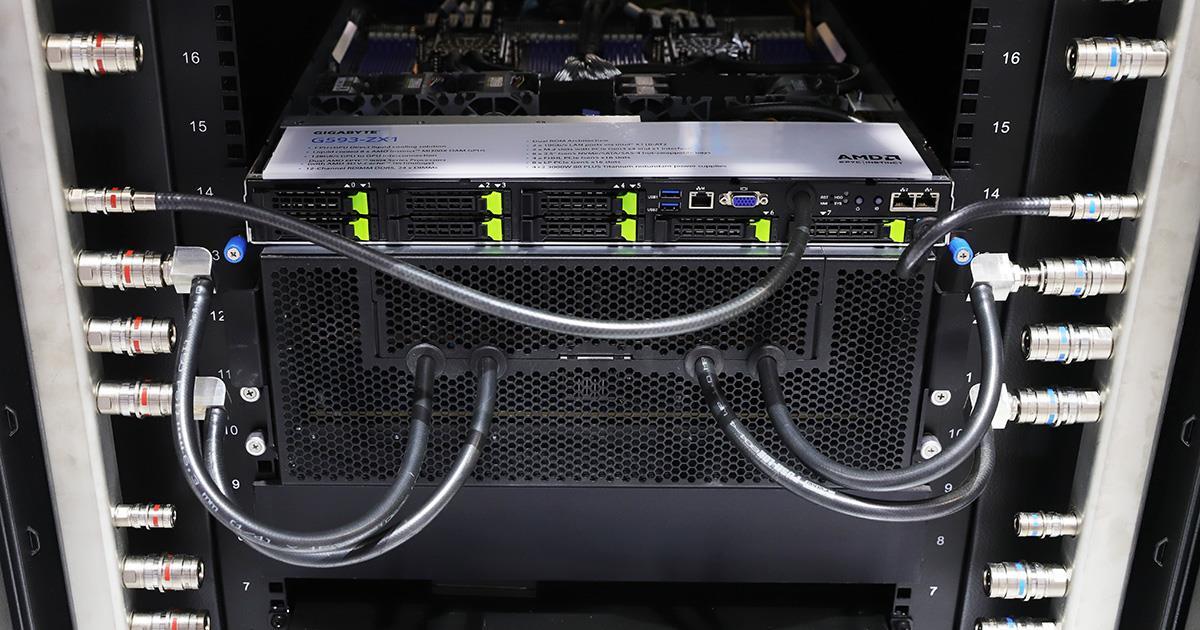
At the same time, AI racks operating at hundreds of kilowatts or megawatt-scale power levels generate extremely high heat density. As a result, the power architecture often needs to be planned together with advanced cooling technologies such as direct liquid cooling.
How Is GIGABYTE Helpful?
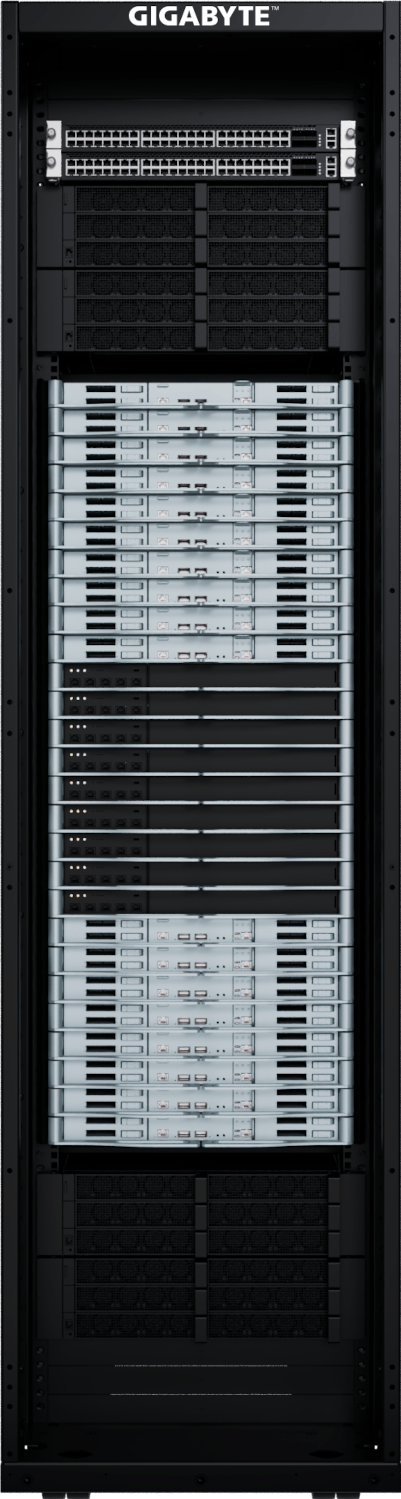
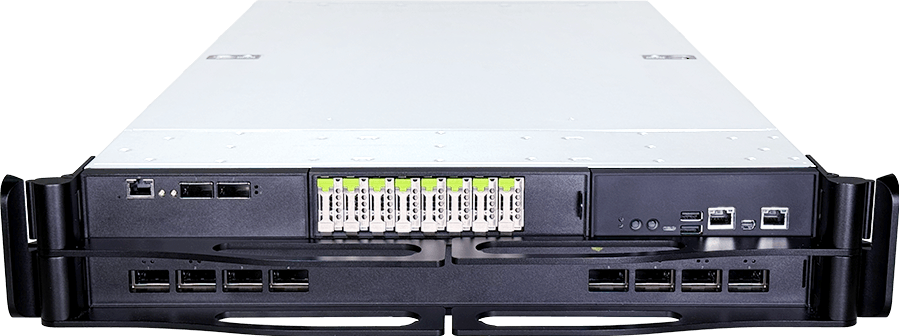
GIGABYTE provides L12-level integration capabilities covering servers, racks, clusters, and data center deployment. Based on different workloads, including AI training, AI inference, agentic AI, and HPC, GIGABYTE can help customers plan the computing, networking, storage, and management infrastructure they need.
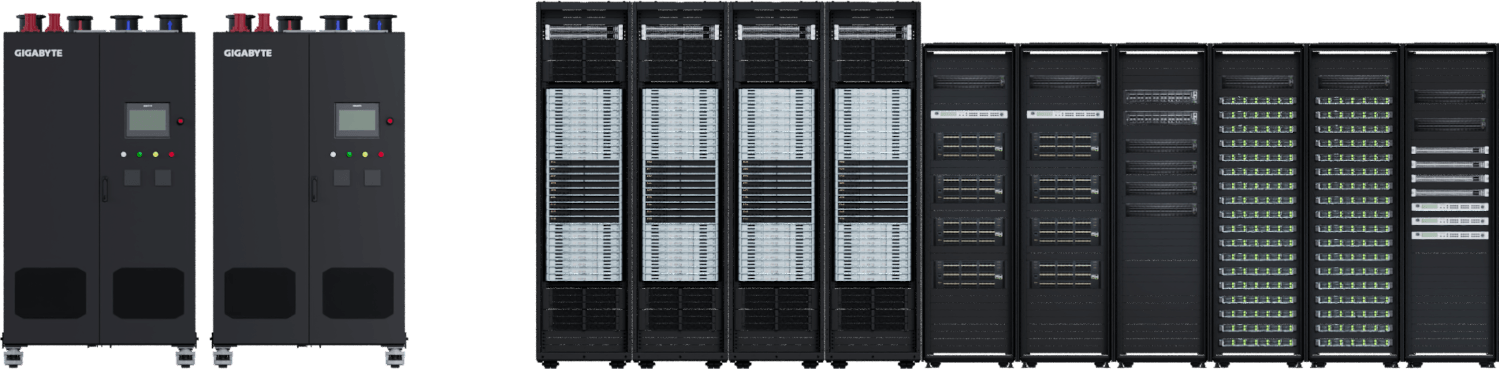
To address the increasing power and cooling requirements of high-density AI systems, GIGABYTE works with its technology partners to integrate power distribution, power backup, power monitoring, direct liquid cooling, and immersion cooling solutions. This helps customers accelerate the deployment of AI infrastructure.
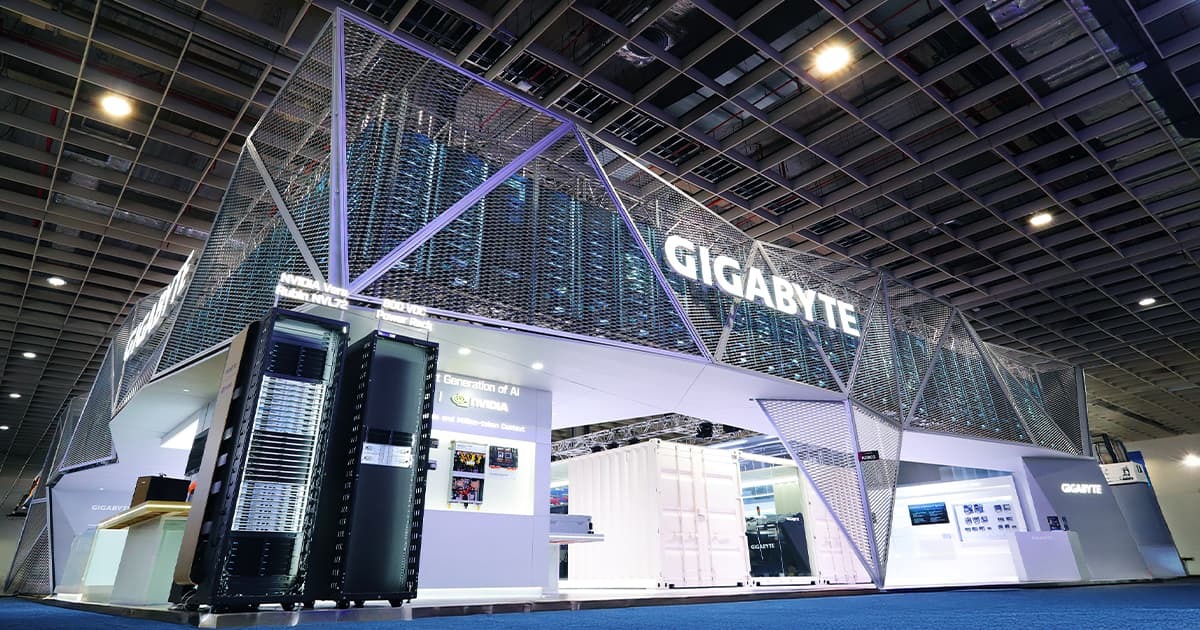
For next-generation AI platforms, GIGABYTE has showcased the NVIDIA Vera Rubin NVL72 together with an 800 VDC power distribution architecture developed in collaboration with ecosystem partners.
Vera Rubin integrates six key chips, including the CPU, GPU, NVLink switch, DPU, SuperNIC, and Ethernet switch, into a co-designed architecture. This design enhances computing, interconnect, and data transfer performance to support next-generation AI applications such as intelligent reasoning and autonomous decision-making.