1. Home
  2. Glossary
  3. Digital Twin

Digital Twin

What Is a Digital Twin?

A digital twin is a dynamic digital representation of a physical asset, product, process, or system. More than a 3D model, it combines geometry, equipment parameters, sensor data, and simulation models to reflect real-world conditions, analyze changes, predict outcomes, and validate new designs.

Digital twins can represent anything from machines, robotic arms, and production lines to factories and entire data centers. With advances in IoT, AI, GPU-accelerated computing, and technologies such as NVIDIA Omniverse, digital twins have become important tools for design, simulation, and operational optimization.

Why Do We Need Digital Twins?

Changes to physical systems can be expensive, disruptive, or risky to test directly. Digital twins allow engineering teams to evaluate different scenarios virtually before applying them in the real world.

Manufacturers can simulate production layouts and machine operations, while data center teams can validate rack layouts, power, cooling, and networking before construction. After deployment, digital twins can also incorporate real-time data for monitoring, analysis, and prediction.

This “simulate first, execute later” approach helps reduce trial-and-error costs, identify bottlenecks earlier, and improve both design and operational efficiency.

According to McKinsey, the global digital twin technology market is expected to grow at an annual rate of around 60% over the next five years, reaching US$73.5 billion by 2027. 

How Does Digital Twin Technology Work?

A digital twin typically begins with a digital model of the physical system. CAD, BIM, or 3D assets are combined with equipment specifications, while IoT sensors, control systems, and operational data keep the virtual model aligned with real-world conditions.

GPUs, HPC systems, and simulation software can then analyze thermal behavior, structures, physical environments, or equipment operation. AI can further identify patterns, predict anomalies, and support what-if analysis. Simulation results can then feed back into real-world design and operations.

What Are the Applications of Digital Twins?

・Smart Manufacturing
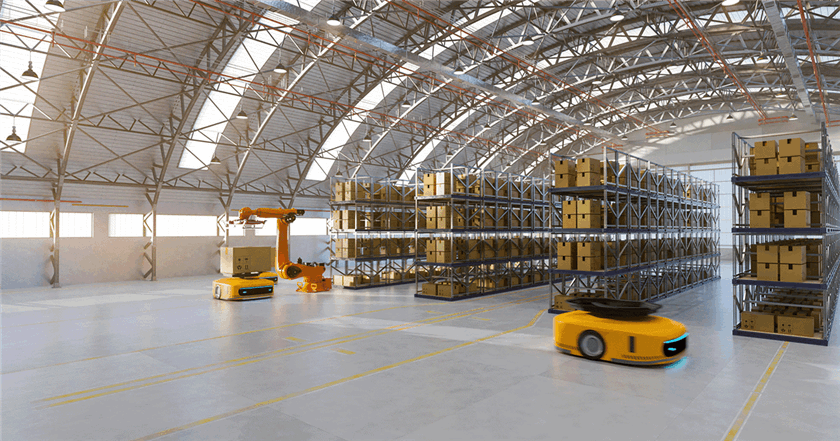
Digital twins can model equipment and production lines to simulate processes, robot movement, and capacity planning while using live data to monitor equipment conditions.

・Data Centers
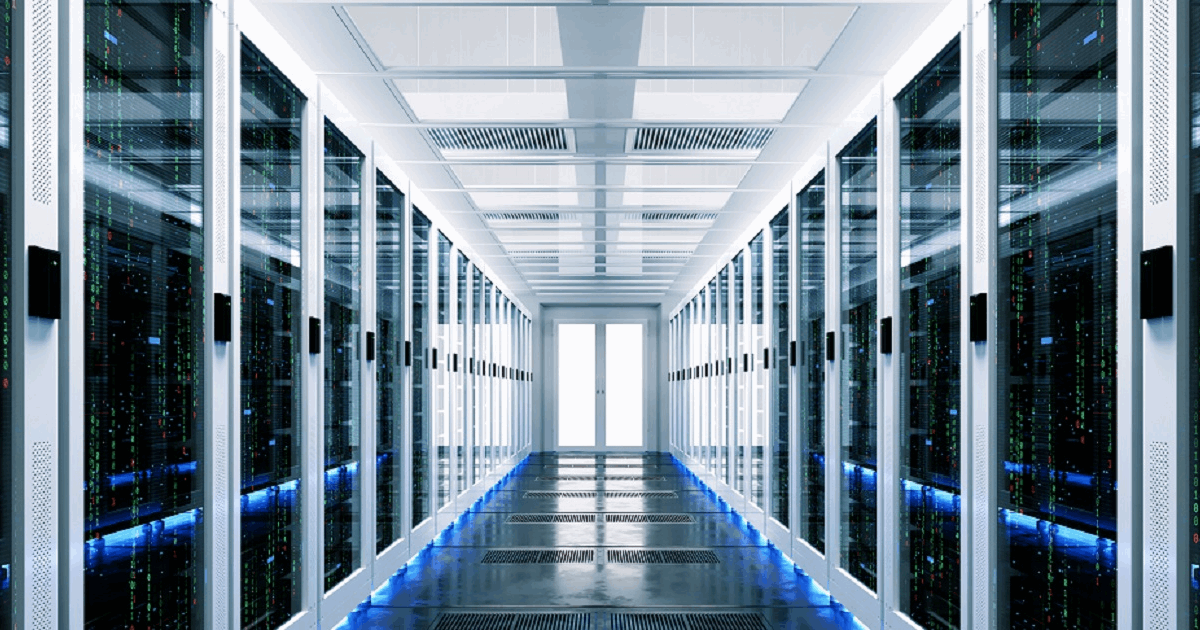
Digital twins can simulate rack layouts, power, cooling, and network architecture before construction, helping validate designs in advance and supporting performance and capacity analysis after deployment.

Robots, autonomous vehicles, and other intelligent machines can be trained and validated in virtual environments before being deployed to physical systems through sim-to-real workflows.

How is GIGABYTE helpful?

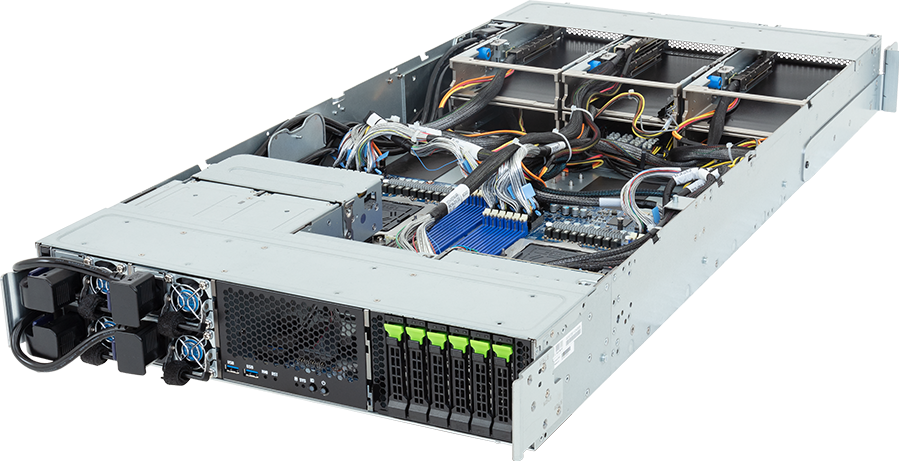
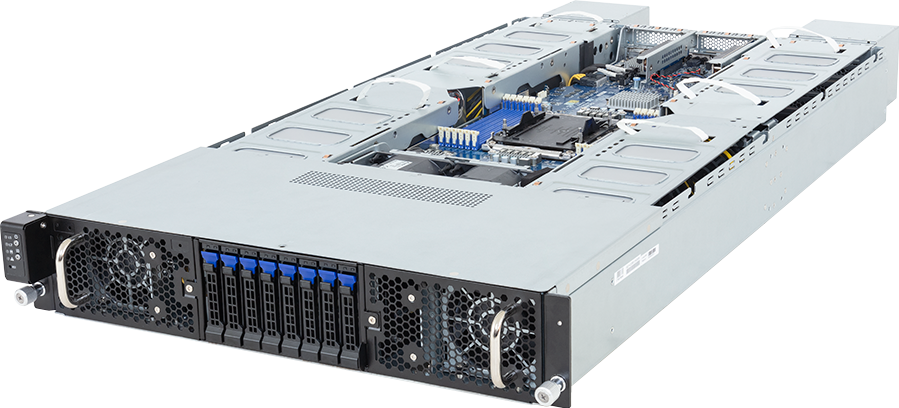
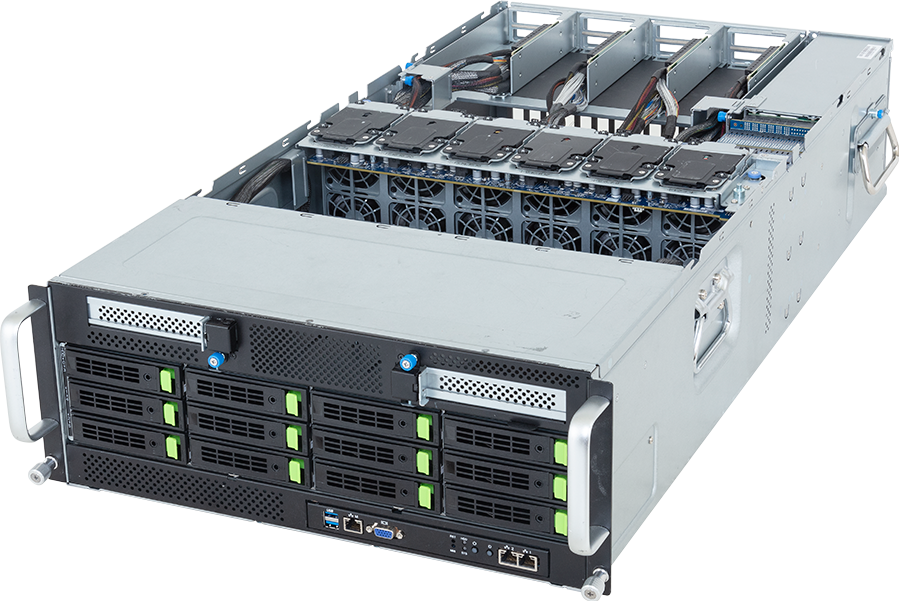
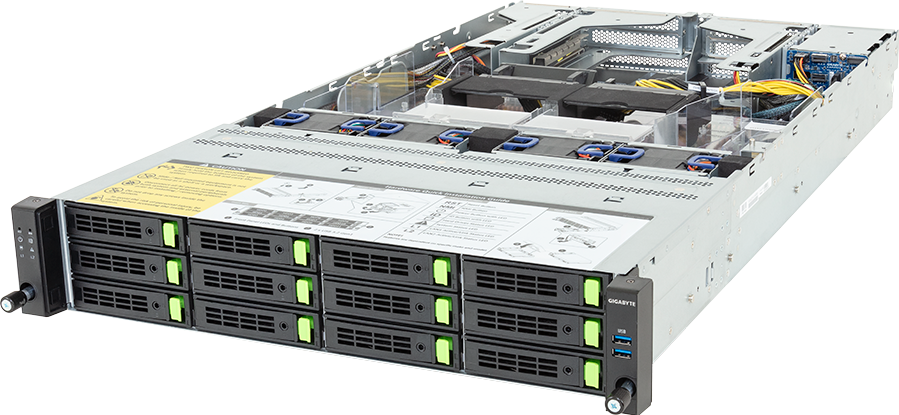
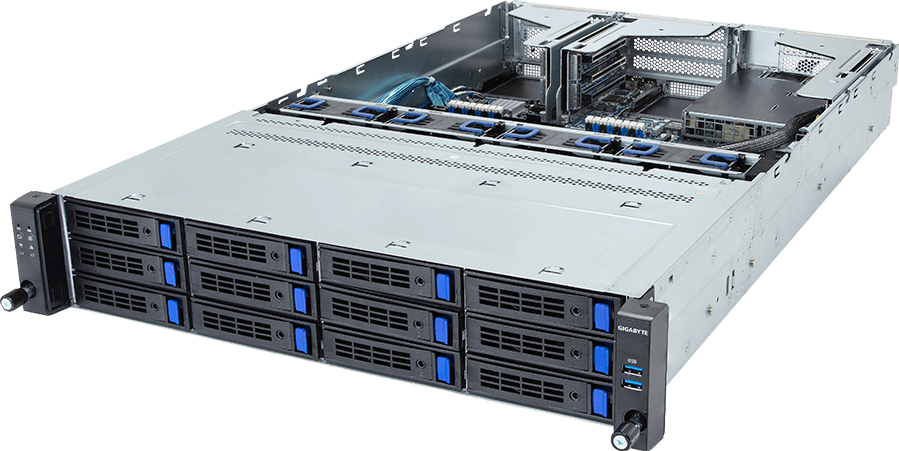
Digital twin workloads require substantial 3D computing, AI, simulation, and data processing capabilities. GIGABYTE provides platforms ranging from professional workstations powered by NVIDIA RTX PRO GPUs to NVIDIA OVX-certified servers, GPU servers, and GIGAPOD for NVIDIA Omniverse visualization, physics-based simulation, and large-scale digital twins.

For AI data centers, GIGABYTE is also adopting NVIDIA DSX SimReady across rack-scale platforms, integrating power, thermal, and connectivity information into digital assets that can be simulated and validated with the NVIDIA Omniverse DSX Blueprint before physical construction.

In scientific research, GIGABYTE has also collaborated with the Institute for Cross-Disciplinary Physics and Complex Systems (IFISC) in Spain, using high-performance servers to build a digital twin of a real-world power transmission grid for simulating the development and deployment of renewable energy.

From workstation-based development and simulation to data center-scale digital twins for AI factories, GIGABYTE provides the computing platforms and infrastructure needed to bring digital twins into real-world applications.
Recommended Reading

NVIDIA Omniverse Solutions

NVIDIA Omniverse Solutions

Build the Future Before It Exists! Accelerate Physical AI from Simulation to Reality.
The Advantages of ARM: From Smartphones to Supercomputers and Beyond

The Advantages of ARM: From Smartphones to Supercomputers and Beyond

Processors based on the ARM architecture, an alternative to the mainstream x86 architecture, is gradually making the leap from mobile devices to servers and data centers. In this Tech Guide, GIGABYTE Technology, an industry leader in high-performance server solutions, recounts how ARM was developed. We also explain the various benefits of ARM processors and recommend ARM servers for different sectors and applications.
6 Key Knowledge to Build the Power of Computing for Your Business

6 Key Knowledge to Build the Power of Computing for Your Business

Digitalization is the first strategy in technology for today's enterprises to stay ahead of others. To develop core business and conduct daily operations, enterprises need IT systems and computing power to store, process, manage and analyze the large amounts of data generated and collected every day. This guide will take you from understanding the relevant definitions of data centers to the functions of servers that are often deployed in modern popular technologies such as high performance computing (HPC), 5G, and artificial intelligence (AI).
What is Big Data, and How Can You Benefit from It?

What is Big Data, and How Can You Benefit from It?

You may be familiar with the term, “big data”, but how firm is your grasp of the concept? Have you heard of the “5 V’s” of big data? Can you recite the “Three Fundamental Steps” of how to use big data? Most importantly, do you know how to reap the benefits through the use of the right tools? GIGABYTE Technology, an industry leader in high-performance server solutions, is pleased to present our latest Tech Guide. We will walk you through the basics of big data, explain why it boasts unlimited potential, and finally delve into the GIGABYTE products that will help you ride high on the most exciting wave to sweep over the IT sector.
Spain’s IFISC Tackles COVID-19, Climate Change with GIGABYTE Servers

Spain’s IFISC Tackles COVID-19, Climate Change with GIGABYTE Servers

By using GIGABYTE, Spain’s Institute for Cross-Disciplinary Physics and Complex Systems is pitting the world’s foremost server solutions against some of the world’s most pressing issues, including the effects of climate change, pollution, and COVID-19. GIGABYTE servers are up to the diverse and daunting tasks, because they are designed for high performance computing, intensive numerical simulations, AI development, and big data management.
10 Frequently Asked Questions about Artificial Intelligence

10 Frequently Asked Questions about Artificial Intelligence

Artificial intelligence. The world is abuzz with its name, yet how much do you know about this exciting new trend that is reshaping our world and history? Fret not, friends; GIGABYTE Technology has got you covered. Here is what you need to know about the ins and outs of AI, presented in 10 bite-sized Q and A’s that are fast to read and easy to digest!
Constructing the Brain of a Self-Driving Car

Constructing the Brain of a Self-Driving Car

GIGABYTE’s High Density Servers Help Technology Innovator Develop Algorithm for Autonomous Vehicle.
OCP ORv3 Solution

OCP ORv3 Solution

The alternative of power-efficient server solutions.
CPU vs. GPU: What's the Difference and Which Do You Need

CPU vs. GPU: What's the Difference and Which Do You Need

Besides the central processing unit (CPU), the graphics processing unit (GPU) is also an important part of a high-performing server. Do you know how a GPU works and how it is different from a CPU? Do you know the best way to make them work together to deliver unrivalled processing power? GIGABYTE Technology, an industry leader in server solutions that support the most advanced processors, is pleased to present our latest Tech Guide. We will explain the differences between CPUs and GPUs; we will also introduce GIGABYTE products that will help you inject GPU computing into your server rooms and data centers.
The University of Barcelona Gets a Computing Boost with GIGABYTE Servers

The University of Barcelona Gets a Computing Boost with GIGABYTE Servers

The Institute of Theoretical and Computational Chemistry at the University of Barcelona has increased the capacity of their on-campus data center by over 40% with a new cluster of GIGABYTE servers. Hundreds of researchers will benefit from the computing power of AMD EPYC™ processors. Administrators can easily manage the cluster with GIGABYTE Server Management (GSM), a proprietary multiple server remote management software platform provided for free by GIGABYTE.